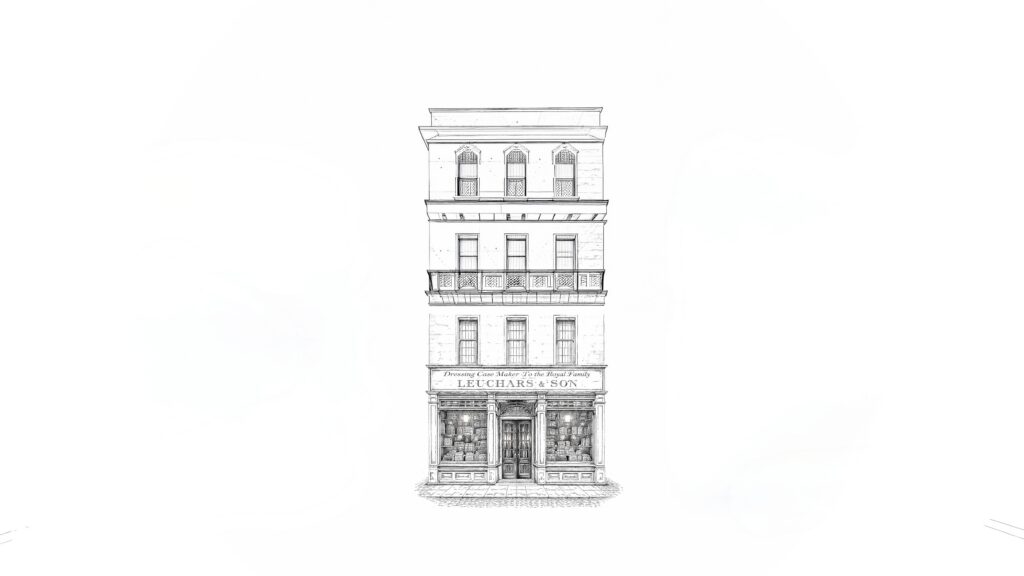
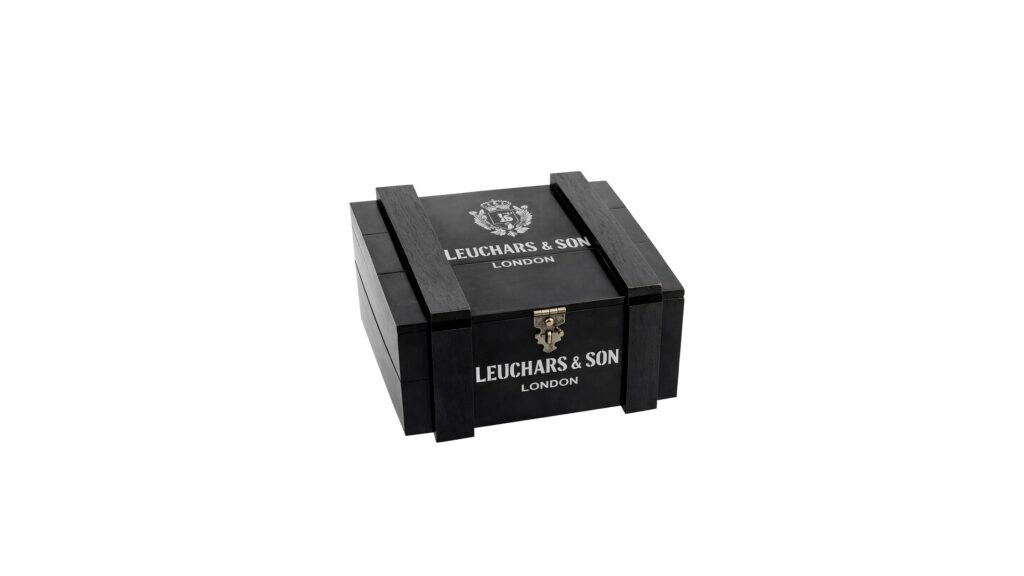
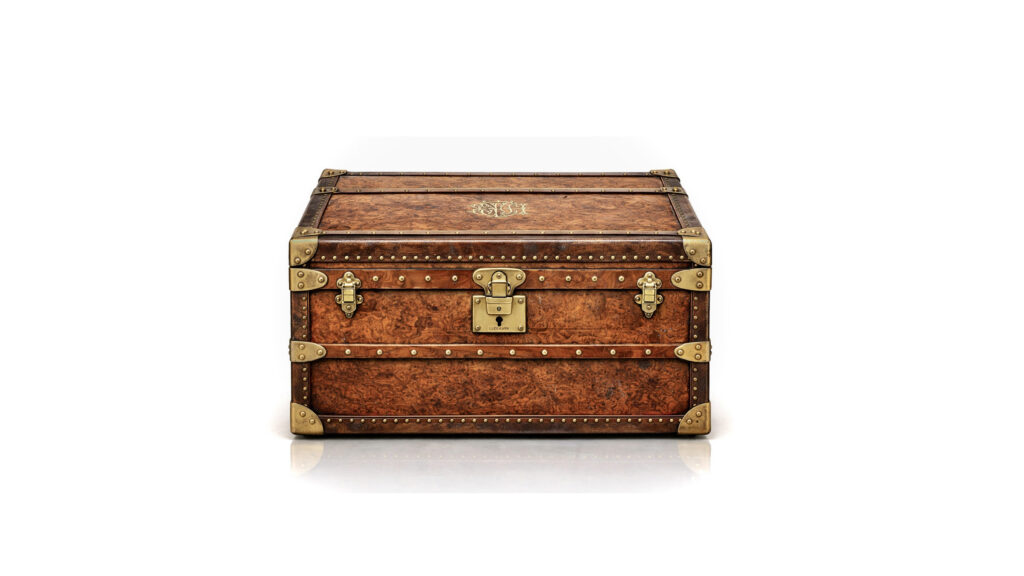
Leuchars London is a present-day house studying the design and making of cases and fitted objects. Its direction is informed by the documented history of the Leuchars name, associated with fitted dressing cases and travelling cases in Piccadilly from 1794. The historic firm and the present-day house are distinct.
These cases were constructed to organise grooming tools, scent bottles, brushes and other personal objects used in private life and travel.
The Craft of Case Making
Case making was a specialised craft within the London luxury trades of the nineteenth century. Cases were designed to hold a complete set of instruments arranged within fitted interiors.
The interiors of the cases were divided into compartments lined with leather, velvet or silk so that each object had a dedicated place.
Silver mounted tools, glass scent bottles and other accessories were often supplied by specialist makers and fitted into the case during assembly.
Dressing Cases
Dressing cases were the most recognisable objects associated with the Leuchars name. These cases were designed to contain the instruments required for personal grooming.
A typical dressing case could include brushes, mirrors, scent bottles, shaving tools and other personal accessories arranged within a fitted interior.
Travelling Cases
Travelling cases were designed to allow personal grooming equipment to be carried during journeys. These portable cases contained the same types of fitted accessories found in dressing cases but were constructed to be more compact and practical for travel.
Travelling cases became increasingly common during the nineteenth century as international travel expanded.
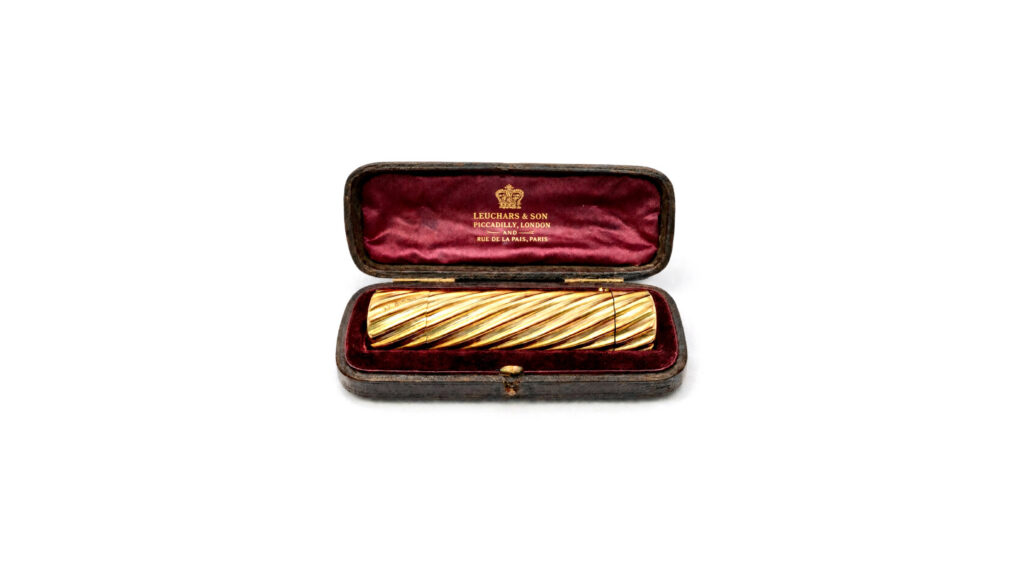
Interpretive reconstruction of a Leuchars & Son scent-bottle case, created from historic references.
Jewellery and Personal Cases
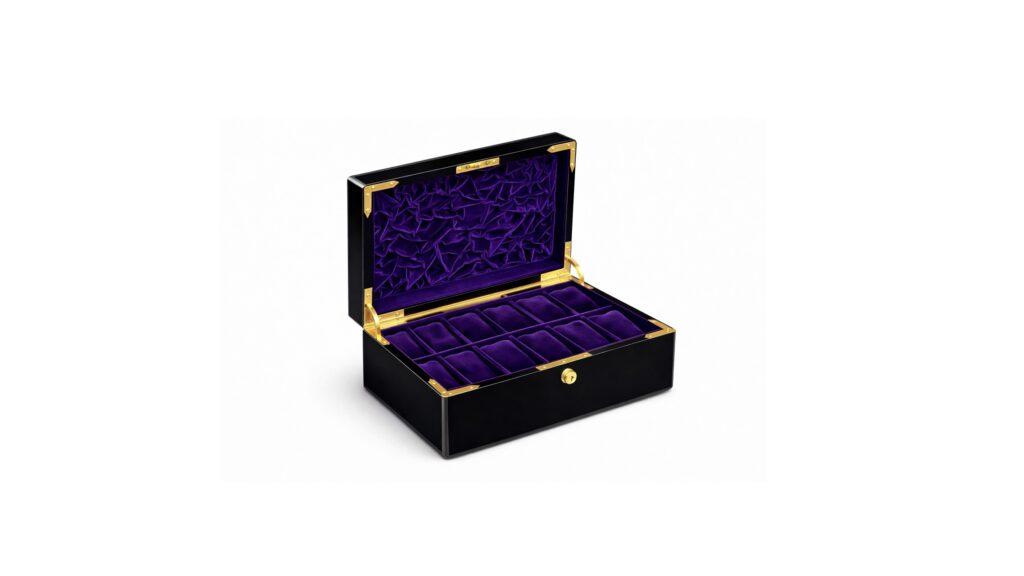
In addition to dressing cases, the Leuchars workshops produced cases intended for jewellery and other personal objects. These cases were designed to protect and organise valuable items during storage or travel.
Structure of a Fitted Case
A fitted case typically consisted of a rigid exterior shell and a carefully arranged interior. The interior was divided into compartments designed to hold specific instruments.
The case itself formed the framework that brought together a collection of tools and accessories into a single organised set.
The Leuchars Record
The Leuchars name became closely associated with case making in nineteenth-century London. Surviving objects and contemporary exhibition records document that work.
This historic record informs the present-day house’s study of cases, fitted objects and the deliberate organisation of personal things.
Explore the principal case types represented within the Leuchars study.