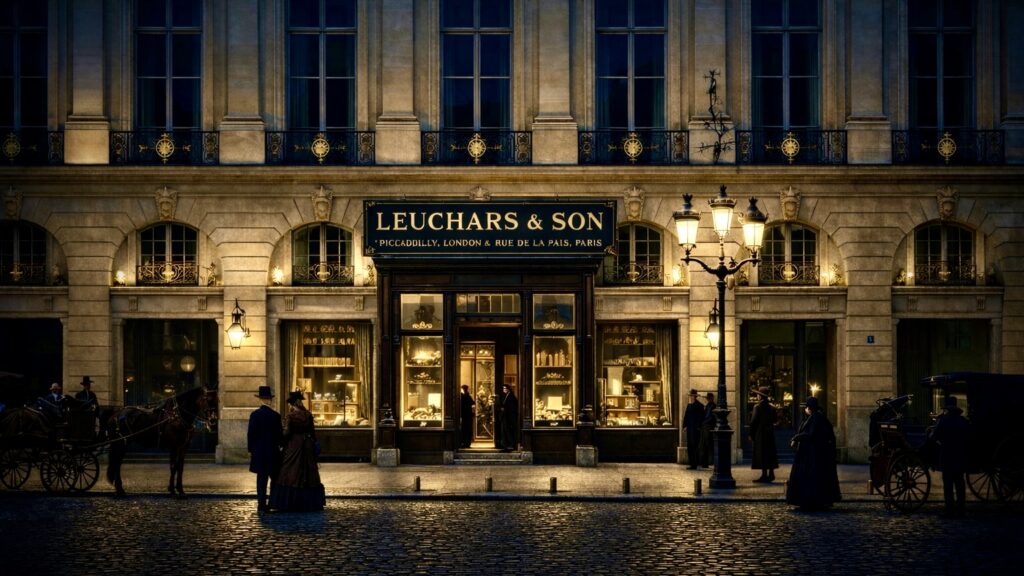
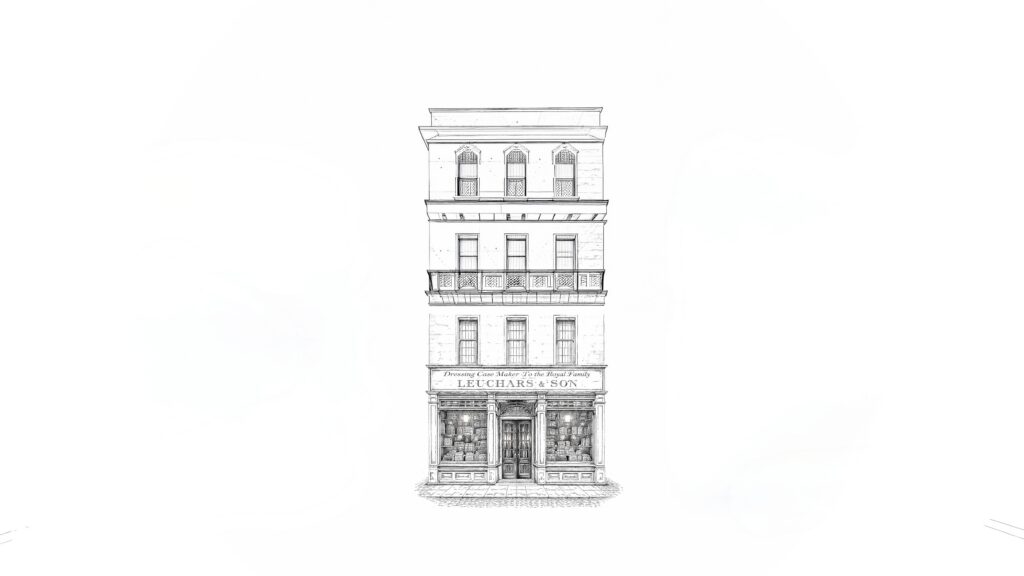
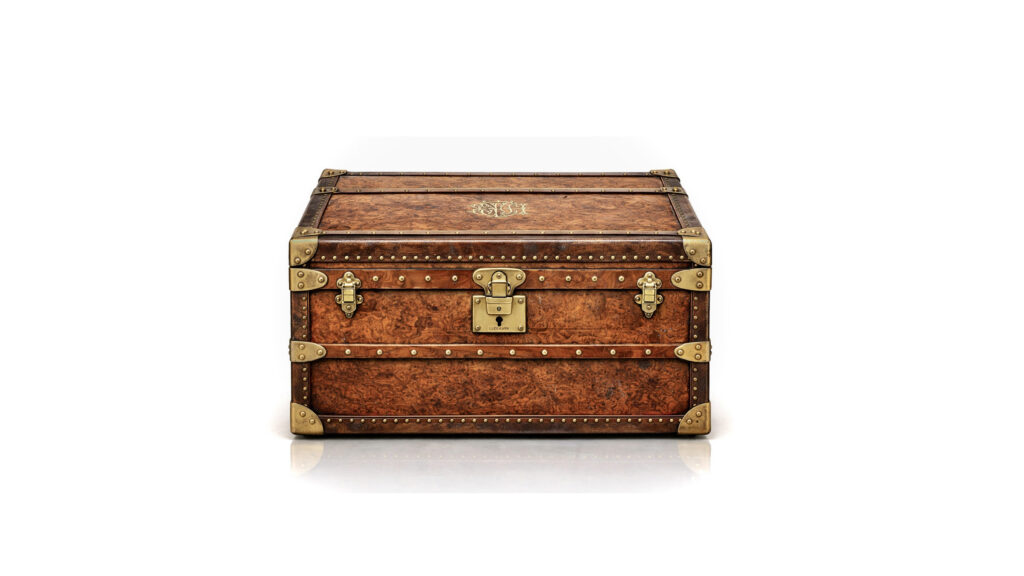
Leuchars & Son was the London firm founded in 1794 by James Leuchars and known for the manufacture of dressing cases and travelling accessories. Operating from Piccadilly, the business became associated with finely fitted cases containing grooming instruments, scent bottles and other personal objects intended for private life and travel.
During the nineteenth century the Leuchars name became widely recognised within the London luxury craft trade and among travellers requiring fitted dressing cases and personal travelling equipment.
1794 — Founding in Piccadilly
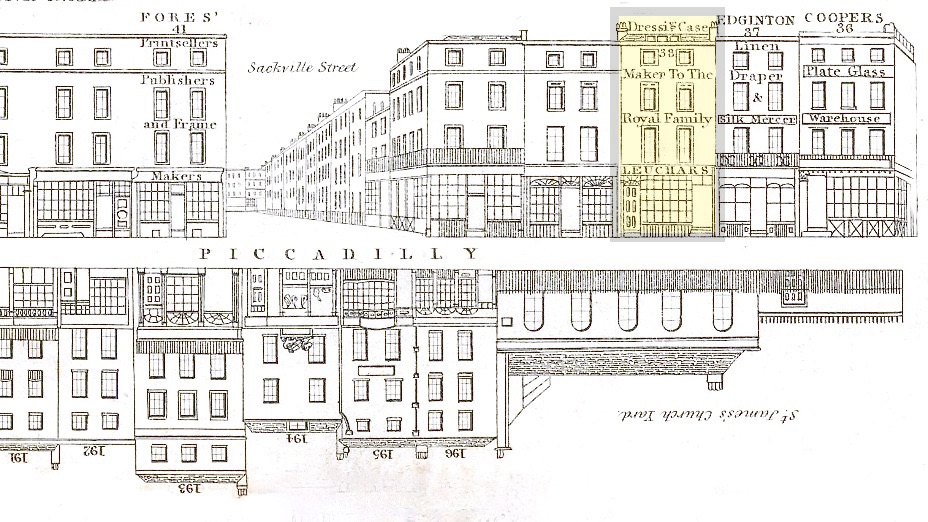
The Leuchars business was founded in Piccadilly, London in 1794 by James Leuchars as a maker and retailer of dressing cases and travelling equipment.
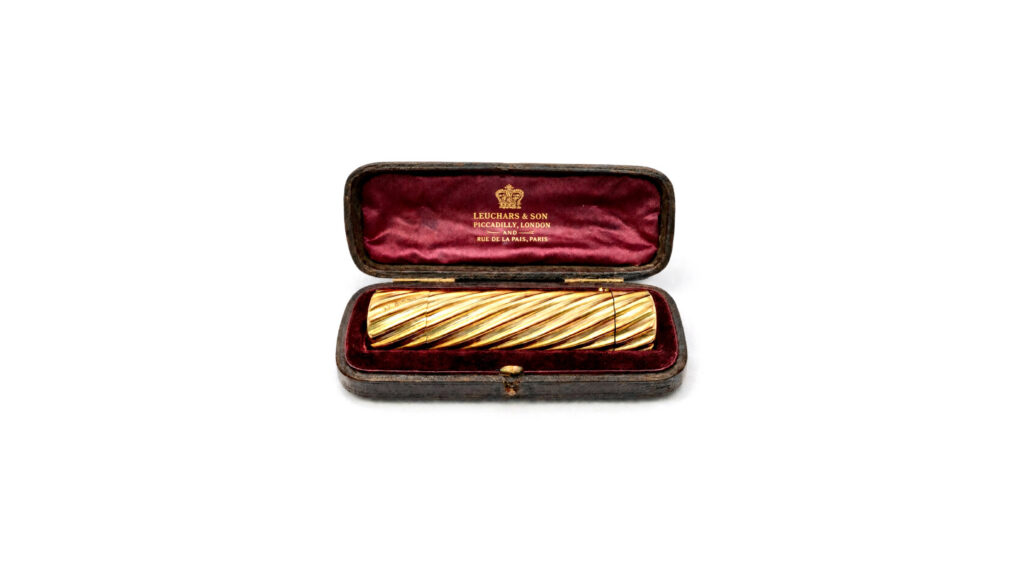
The firm specialised in fitted dressing cases, travelling vanity sets and cases designed to contain grooming instruments and personal accessories. These cases often included silver mounted tools, glass bottles and other fitted components arranged within carefully organised interiors.
Leuchars operated within the London luxury craft trade serving aristocratic clients and international travellers.
1822 — Lucy Leuchars
Following the death of James Leuchars in 1822, the business was taken over by his widow Lucy Leuchars, who traded under the name L. Leuchars.
Lucy Leuchars expanded the business and established the firm as one of London’s leading makers of dressing cases and travelling accessories.
1837 — Royal Warrant
In 1837 Lucy Leuchars received a Royal Warrant as Case Manufacturer to Queen Victoria. This recognition confirmed the firm’s status among the elite London suppliers serving the Royal Household.
1841 — Lucy Leuchars & Son
By 1841 the firm had expanded its premises at 39 Piccadilly and traded under the name Lucy Leuchars & Son when her son William joined the business.
Following Lucy’s death in 1847 the business continued under William Leuchars.
International Exhibitions
During the nineteenth century Leuchars gained international recognition through the major industrial and decorative arts exhibitions of the period.
1851 — Medal at the Great Exhibition, London
1862 — International Exhibition, London
1867 — Silver Medal, Paris Exposition
1878 — Gold Medal, Paris Exposition
These exhibitions served as global showcases for craftsmanship and luxury goods and contributed to the international reputation of the Leuchars name.
1870 — Paris Presence
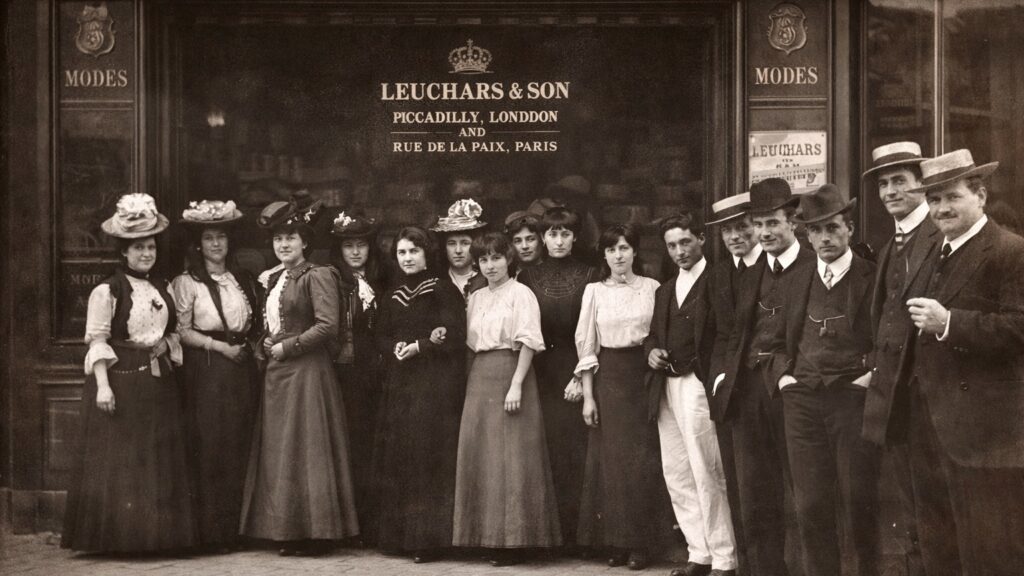
In 1870 Leuchars established a presence at 2 Rue de la Paix, Paris, a street that later became one of the world’s most important luxury addresses.
The Paris premises likely functioned as a showroom serving international clients travelling between London and Paris.
The Craft of Case Making
Historical evidence suggests that the Leuchars business operated as a luxury case-making and retail house. The firm designed and manufactured fitted cases while commissioning silver components and specialised accessories from independent craftsmen.
The completed cases were assembled and retailed as complete travelling sets containing grooming tools, scent bottles and other personal objects.
1888 — Sale of the Manufactory
In 1888 the Leuchars manufactory and case-making workshops were sold to Asprey. The workshops were absorbed into Asprey’s manufacturing operations.
Packaging from the period references “Asprey – Late Leuchars – London”, indicating that Asprey positioned itself as successor to the Leuchars workshop tradition.
1888–1902 — The Piccadilly Retail House
Historical records suggest that the Leuchars Piccadilly retail house continued trading under the Leuchars name until approximately 1902.
This suggests a distinction between the workshops, which transferred to Asprey, and the Piccadilly retail house, which continued trading independently for a period afterwards.
1902 — Dormancy of the Name
After around 1902 the Leuchars business disappears from trading records and the name ceased active commercial use.
Historic Leuchars objects survived in museums, private collections and the antique trade.
The Revival of the Leuchars Name
Leuchars London ® represents a contemporary London company inspired by the historic Piccadilly maker established in 1794.
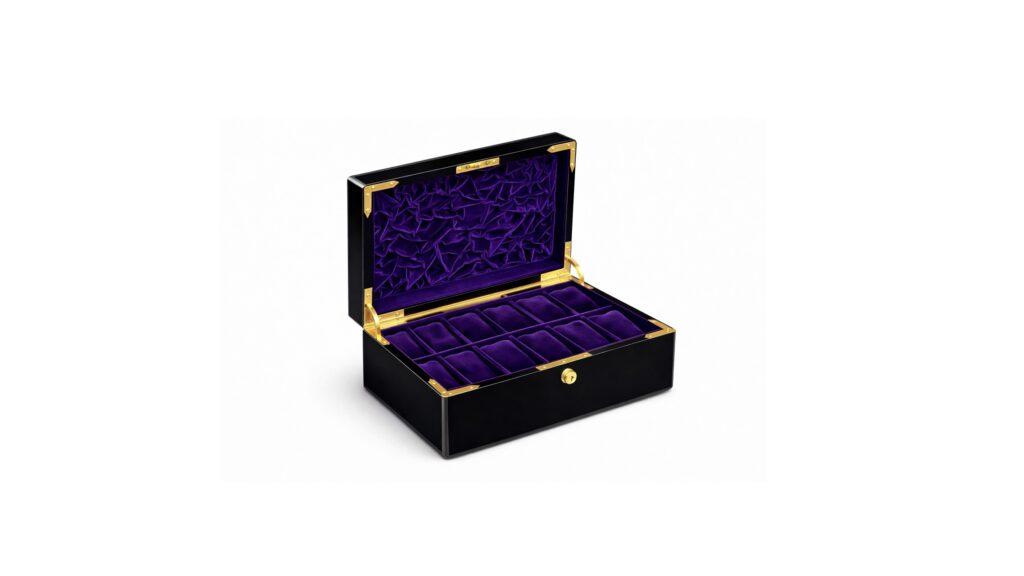
The modern revival focuses on historical research, the preservation of historic Leuchars objects and the continued tradition of case making associated with the Leuchars name.
Explore the principal parts of the historical Leuchars study.