Objects, documents, places
A name, traced through objects.
A fitted compartment, a maker’s mark, a line on a bill: the surviving material gives the Leuchars story its detail. These objects and records allow us to look closely at what was made, how it was used and the people and places connected with it.
The fitted interior
A place for each possession.
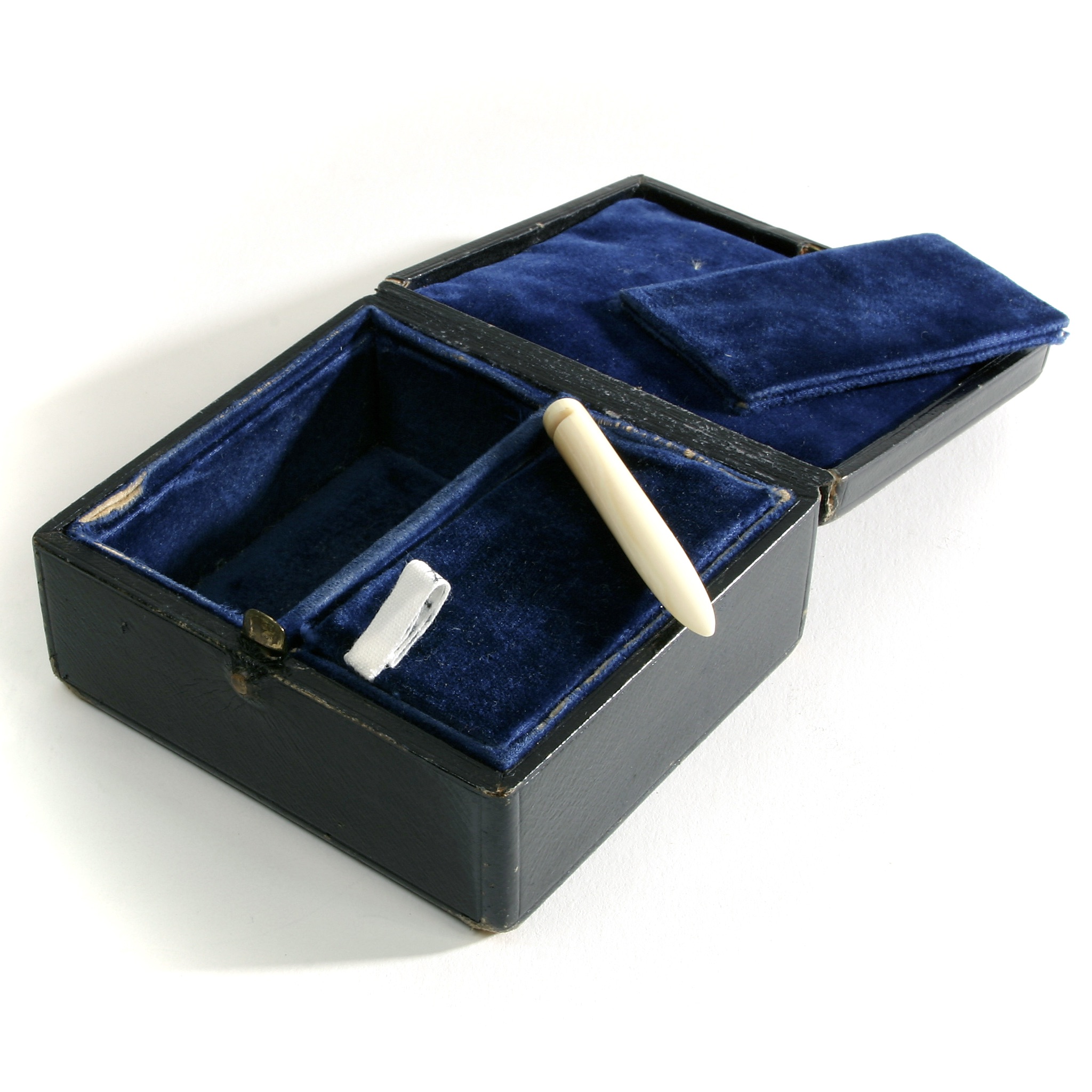
A case brings several materials into one carefully arranged interior: a firm exterior, a soft lining and spaces shaped around the objects they hold. Dressing cases joined cabinet work, leather, glass, metal and interior fitting.
The surviving blue velvet case makes that relationship visible. Its compartments tell a more particular story than a general description of luxury: contents and container were considered together.
Explore the fitted interior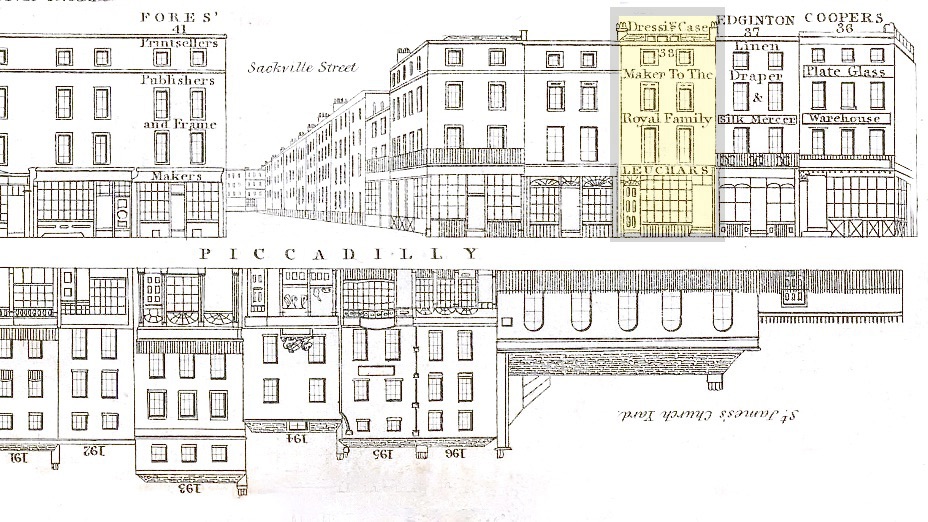
London
Piccadilly, in the record.
Established in London in 1794, Leuchars became associated with fitted dressing cases and personal travel equipment. The Piccadilly address places the house within the streets where such objects were made, displayed and chosen.
Street views, trade records and surviving marks offer different kinds of evidence. The Archive follows Lucy Leuchars at Piccadilly and distinguishes a maker, a retailer and a marked component.
Lucy Leuchars at Piccadilly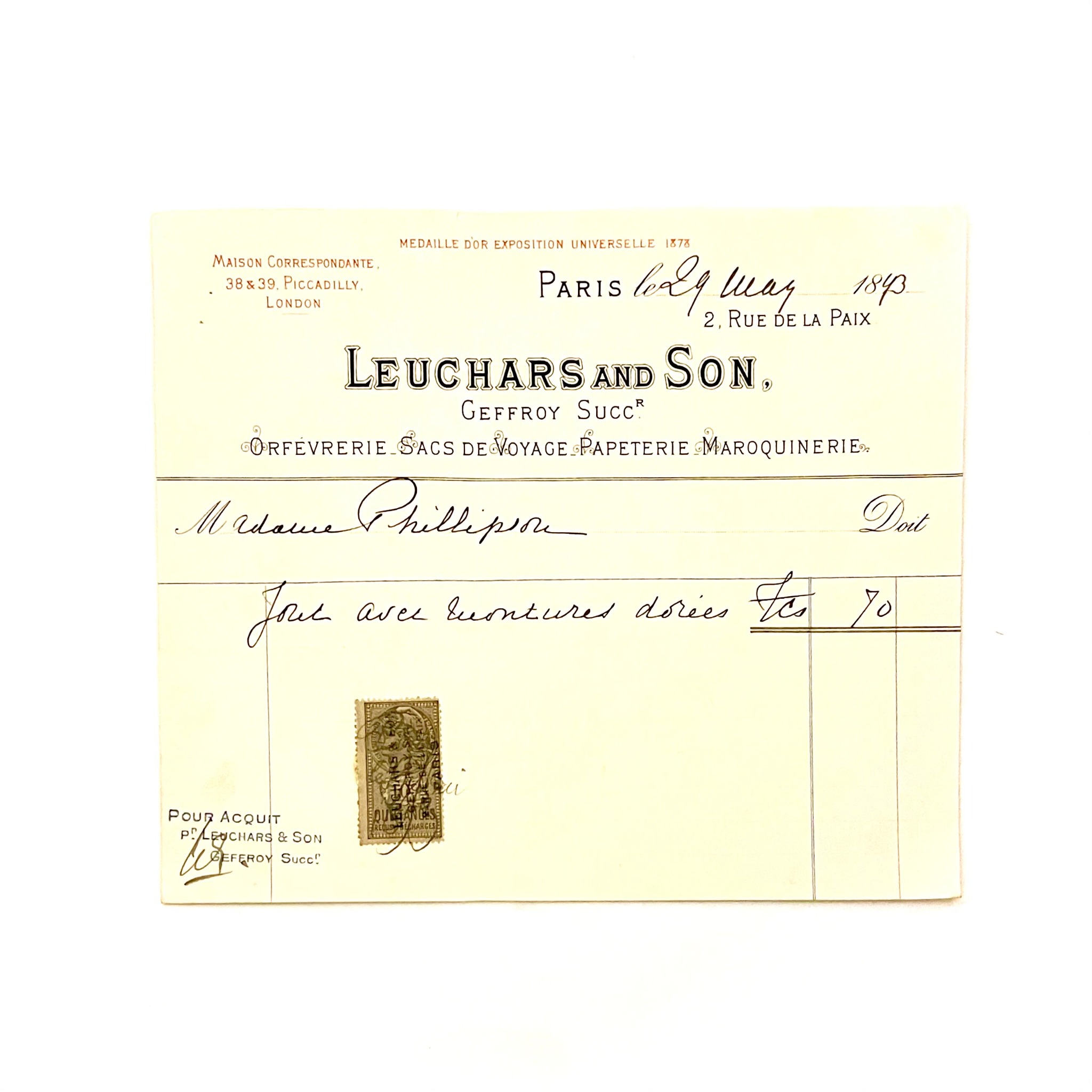
Paris
Two cities on one sheet.
Piccadilly and Rue de la Paix meet on surviving Leuchars documents. This Paris bill names 2 rue de la Paix beneath “Geffroy Succr”, with a London correspondent at 38 & 39 Piccadilly.
The printed addresses are clear; the handwritten date and transaction require closer reading. Keeping that distinction visible allows the document to speak without asking it to prove more than it records.
Follow the Paris chapterThe house today
A contemporary purpose.
Leuchars London begins with the care given to personal possessions: how they are held, carried and kept within reach. Original objects and documentary research inform that work. The present-day house is distinct from the historical firm.
Historical context and sources
The Paris operation is documented by 1877 and was publicly presented in 1878 as part of a London–Paris house. The Paris chapter sets out the supporting records. The later history of the London manufactory includes its absorption into Asprey; this does not establish uninterrupted operation of the present house.
For individual evidence, consult Lucy Leuchars at Piccadilly, Crown Prince Gustaf’s travelling service, and the Paris bill. Printed royal and imperial appointment wording is examined separately in Royal & Imperial Patronage.
