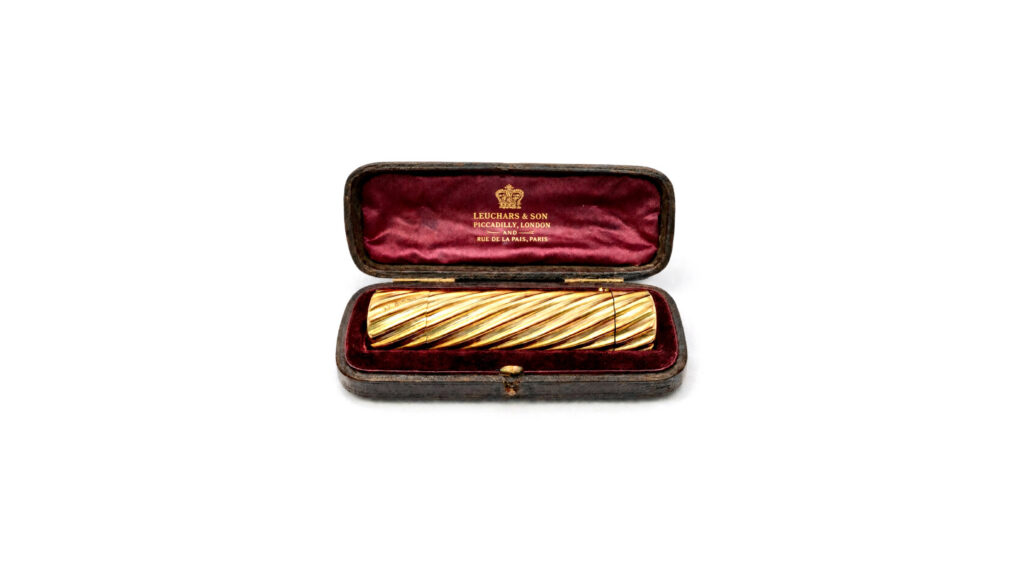
Piccadilly 1794 – Leuchars & Son in Historic London
Piccadilly 1794
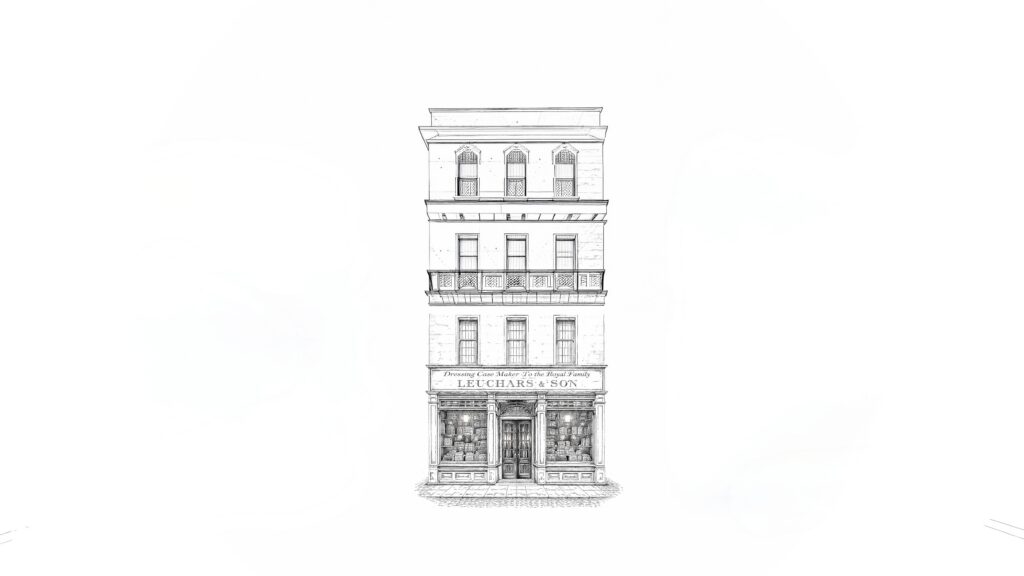
During the early nineteenth century Leuchars & Son operated from 38 Piccadilly, one of the most prominent streets in London’s West End. This address placed the house among the craftsmen and luxury retailers who served the travellers, diplomats and society of the period.
Piccadilly formed part of a district closely associated with London’s finest shops and specialist makers, where fitted dressing cases, travel equipment and personal accoutrements could be found among the many goods produced by the city’s craftsmen.
A Piccadilly Address
Piccadilly has long been one of London’s most recognisable streets. By the early nineteenth century it had become a centre for retailers serving both London society and visitors arriving from across Europe and beyond.
Merchants, craftsmen and luxury retailers established their premises along the street, offering goods that reflected the refinement and practical needs of travel during the period.
The presence of Leuchars & Son at 38 Piccadilly places the house firmly within this historic landscape of London craftsmanship.
The Tallis Street Views
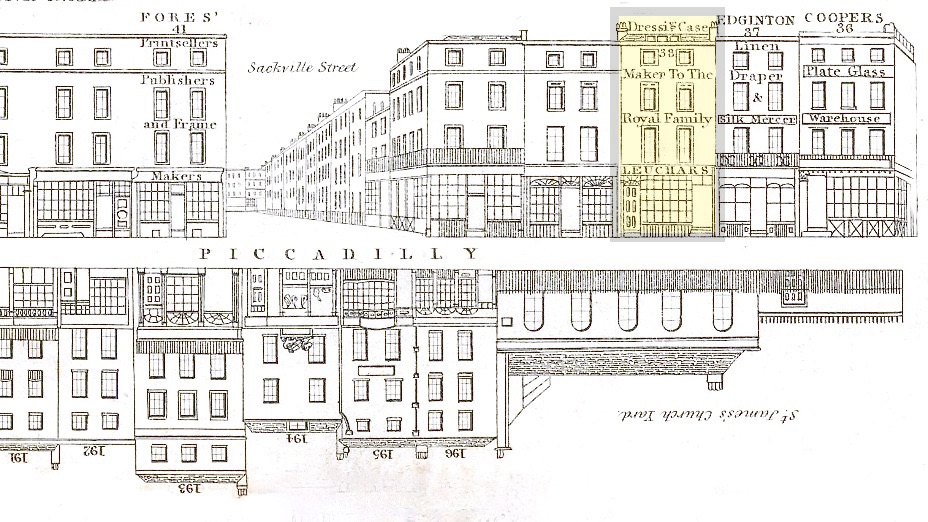
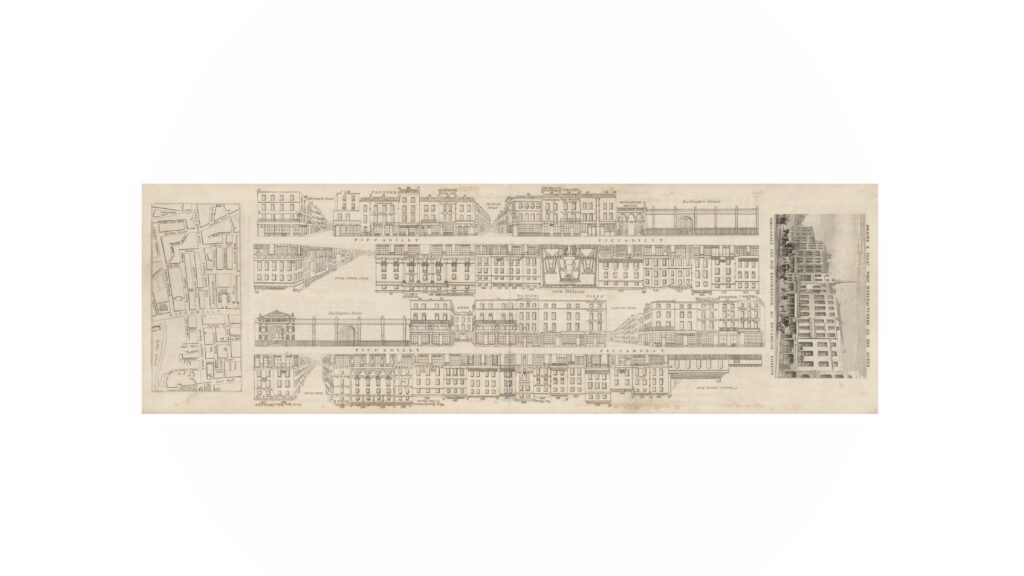
One of the most detailed visual records of Piccadilly in the nineteenth century appears in the celebrated street views published by the cartographer and publisher John Tallis.
These engravings recorded the shopfronts and businesses operating along the street, providing a rare glimpse into the commercial life of London during the period.
Among the establishments shown within these views appears the premises of Leuchars, listed among the retailers serving Piccadilly and the surrounding district.
The Tallis engravings remain one of the most valuable historical references for understanding the appearance of London’s streets during the early Victorian period.
The World of the London Case Maker
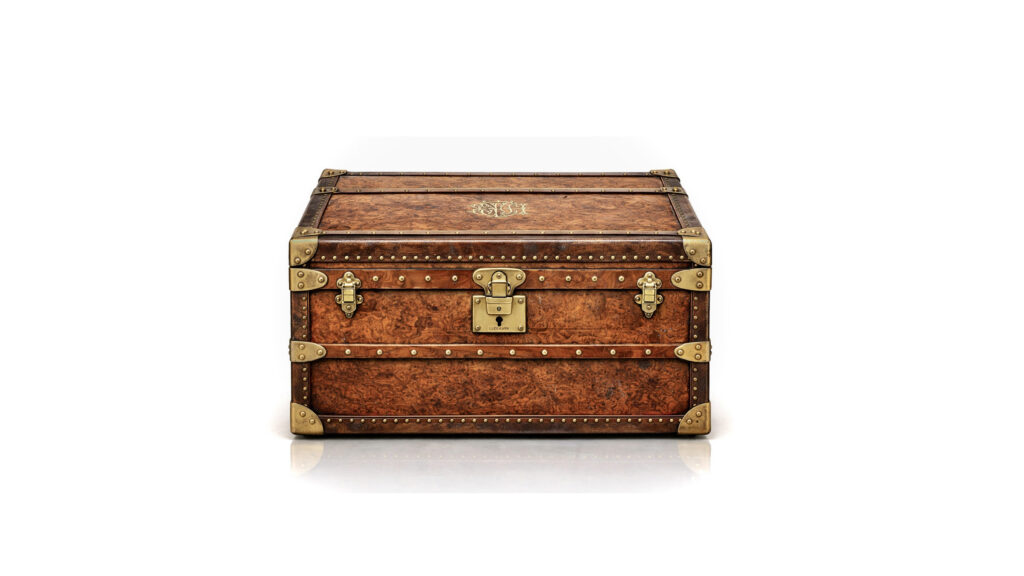
During the nineteenth century fitted cases and travel equipment played an important role in the lives of travellers. Journeys between cities often lasted days or weeks, requiring carefully organised equipment to carry personal belongings.
Dressing cases and travel cases provided secure compartments for items such as:
- Grooming tools
- Scent bottles
- Hair brushes
- Writing instruments
- Personal accessories
These objects were both practical and refined, reflecting the Victorian fascination with order and the careful organisation of personal possessions.
Piccadilly and the Luxury Trade
Piccadilly formed part of a wider network of streets that became closely associated with London’s luxury trades.
Retailers serving diplomats, officers and international travellers established their premises in this area, where specialist makers offered goods that combined craftsmanship with practicality.
The presence of Leuchars in this district reflects the importance of fitted travel equipment and personal cases during the great age of nineteenth-century travel.
Leuchars in Historic London
The Piccadilly address provides an important historical reference point for understanding the role of Leuchars within London’s tradition of case making.
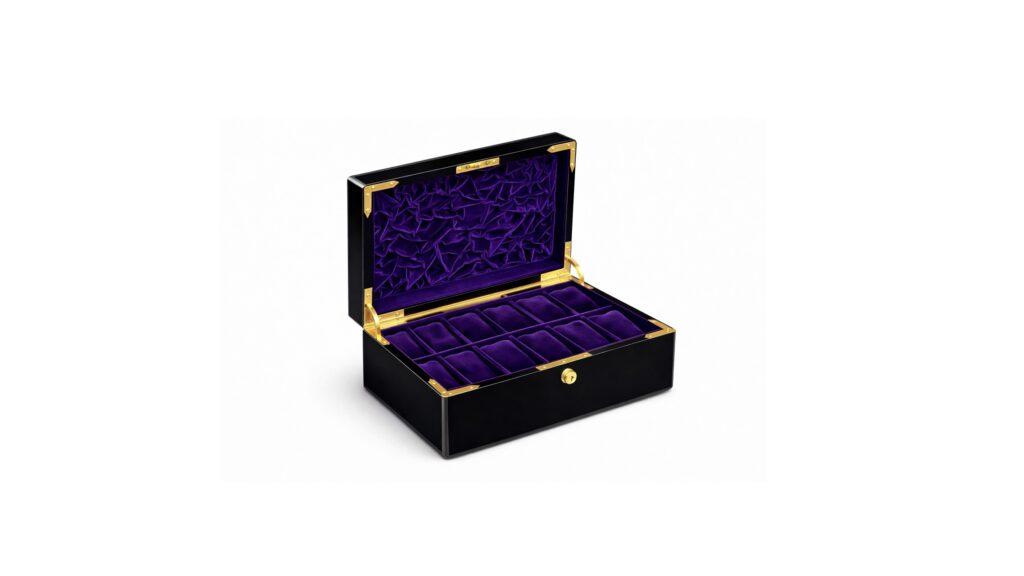
Today the study and preservation of historic objects associated with the house continue through the work of the Leuchars Archive, which documents dressing cases, travel equipment and related objects connected with the traditions of the London case maker.
Visitors can explore further aspects of this history through the archive and related pages documenting the craftsmanship and objects associated with the house.