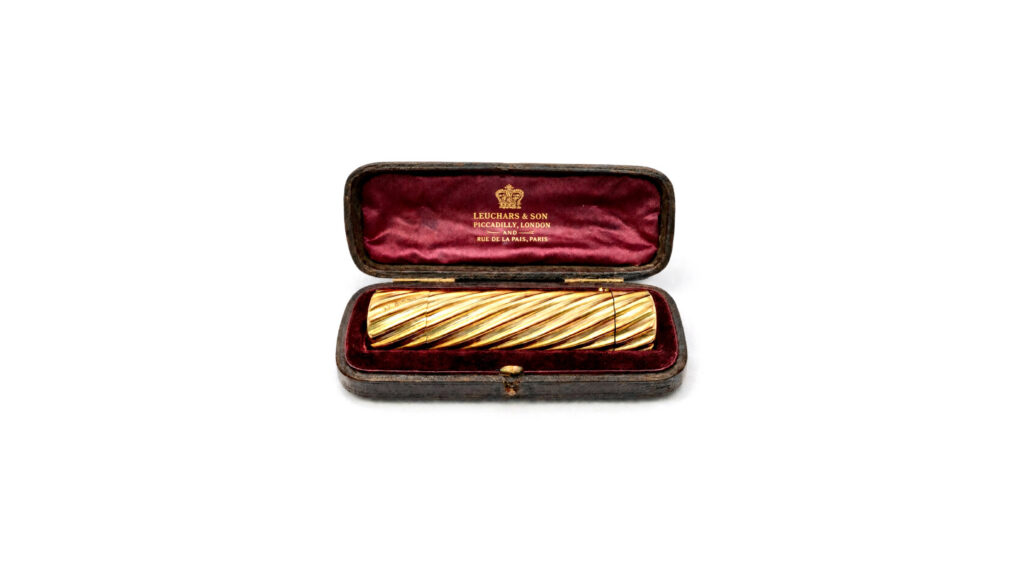
Craftsmanship
The fitted dressing case represents a specialised tradition of craftsmanship that combines several disciplines. Historic examples associated with London case makers required the collaboration of leather workers, cabinet makers, silversmiths, glass makers and interior fitters.
The result was an object designed not only for travel but also for order, durability and refinement. Each component worked together to create cases capable of protecting personal possessions while presenting a carefully arranged interior.
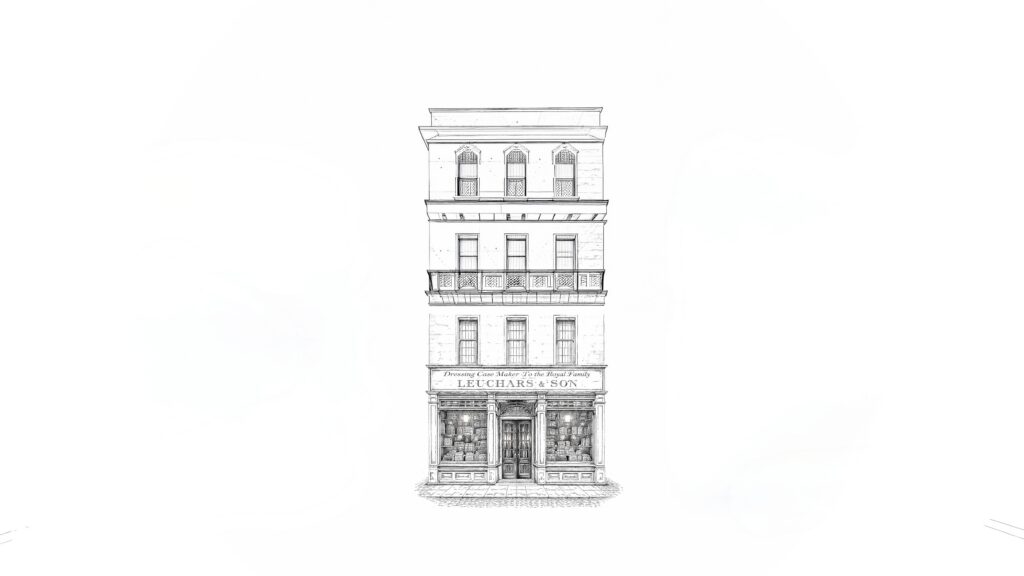
The Tradition of the Fitted Case
During the eighteenth and nineteenth centuries the fitted case became an essential companion for travellers. Long journeys required practical equipment capable of organising grooming tools, scent bottles, writing instruments and personal accessories.
The fitted dressing case was therefore designed with careful attention to structure and interior layout. Compartments were arranged to secure each object in place, protecting fragile items such as glass bottles while allowing easy access when the case was opened.
This balance between practicality and elegance became a defining characteristic of the fitted case.
Interior Fittings
The interior of a dressing case was carefully designed to organise a wide range of objects associated with personal grooming and travel.
Typical fittings might include compartments for brushes, razors, scent bottles, grooming tools and writing instruments. Each piece was positioned within the case to prevent movement during travel while maintaining a visually balanced arrangement.
This careful organisation reflected the Victorian fascination with order and the presentation of personal equipment.
Materials
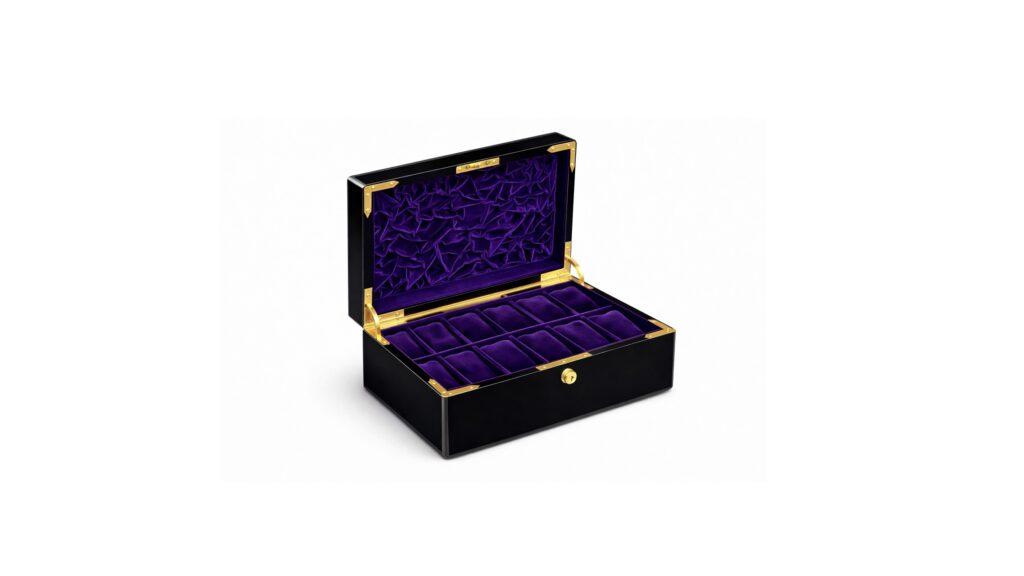
Historic cases often incorporated a variety of materials chosen for both durability and refinement.
- Leather coverings
- Wooden case structures
- Velvet or leather linings
- Glass bottles and containers
- Silver or metal mounted accessories
The combination of these materials created objects capable of withstanding travel while presenting an elegant appearance suitable for refined personal use.
Preserving Craft Traditions
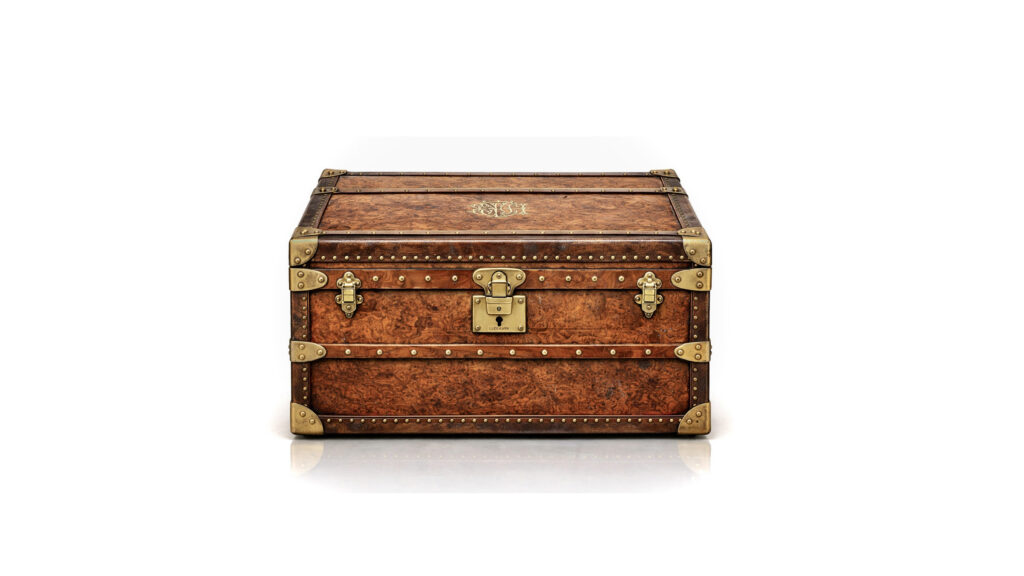
Surviving examples of fitted cases provide valuable insight into the craftsmanship associated with nineteenth century travel equipment.
Through the study and preservation of historic objects documented within the Leuchars Archive, the traditions of London case making continue to be explored and recorded.
These objects reveal the skill required to combine multiple crafts into a single functional and elegant piece of equipment.