Evidence note: This record is based on catalogue entries published by Livrustkammaren, the Royal Armoury in Sweden, for several related components from a travelling dressing service used by Crown Prince Gustaf, later King Gustaf V. The entries share a related-object reference and collection number, record Leuchars marks and preserve a royal-family gift history. The complete original inventory, arrangement and commissioning circumstances have not yet been established.
Livrustkammaren preserves a group of personal travelling objects associated with Crown Prince Gustaf of Sweden and dated principally to 1877–1878. Glass jars and bottles, a fitted jewellery case and a grooming brush carry his crowned mirror monogram. The museum catalogues the components under W. Leuchars and identifies them as parts of a travelling dressing service used by the future King Gustaf V.
The group gives unusual substance to the international reach of Leuchars. It is not merely a branded case detached from its history: the surviving components retain materials, marks, measurements, royal personalisation and a documented route into a national collection.
A travelling service in fitted parts
A fitted travelling service depended on coordination. Each container or implement had its own function, dimensions and place within a larger arrangement. Livrustkammaren’s related entries reveal that system through individual components rather than a single catalogue description of the whole.
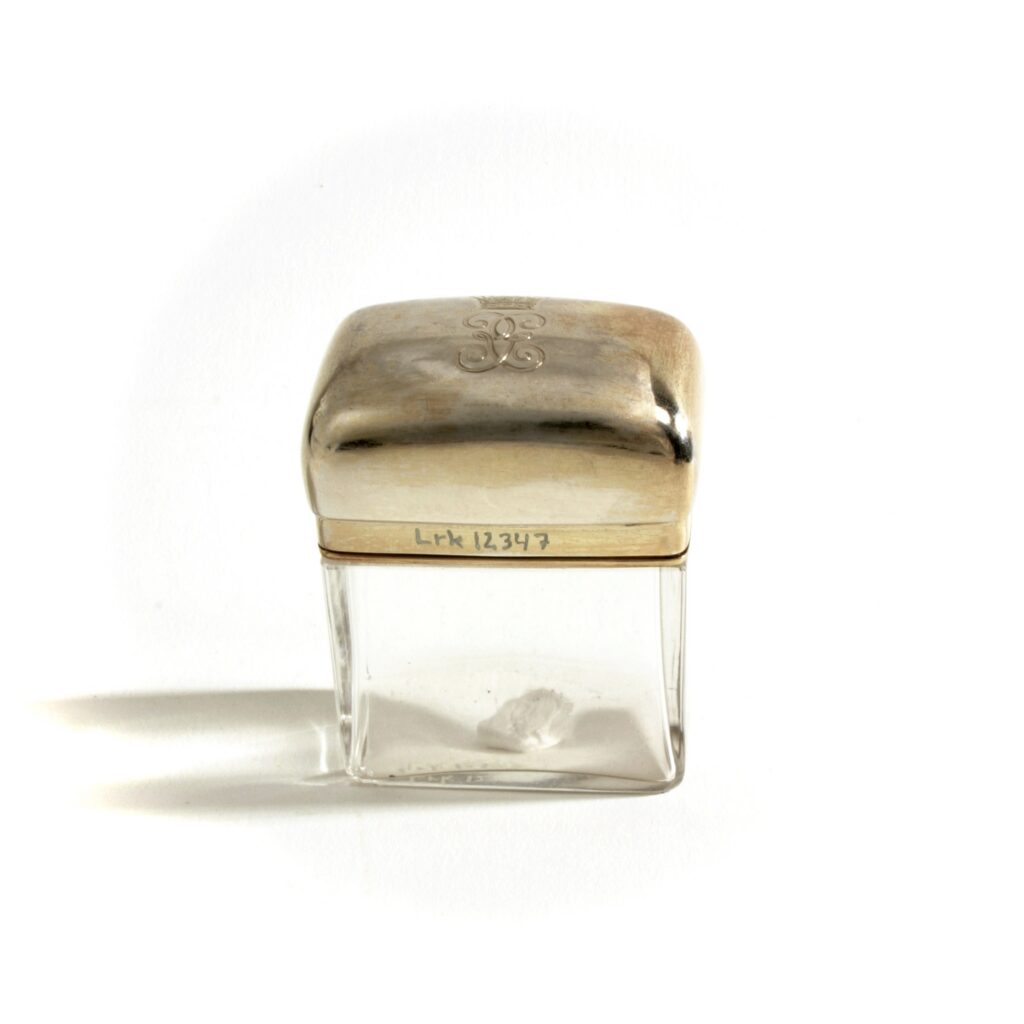
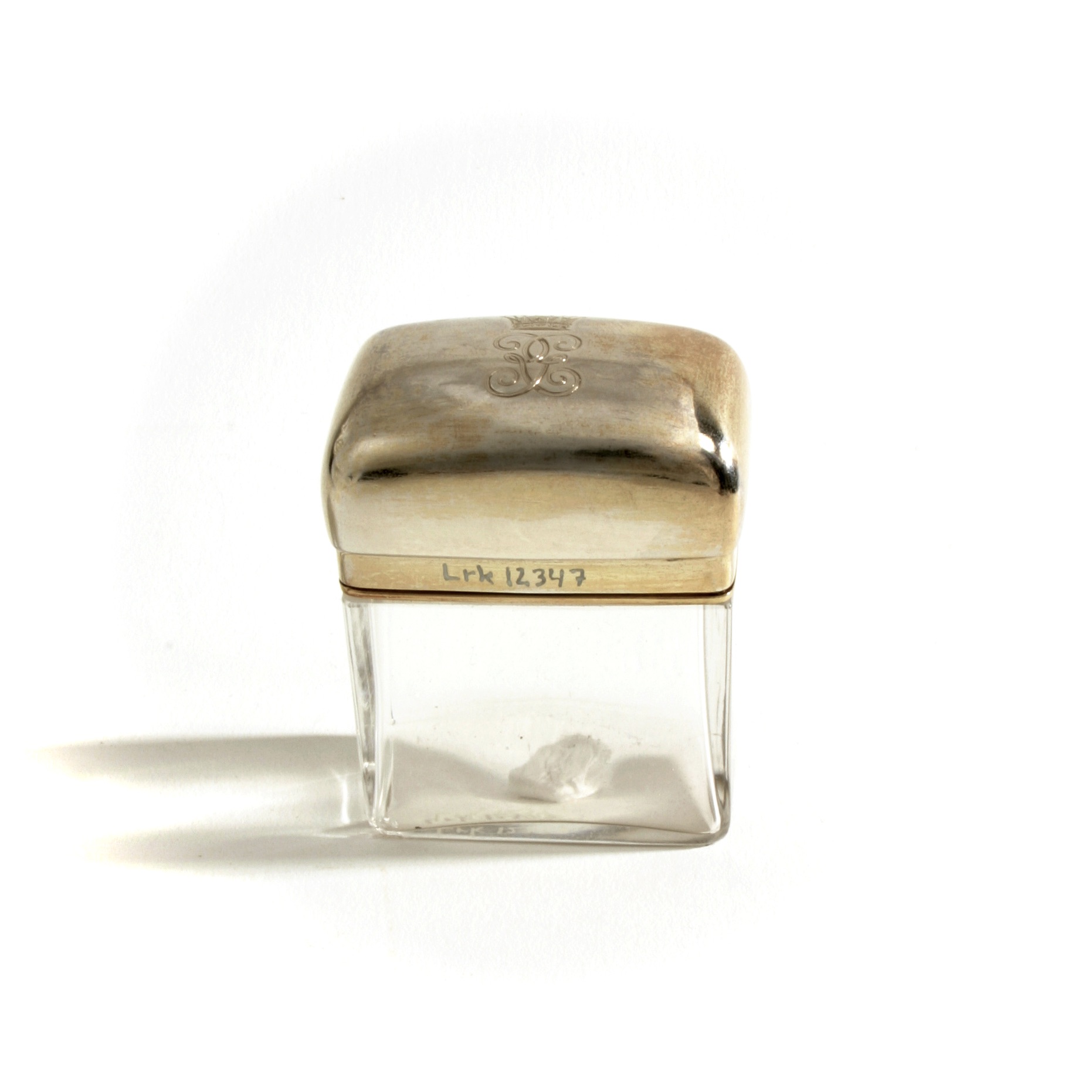
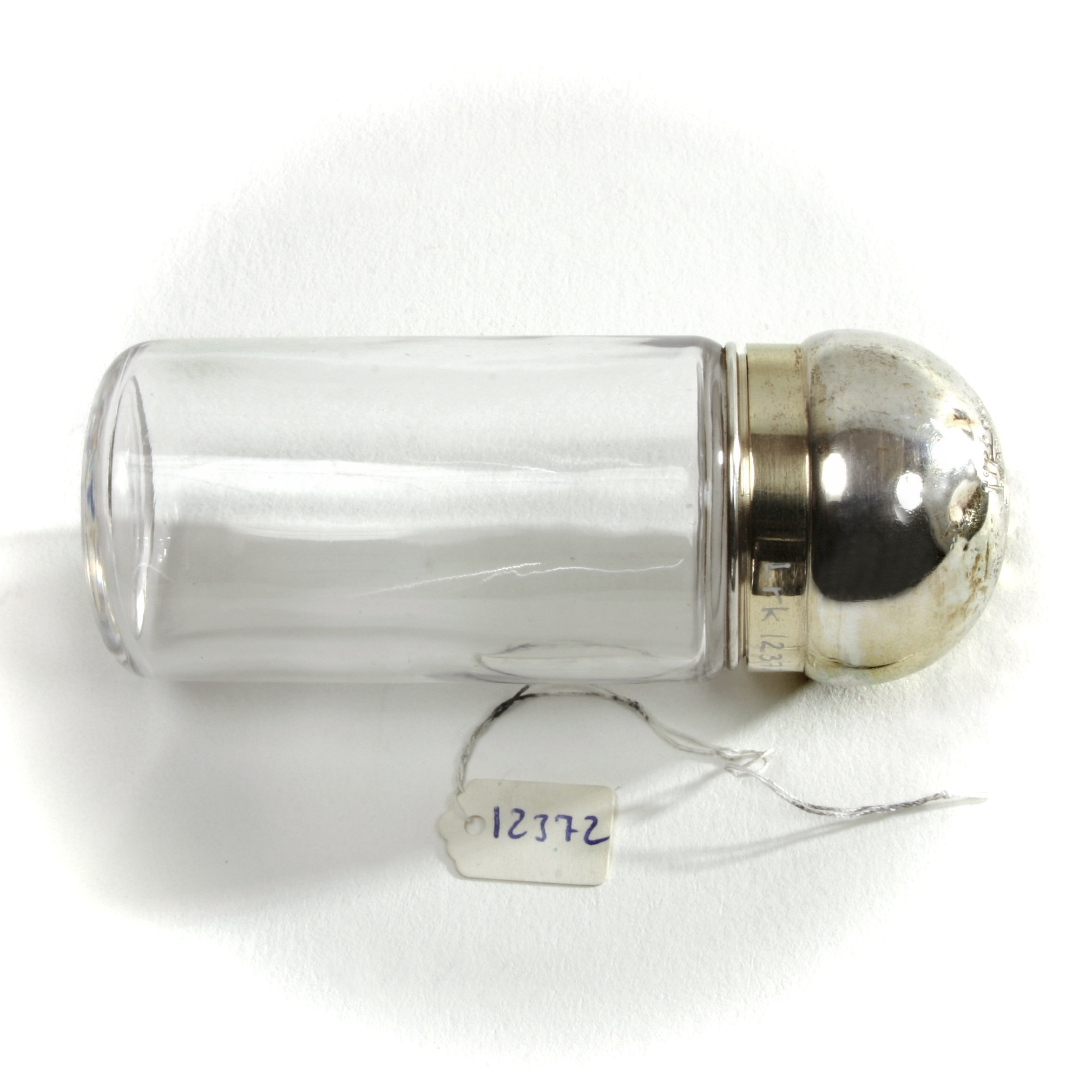
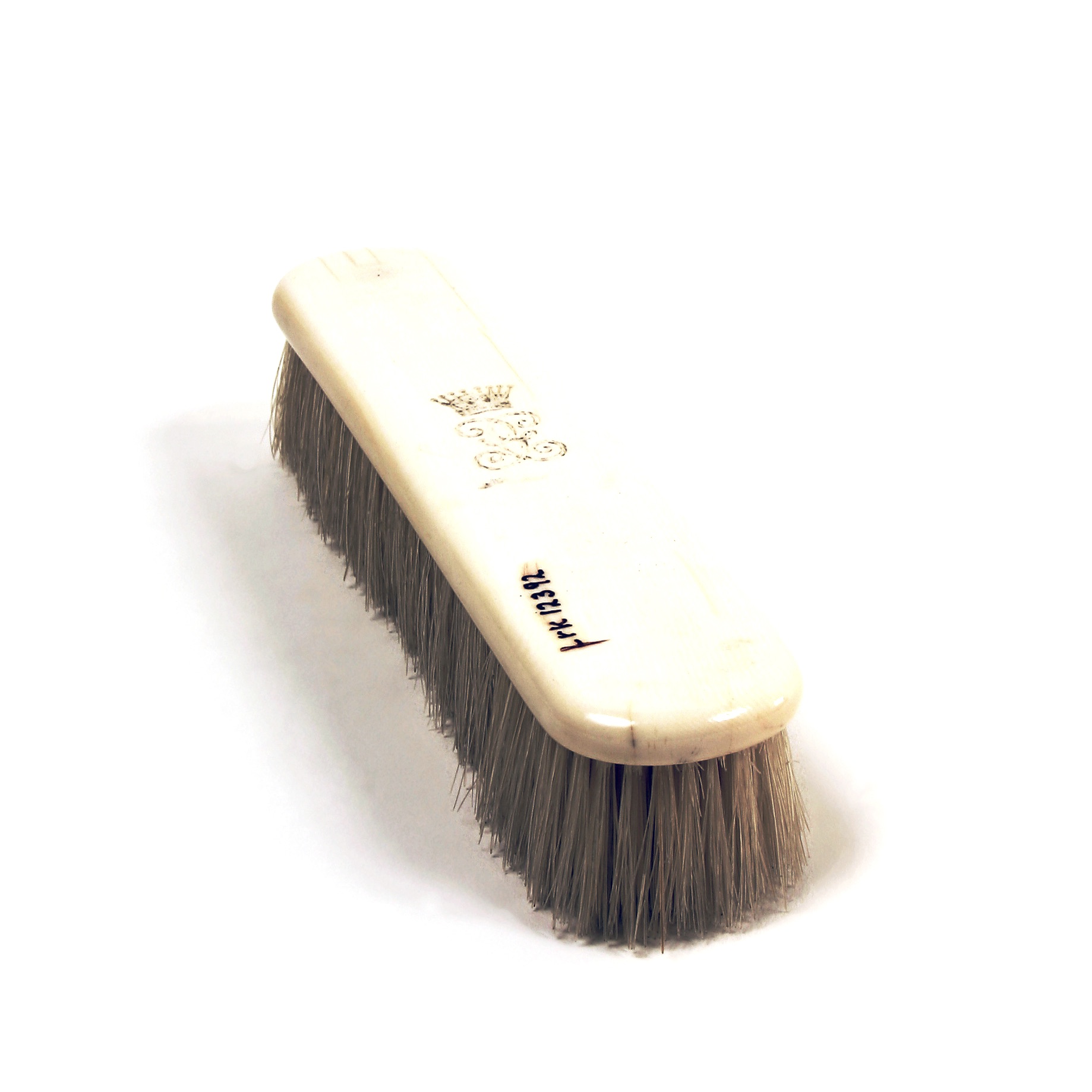
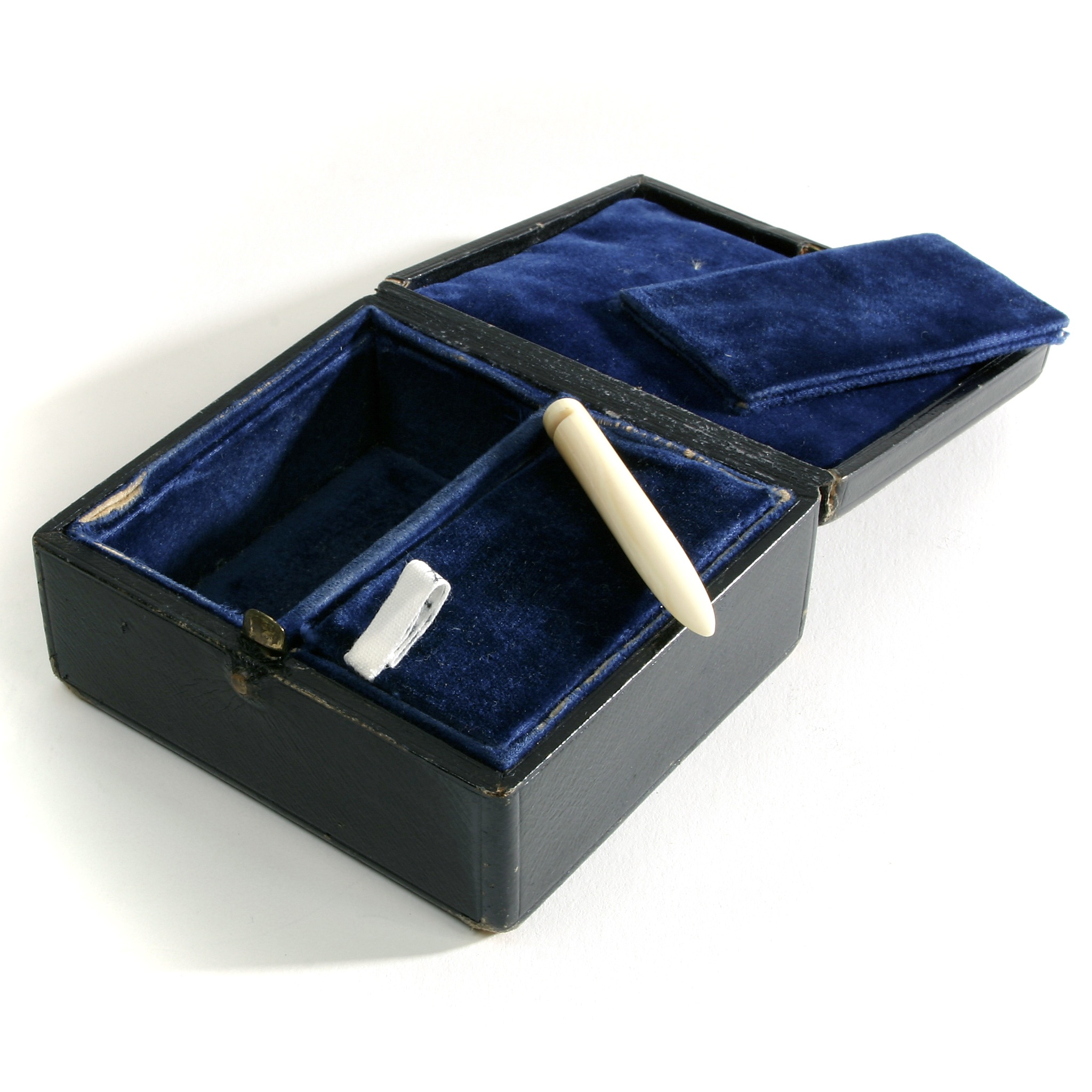
One rectangular jar is made from thick glass with a hinged silver-gilt cover. A round jar uses a screw cover, while a rectangular bottle has a threaded neck and spherical silver-gilt cap. The fitted jewellery case is covered in black leather and lined with blue velvet. Its interior is divided into two compartments with removable pads and an ivory implement.
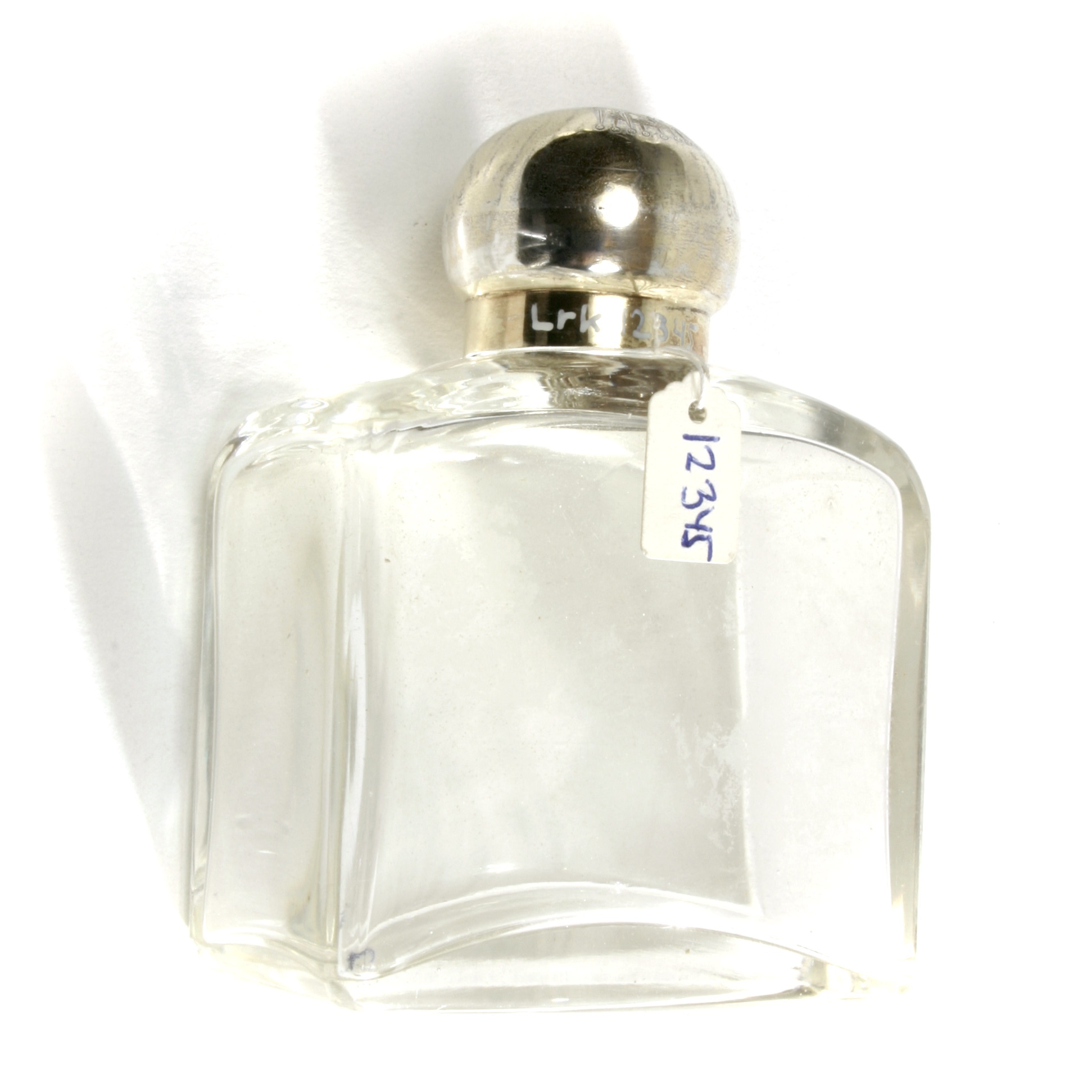
The brush extends the material vocabulary again. Catalogued as ivory with natural bristles, it is stamped LEUCHARS & SON LONDON. Together these pieces show how a travelling service combined hard and soft materials, containers and implements, protective cases and personal marks.
The original placement of every component has not yet been reconstructed. What survives securely is the principle: travel was organised through a set of individually shaped objects designed to operate as one personal system.
The crowned G
Several silver-gilt covers bear Gustaf’s mirror monogram beneath a crown appropriate to the Crown Prince. The same identifying device appears on the brush. It turns otherwise practical objects into a coherent personal service.
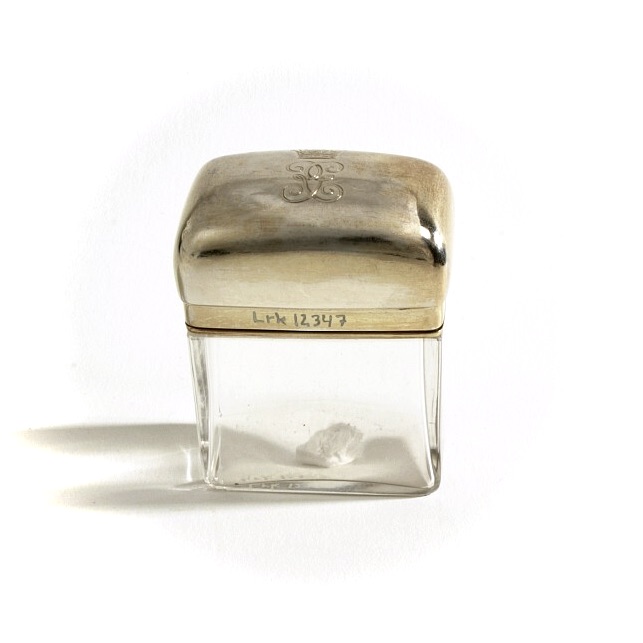
This repeated monogram is more than decoration. Within a travelling group it identifies ownership across separate pieces and visually binds different materials together. Glass, gilded silver and ivory become parts of one commission or assembled service, even where the exact contractual history remains unknown.
The museum records Gustaf as the user while Crown Prince. He became King of Sweden in 1907 and reigned until 1950. The objects therefore preserve an earlier, private stage of a long public life.
Marks from London and Paris
The rectangular glass jar carries the most expansive recorded firm mark: LEUCHARS, Piccadilly, London and 2 Rue de la Paix, Paris. Other components record W L or LEUCHARS & SON LONDON.
These marks place the service within the firm’s London-and-Paris period. They show how a Piccadilly case maker presented a dual-city identity on an object intended for a Scandinavian Crown Prince. They do not establish whether the service was ordered in London, purchased in Paris or delivered through another channel.
The distinction matters. An address mark is firm evidence of commercial identity, but it is not a record of the transaction. The Archive can establish the marked object, date, owner and museum provenance without inventing the original purchase.
From royal possession to national collection
Livrustkammaren records that the pieces were given in 1951 by Gustaf V’s heirs through the Office of the Marshal of the Realm. That transfer supplies an unusually clear modern provenance.
The entries also share related-object reference 12338_LRK and the group number Nr 1867: 51:243. These repeated identifiers support their treatment as parts of one museum group. They should not, however, be used to claim that every surviving related object was made at the same moment or that the present catalogue group exactly reproduces the original contents.
A documented international client
For the Leuchars Archive, the service connects three central ideas: fitted organisation, international retailing and personal commission. It shows the historic firm’s name carried through objects designed for movement between residences and countries.
The significance is not the royal name alone. It lies in the discipline of the ensemble. Different materials and specialist objects were made legible as one service through scale, fitting, marking and monogram.
The present-day Leuchars house is distinct from the historic firm. The Leuchars Archive records Crown Prince Gustaf’s travelling service as part of the documented history of objects and design associated with the Leuchars name.
