Evidence note: This record is based on two collection entries published by the Castle Museum in Łańcut through the In Museums portal. Both tables retain recorded Leuchars-related marks and are associated by the museum with the Potocki family’s Parisian purchases. The catalogue dates one table inconsistently, and the surviving labels establish commercial association rather than the workshop identity of every component.
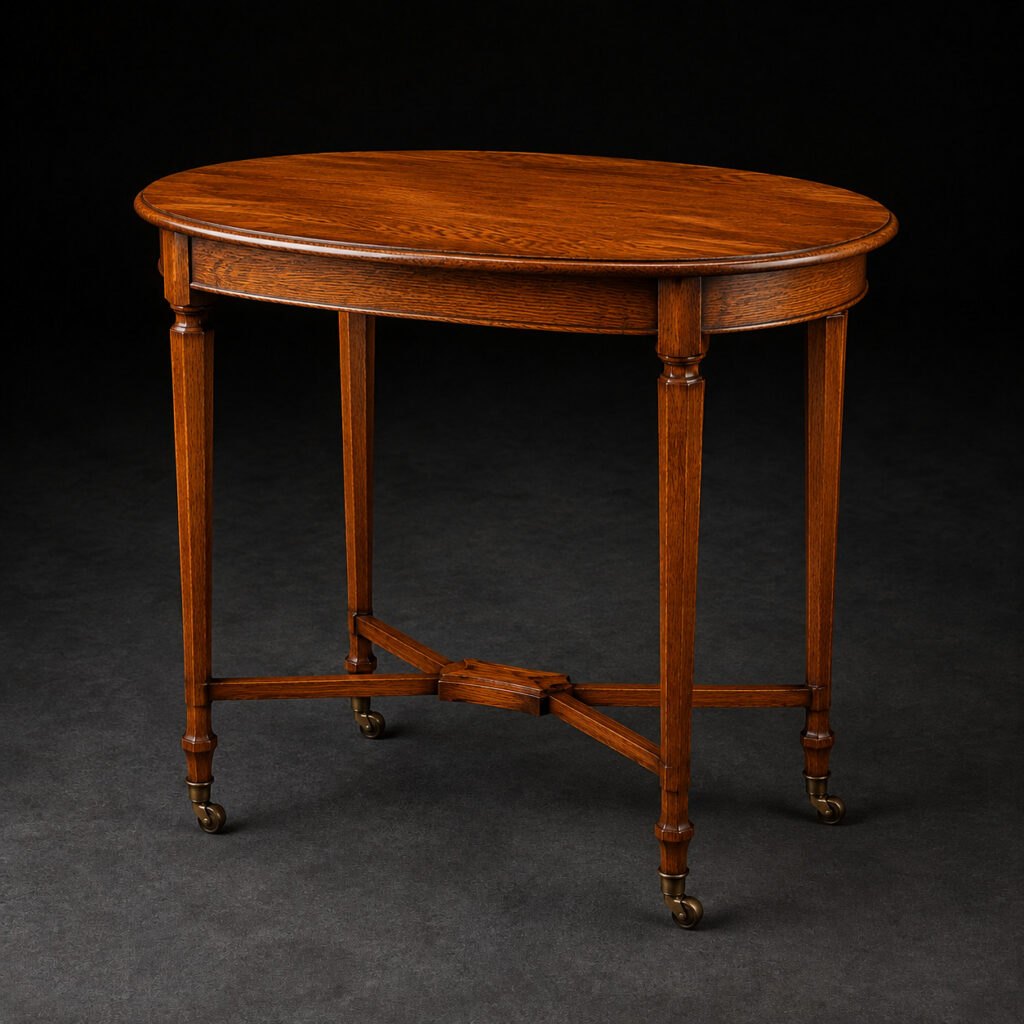
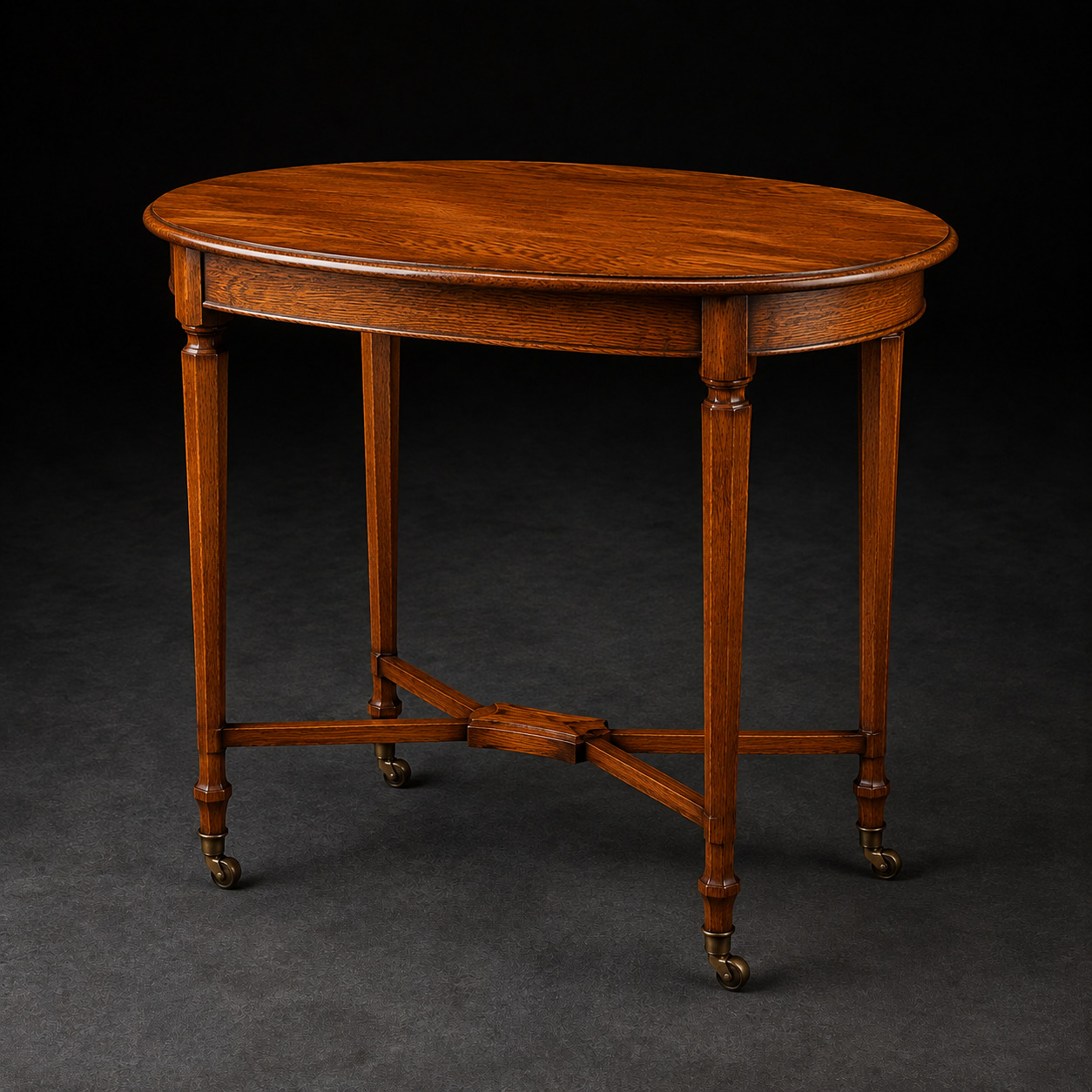
The object views accompanying this record are editorial reconstructions based on the museum descriptions; they are not documentary photographs of the surviving tables.
The Castle Museum in Łańcut preserves two small English tables that broaden the surviving material associated with the Leuchars name. Neither is a dressing case or a travelling bottle. They are pieces of domestic furniture: portable in scale, mechanically considered and connected through their marks to the firm’s London-and-Paris trade.
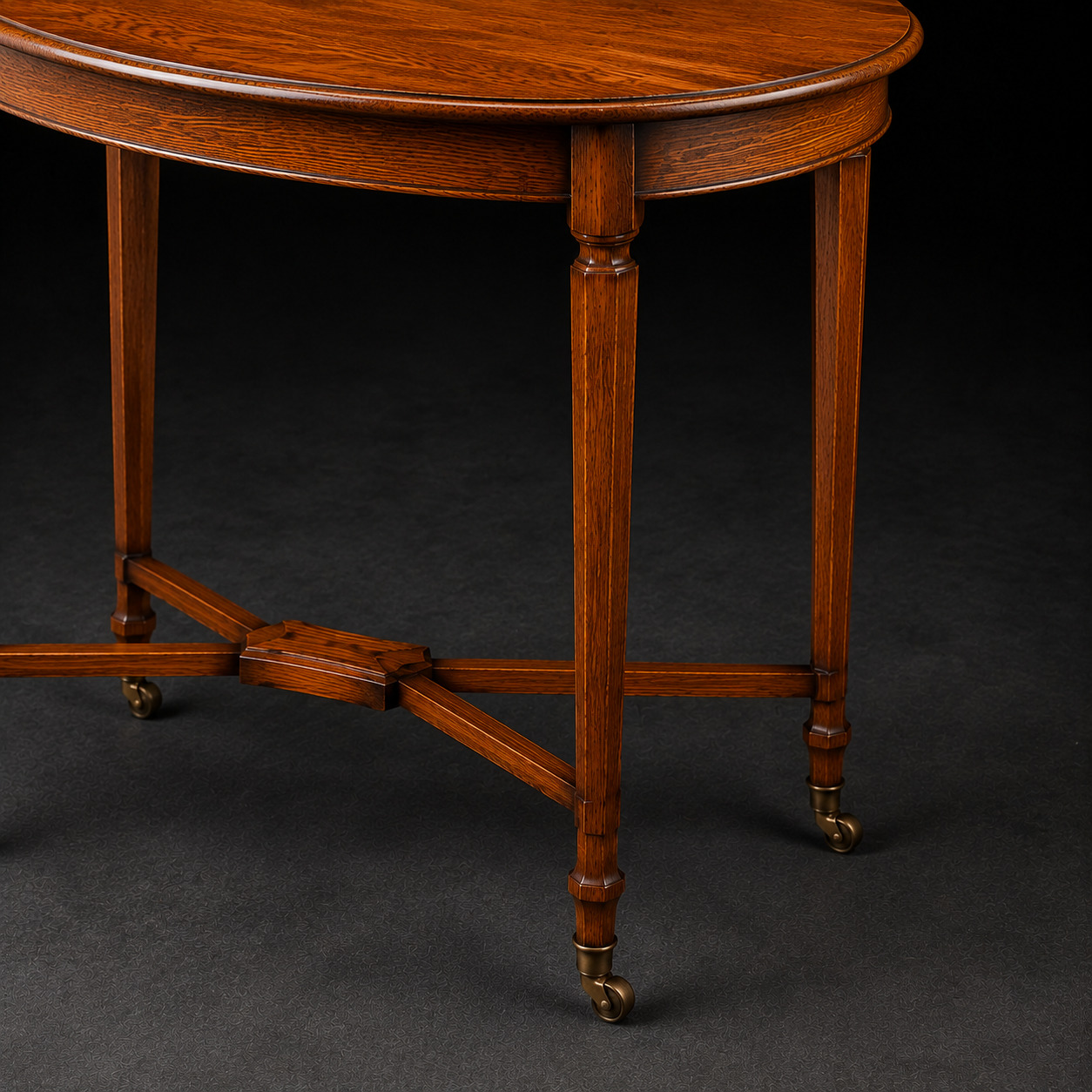
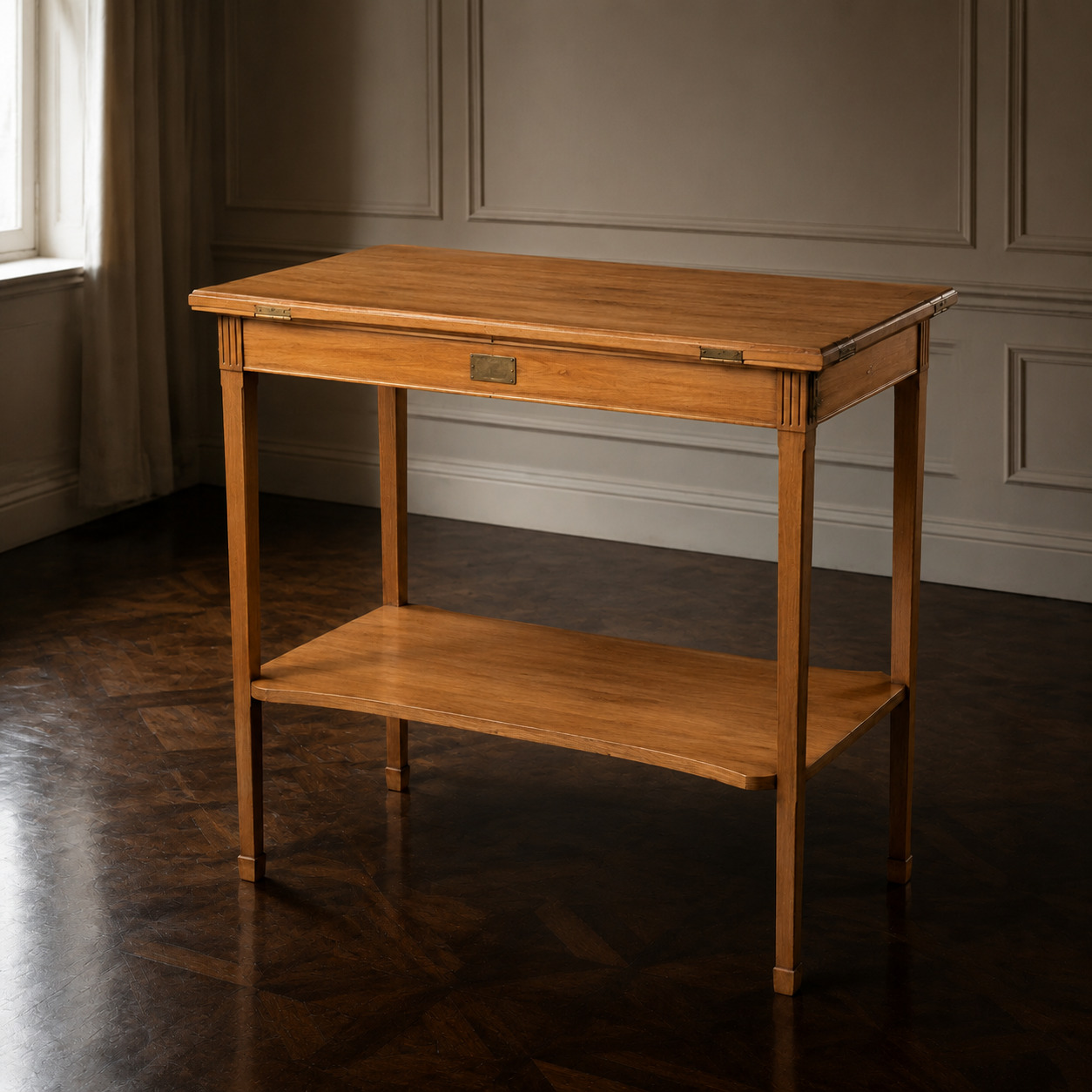
The first is an oval oak breakfast table, inventory S.1596MŁ. The second, S.6172MŁ, is a rectangular light-walnut table with a lower shelf and a folding top that rotates through 90 degrees. The museum links both to purchases made in Paris by the Potocki family.
Furniture as fitted organisation
The tables belong to the broad family of auxiliary furniture developed for particular actions within an interior: breakfast, reading, writing, serving or the temporary placement of personal things. Their smaller scale allowed them to operate around larger fixed pieces and to move as daily routines required.
That functional specificity makes them relevant to Leuchars. The same culture of organisation visible in a fitted case can extend into furniture through adjustable surfaces, controlled proportions, casters and shelves. The connection is not that the two kinds of object are identical. It is that both make use legible through structure.
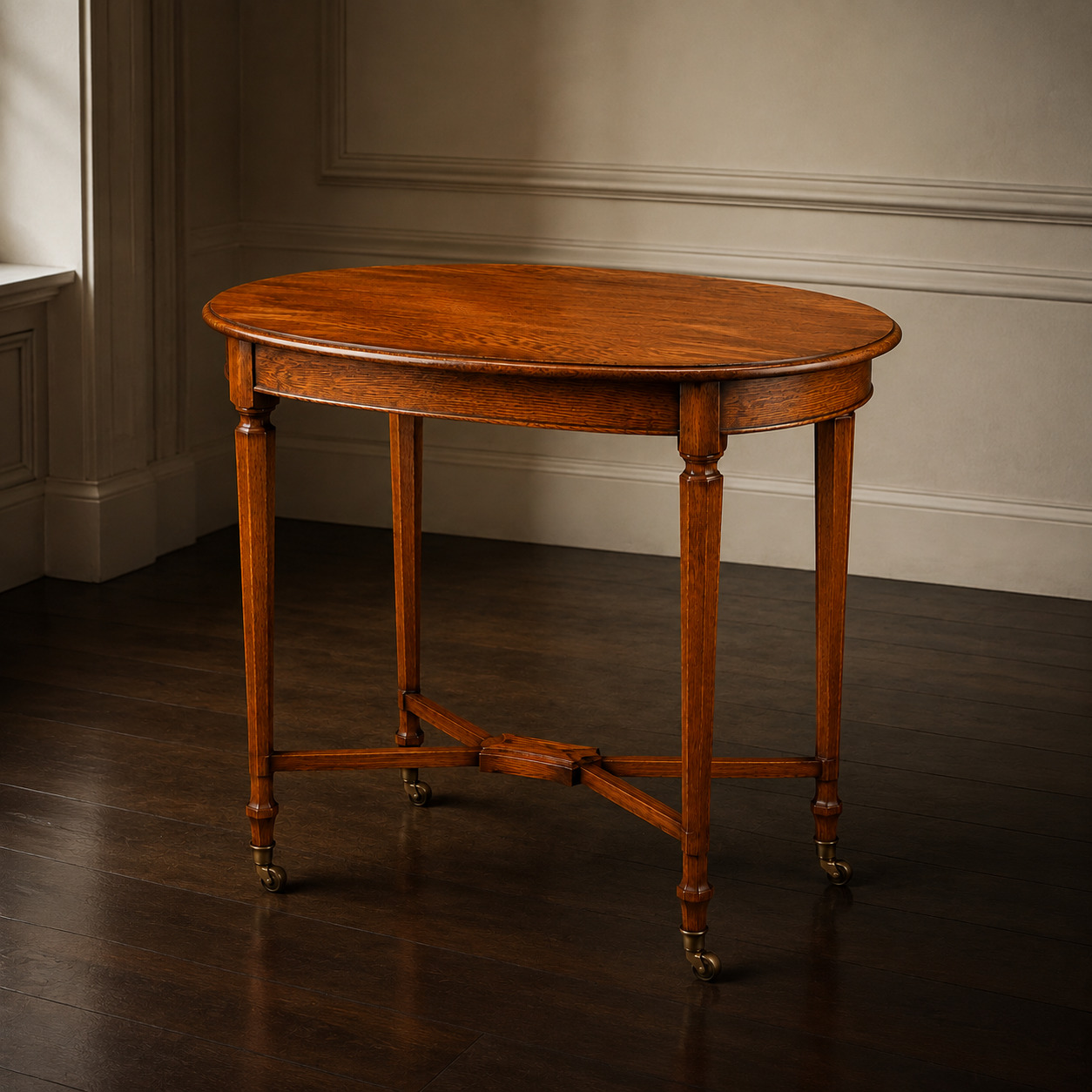
The oval table stands on four legs ending in casters. The museum records oak, bronze, carpentry and a French-polish coating, with dimensions of 72 centimetres high and 40 centimetres wide. The rectangular table uses a different solution: a top capable of folding and rotating, above a shelf wider than the closed surface.
London and Paris on one object
The oval table carries a recorded inscription naming Leuchars & Son in London and at 2 Rue de la Paix in Paris. The portal’s transcription of the name varies, so the precise lettering requires confirmation from a clear image. The addresses nevertheless place the object within the international commercial identity used by the firm.
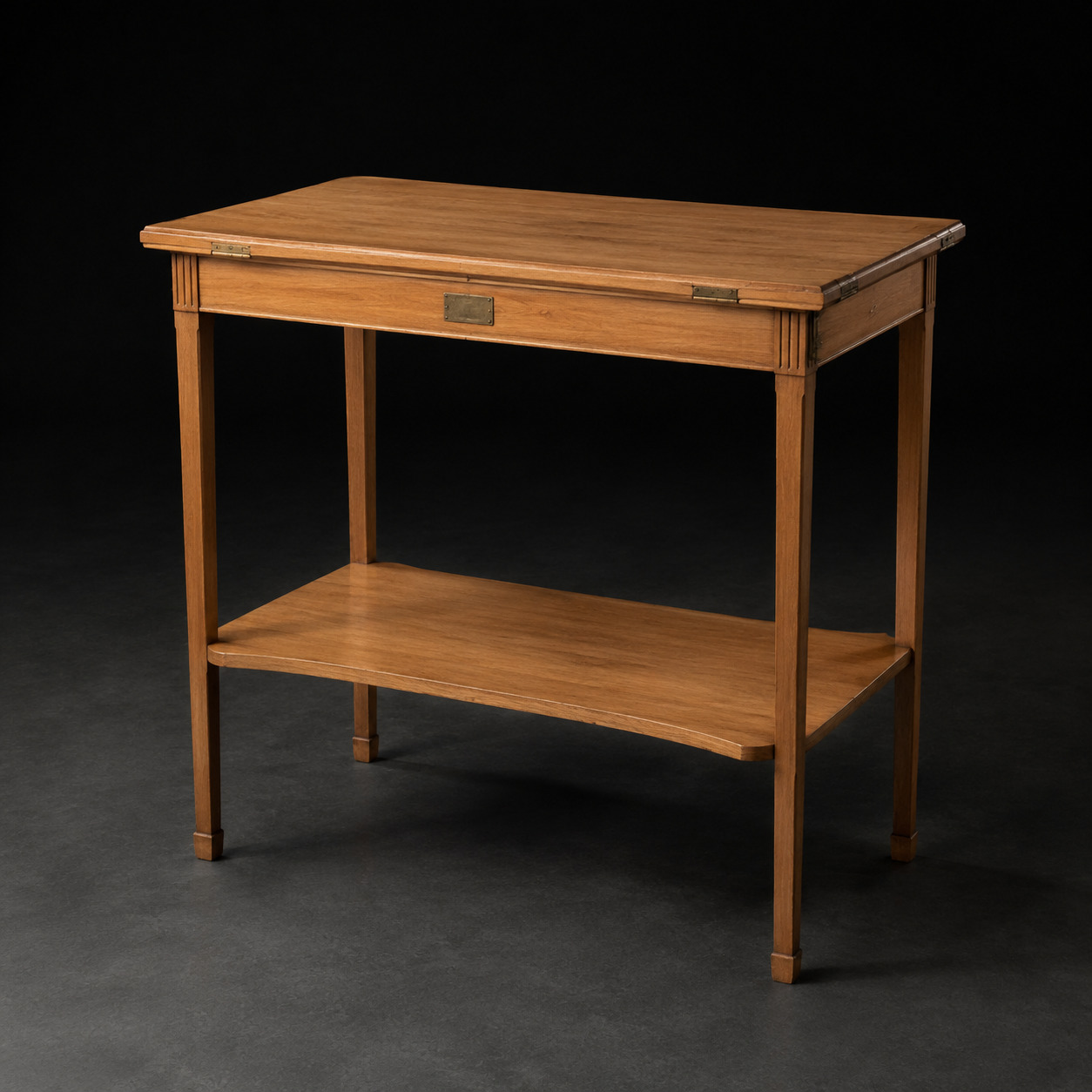
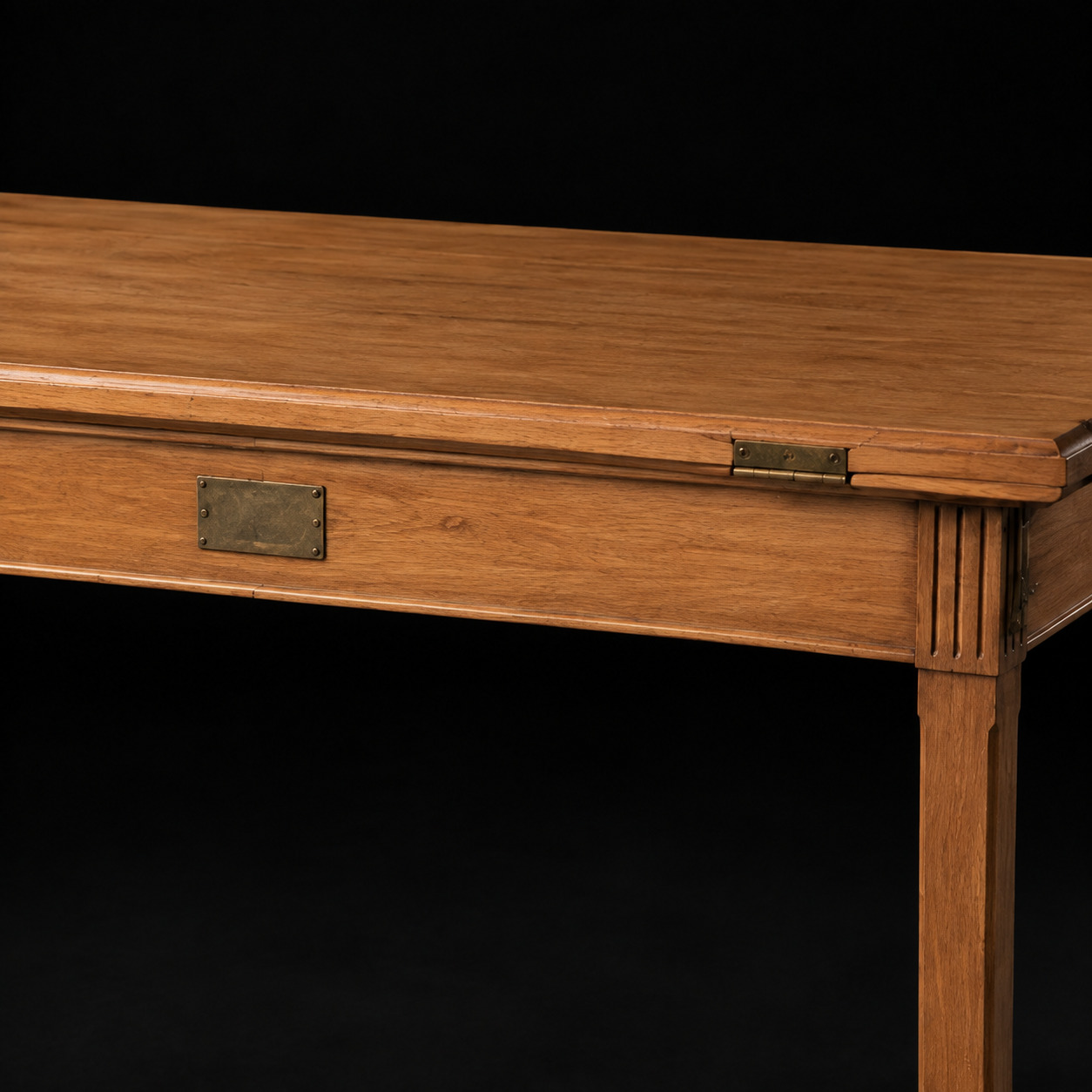
The rectangular table preserves a more complicated plaque: LEUCHARS & SON / GEFFROY SR / PARIS. / IMPORTÉ D'ANGLETERRE. Its French wording states that the table was imported from England. The name Geffroy identifies the later Paris successor context recorded by the museum, rather than demonstrating continued ownership by the Leuchars family.
This distinction is important. A retailer’s or successor’s plaque can establish how an object was presented and sold. It does not necessarily identify the cabinetmaker responsible for every part. The surviving label documents a trade relationship between English manufacture and Paris retail, while the specific workshop remains unknown.
The Potocki purchases
The museum describes both tables as coming from the Potocki family’s Parisian purchases. Their presence at Łańcut therefore gives the labels a wider setting: objects carrying a London name and Paris address entered one of Poland’s significant historic house collections through continental acquisition.
The available entries do not yet identify the buyer, purchase date, invoice or room for which either table was acquired. Those details should remain open. What the records do establish is a shared collection context and a route through Paris.
Seen together, the tables show that the Leuchars name circulated beyond cases and personal travelling equipment. It could also appear on adaptable furnishings intended for use within a sophisticated domestic interior.
A catalogue date that remains open
The oval table’s museum record contains an unresolved dating conflict. Its narrative note assigns it to the last quarter of the nineteenth century, while the structured catalogue field says twentieth century. The rectangular table is dated more broadly to the late nineteenth or early twentieth century.
The Archive therefore does not impose a single year. The London-and-Paris inscription, the Geffroy plaque, the furniture forms and the museum’s provenance statement can all be recorded without pretending that the catalogue is more precise than it is.
From cases to interiors
These two tables extend the evidence of Leuchars into furniture, but their value is more specific than simple range expansion. They show compact objects designed around use: one movable on casters, the other transformed by a rotating top. Their labels connect England, Paris and Łańcut; their collection history places them in an aristocratic European interior.
The present-day Leuchars house is distinct from the historic firms and successors represented by these marks. The Leuchars Archive records the tables as evidence of objects, commerce and design associated with the Leuchars name, while leaving their exact dates and workshop authorship open.
