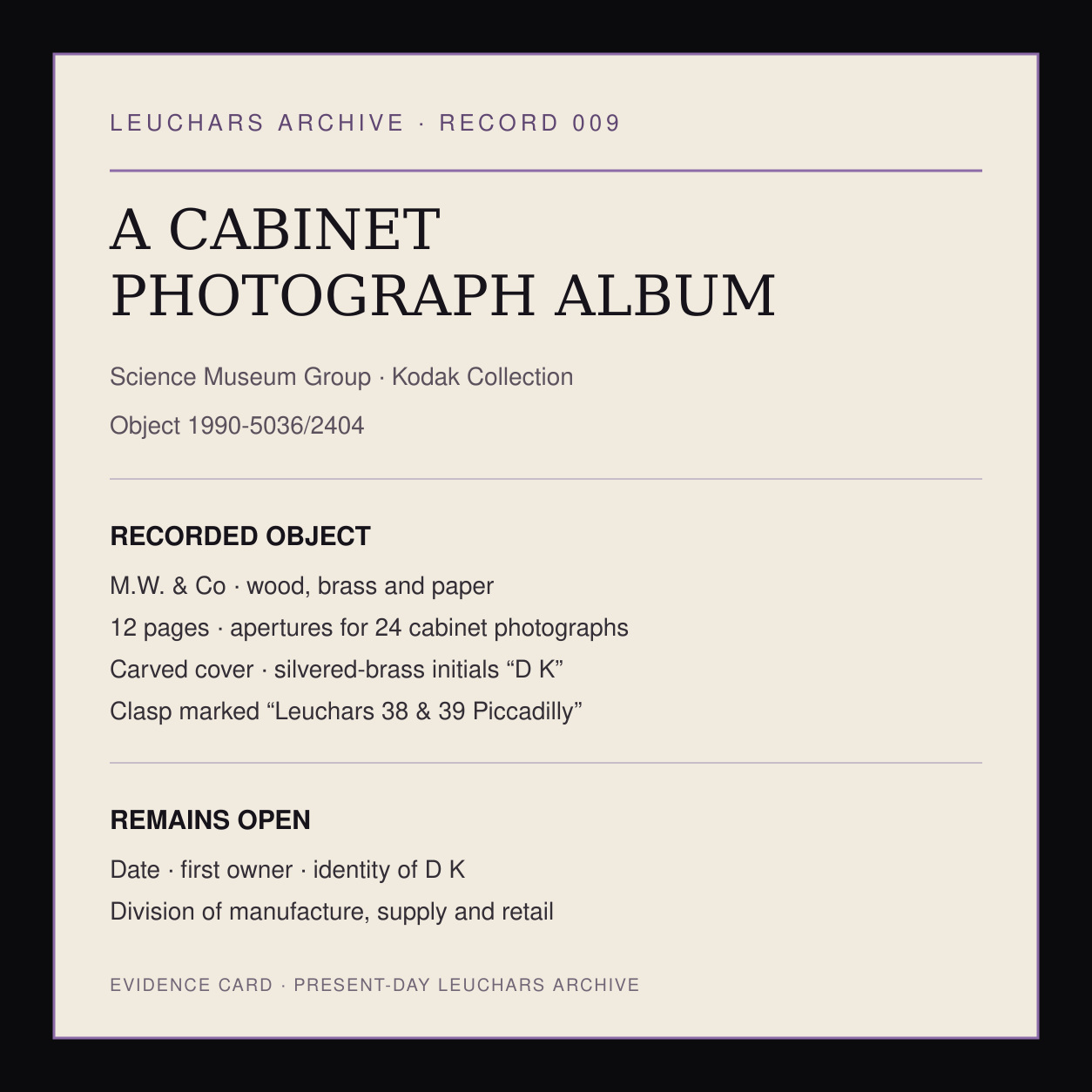
Evidence note: This record is based principally on Science Museum Group object 1990-5036/2404. The museum describes an M.W. & Co cabinet photograph album whose clasp is marked Leuchars 38 & 39 Piccadilly. The mark establishes a commercial association with the Piccadilly shop, but does not by itself identify the maker of the complete album. The object is undated, its D K initials remain unidentified and none of its original photographs survives.
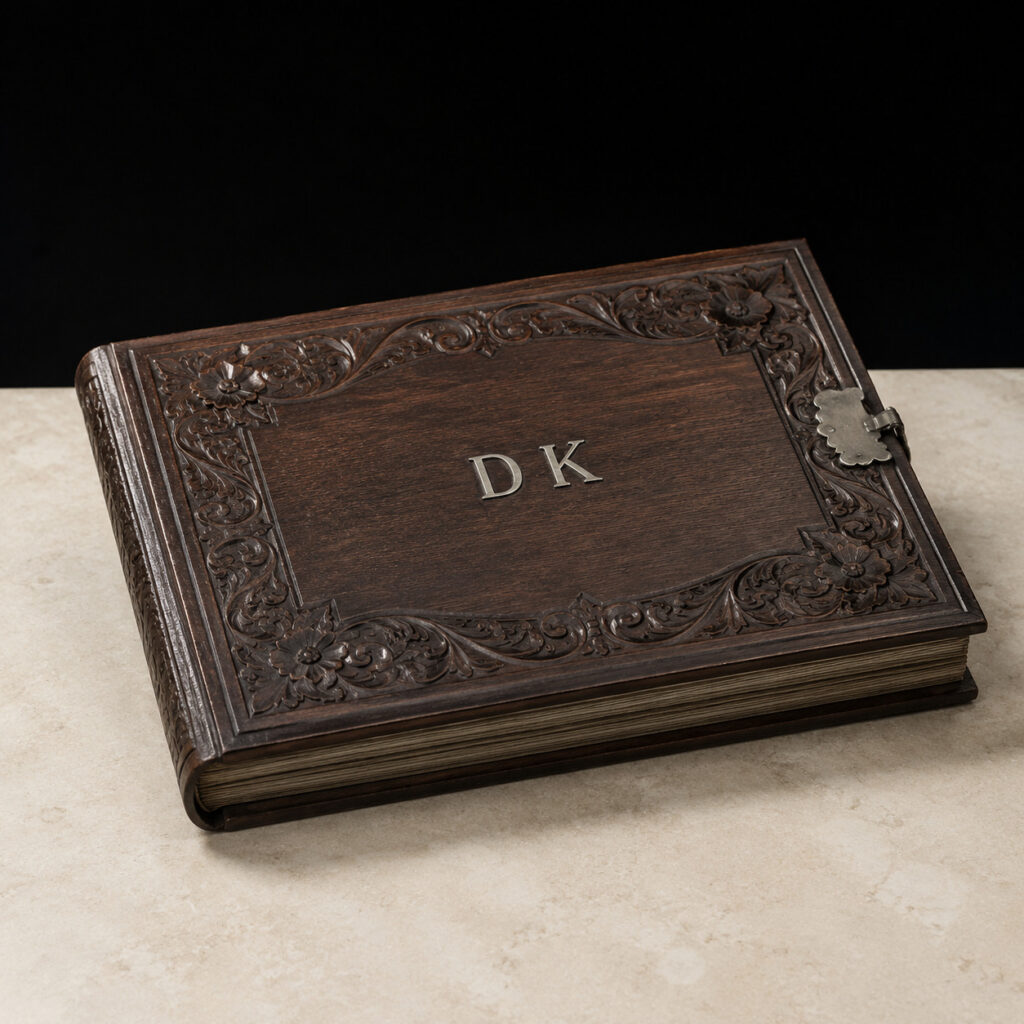
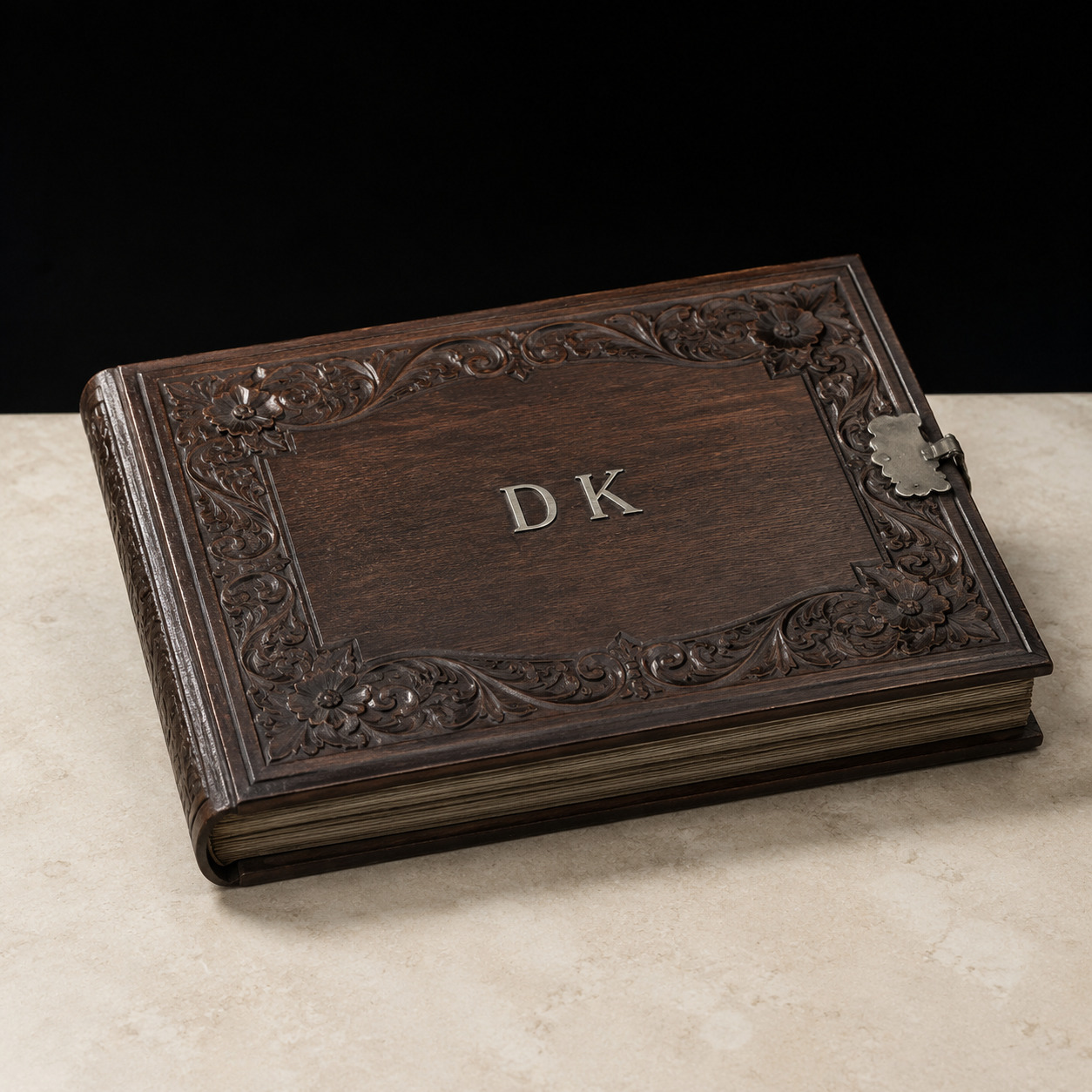
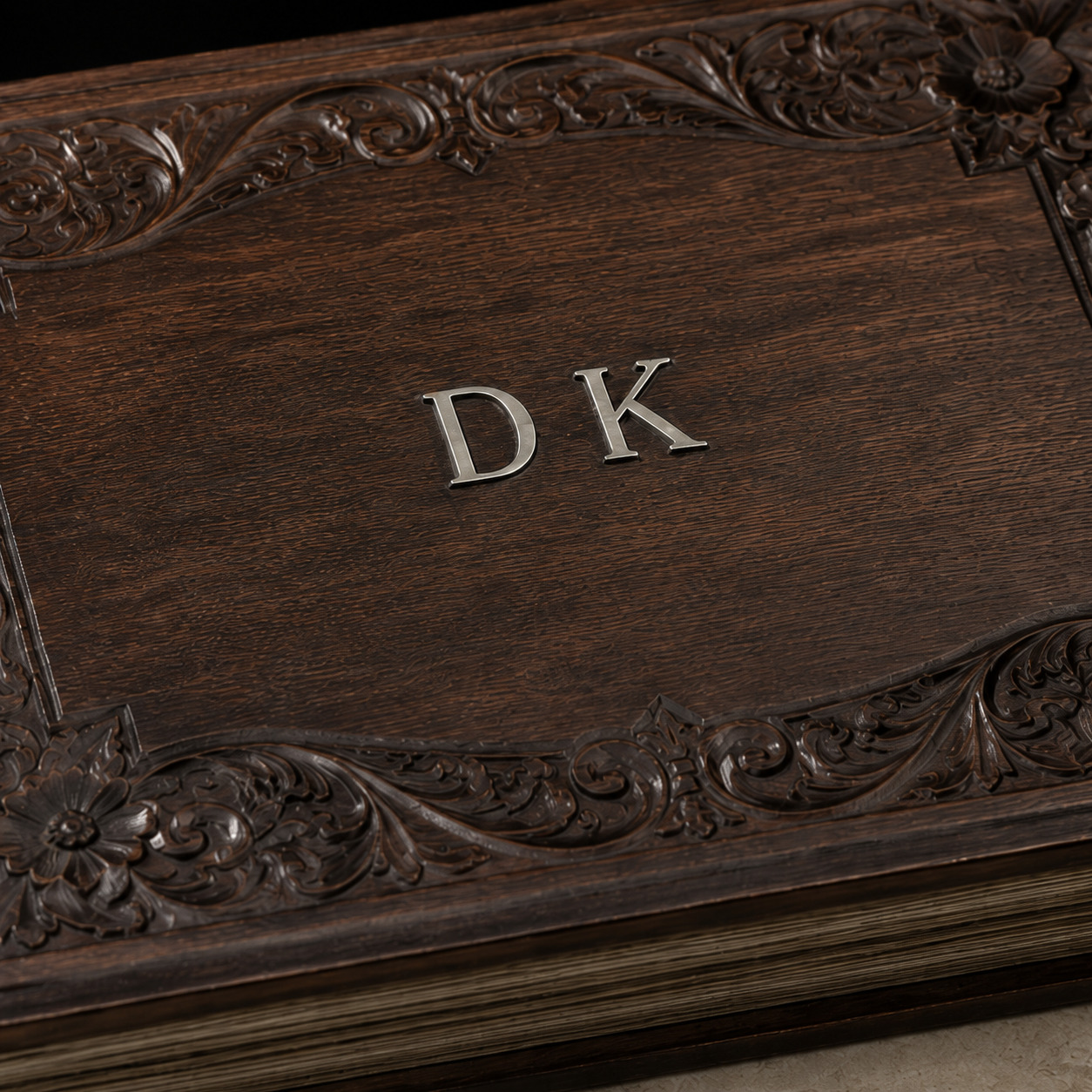
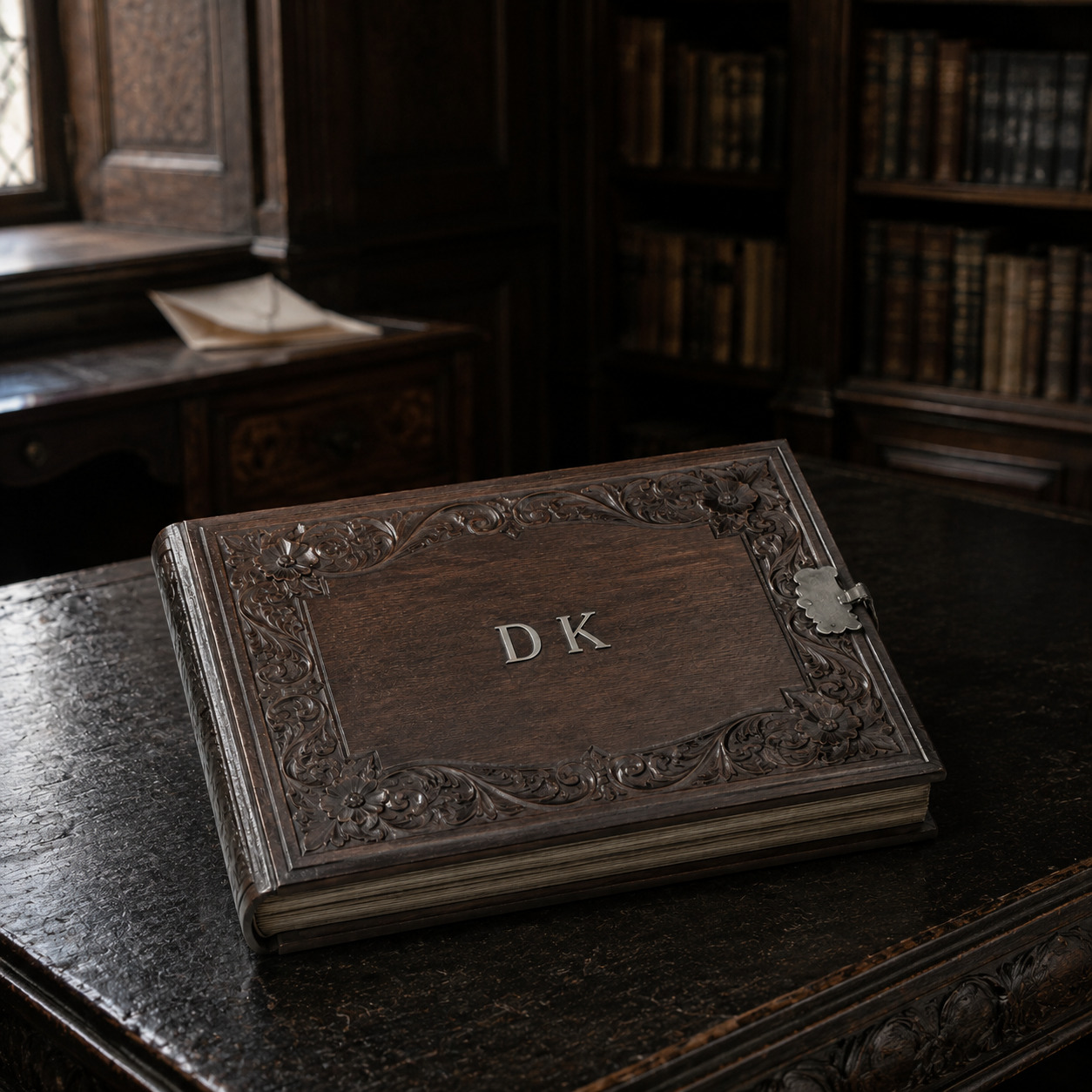
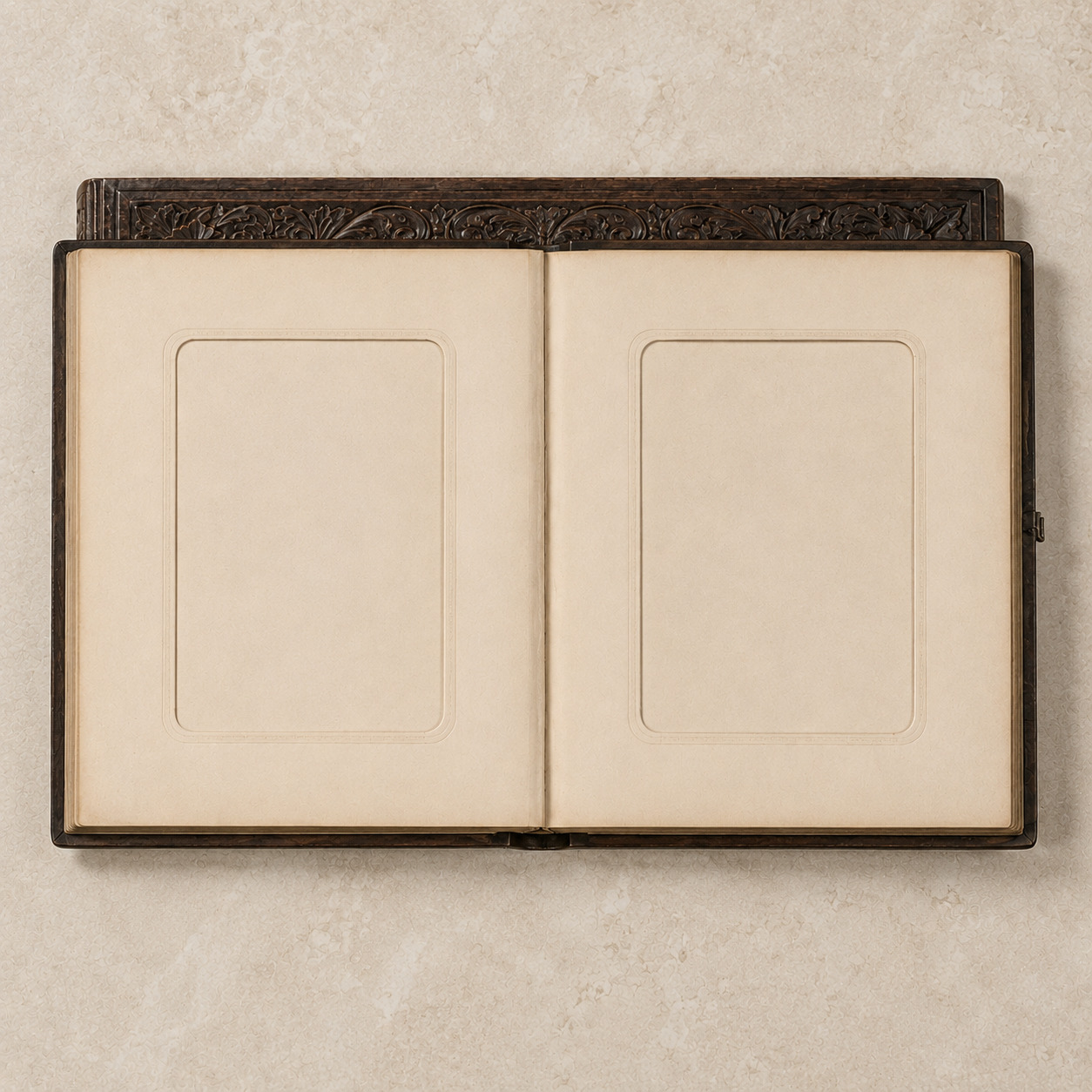
Image note: The object views accompanying this record are editorial reconstructions based on the museum’s written description. They are not documentary photographs of the surviving album and do not establish its exact carving, proportions or hardware.
The Science Museum Group preserves a cabinet photograph album that connects the Leuchars name with the organisation of personal images. Catalogued within the Kodak Collection as object 1990-5036/2404, it has a carved wooden cover, silvered-brass initials D K and a clasp marked Leuchars 38 & 39 Piccadilly.
Inside are twelve pages with apertures for twenty-four cabinet photographs. Today every space is empty. The album therefore survives as a structure for a personal collection without the portraits that once may have explained it.
A container for portraits
Cabinet cards were photographs mounted on stiff card. Introduced in the 1860s as a larger relation of the carte de visite, they offered more room for the sitter and the photographer’s presentation. Families collected portraits of relatives, friends and public figures, arranging them in albums made with apertures sized for the standard mounts.
The Leuchars-marked album belongs to this culture of ordered images. Its pages did not merely store photographs loosely. Each aperture gave a portrait a defined place, turning a sequence of individual cards into a private visual collection.
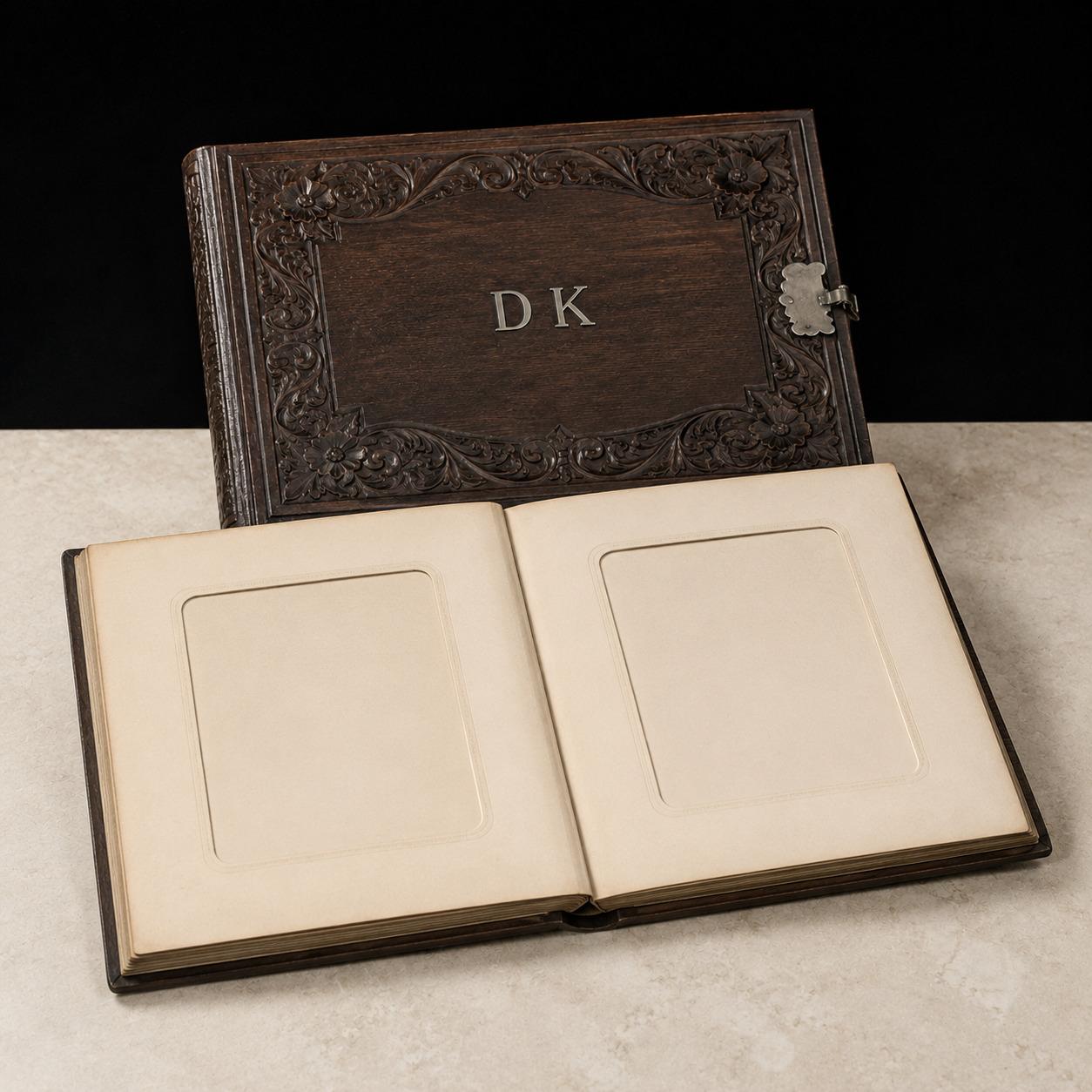
This fitted organisation is familiar within the wider material associated with Leuchars. A dressing case uses compartments to make grooming instruments legible; a photograph album uses pages and apertures to order faces, relationships and memory. The objects are different, but both give structure to personal possessions.
Twenty-four spaces, no surviving sitters
The museum records twelve pages with apertures for twenty-four cabinet photographs. It also records that the album is empty. No sitter, photographer, inscription or sequence survives to identify the collection that once occupied it.
That absence must not be repaired through invention. The empty pages are evidence in their own right. They show the capacity and intended action of the album while leaving its social history open.
The initials D K indicate personalisation, but not identity. They may represent an owner, recipient or household, yet the available record does not say which. Without an invoice, presentation inscription or surviving photographs, the Archive records the initials exactly and goes no further.
The mark on the clasp
The catalogue places the Leuchars name on the clasp: Leuchars 38 & 39 Piccadilly. A mark attached to one component can establish how an object was presented, supplied or retailed. It cannot automatically prove that the Piccadilly firm manufactured the wooden cover, bound the pages and made every metal part.
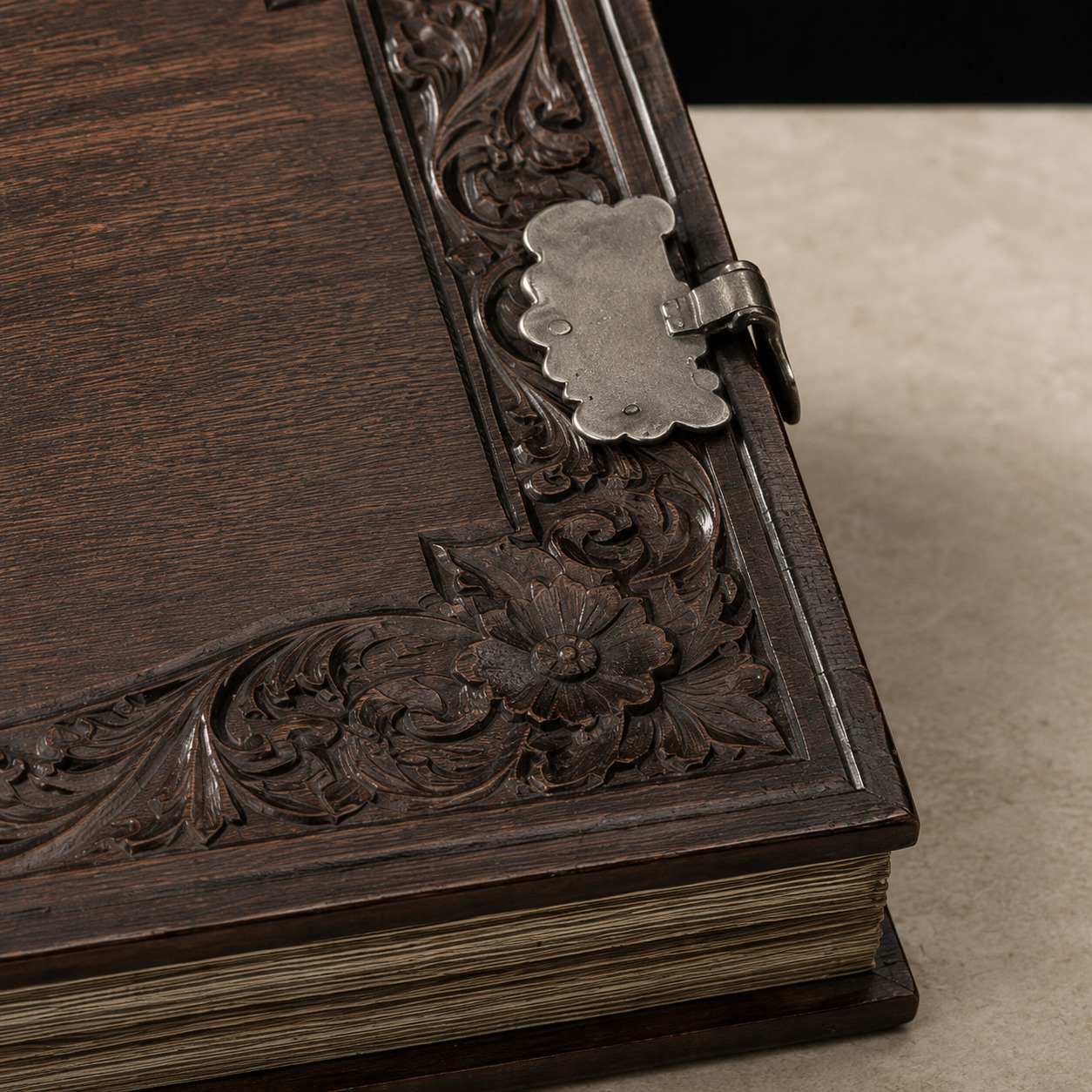
The museum’s description begins with M.W. & Co cabinet photograph album, introducing a second recorded name whose exact role is not explained. The safest reading is therefore a network of association rather than a single unsupported attribution. M.W. & Co and Leuchars both belong to the surviving record, while the division between manufacture, component supply and retail remains unresolved.
This is precisely the kind of distinction the Archive is intended to preserve. Retail marks are historically valuable, but they should not be expanded into claims that exceed the object.
An album from Piccadilly
The address on the clasp places the commercial association at 38 and 39 Piccadilly. Unlike the London-and-Paris marks recorded on other objects, this clasp names only the Piccadilly premises.
A separate secondary record describes a different luxury album dated 1868 and carrying a W. Leuchars sticker at 38 Piccadilly. That object contained crests, monograms and autographs rather than cabinet portraits. It does not prove a common maker or owner, but it supports the broader point that albums formed part of the objects associated with the shop.
Together, the records widen the picture of Leuchars beyond the dressing table and travelling case. The shop could participate in the presentation of paper, images, autographs and personal identity as well as bottles, tools and fittings.
From possessions to memory
The cabinet photograph album shows how a luxury object can organise something less tangible than equipment. Its purpose was to give durable form to a set of images: selected, ordered and personalised for private viewing.
The present-day Leuchars house is distinct from the historic firms and suppliers represented by the surviving marks. The Leuchars Archive records this album as evidence of an object and retail association connected with the Leuchars name, while leaving its date, owner, contents and manufacturing roles open.