Evidence note: This record is based on Sotheby’s catalogue description of a surviving 1881 crow-form jug, The National Archives’ guidance to Victorian registered-design records and a specialist transcription of design number 375007. The original Patent Office representation and register entry have not yet been visually inspected. Registration identifies a proprietor but does not, by itself, establish the individual designer or the maker of every component.
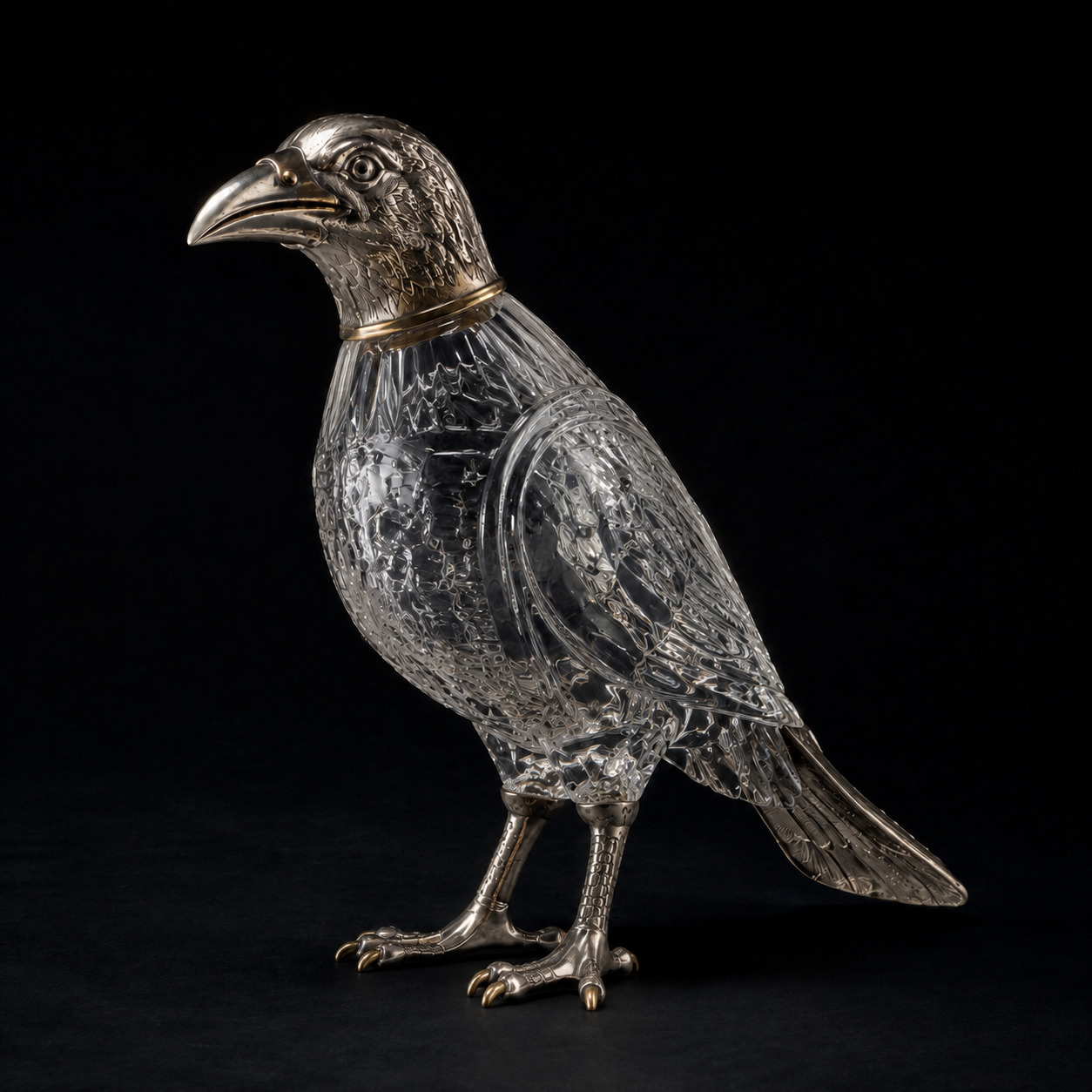
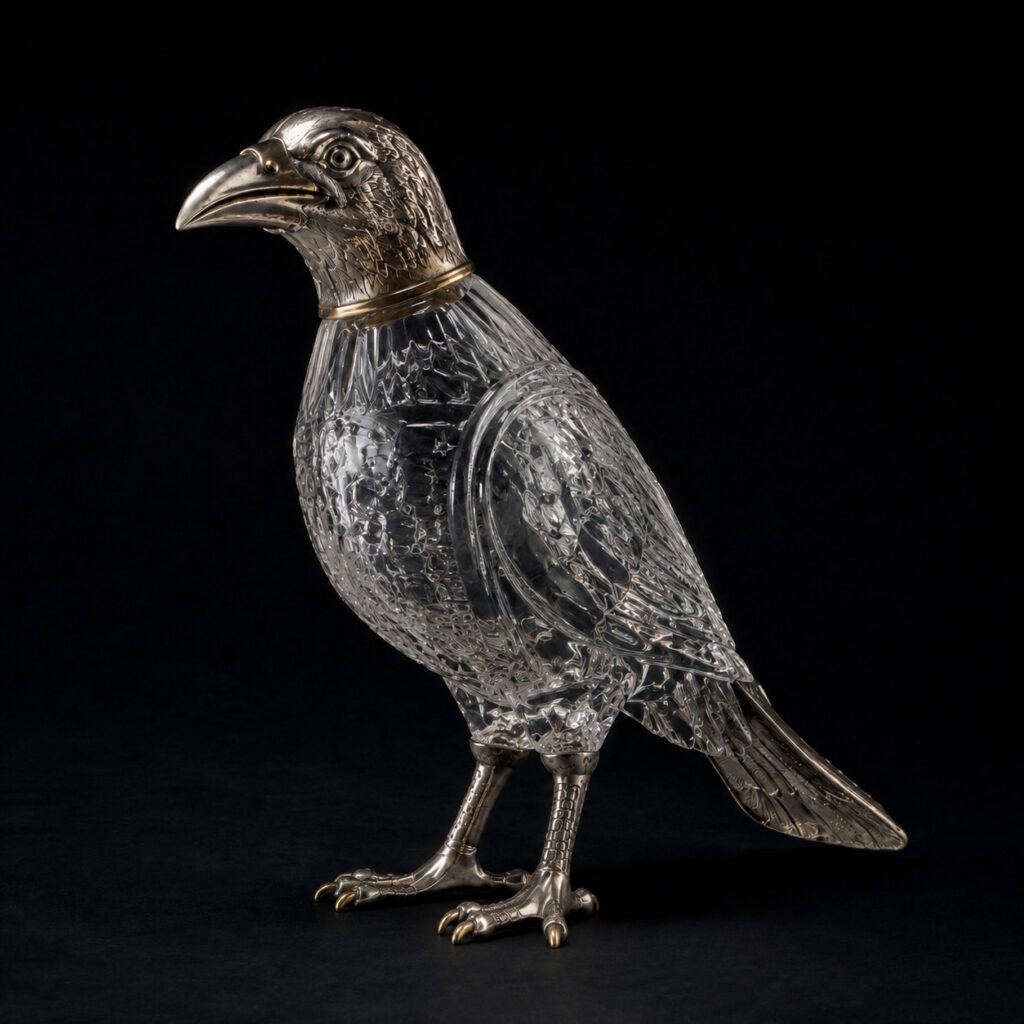
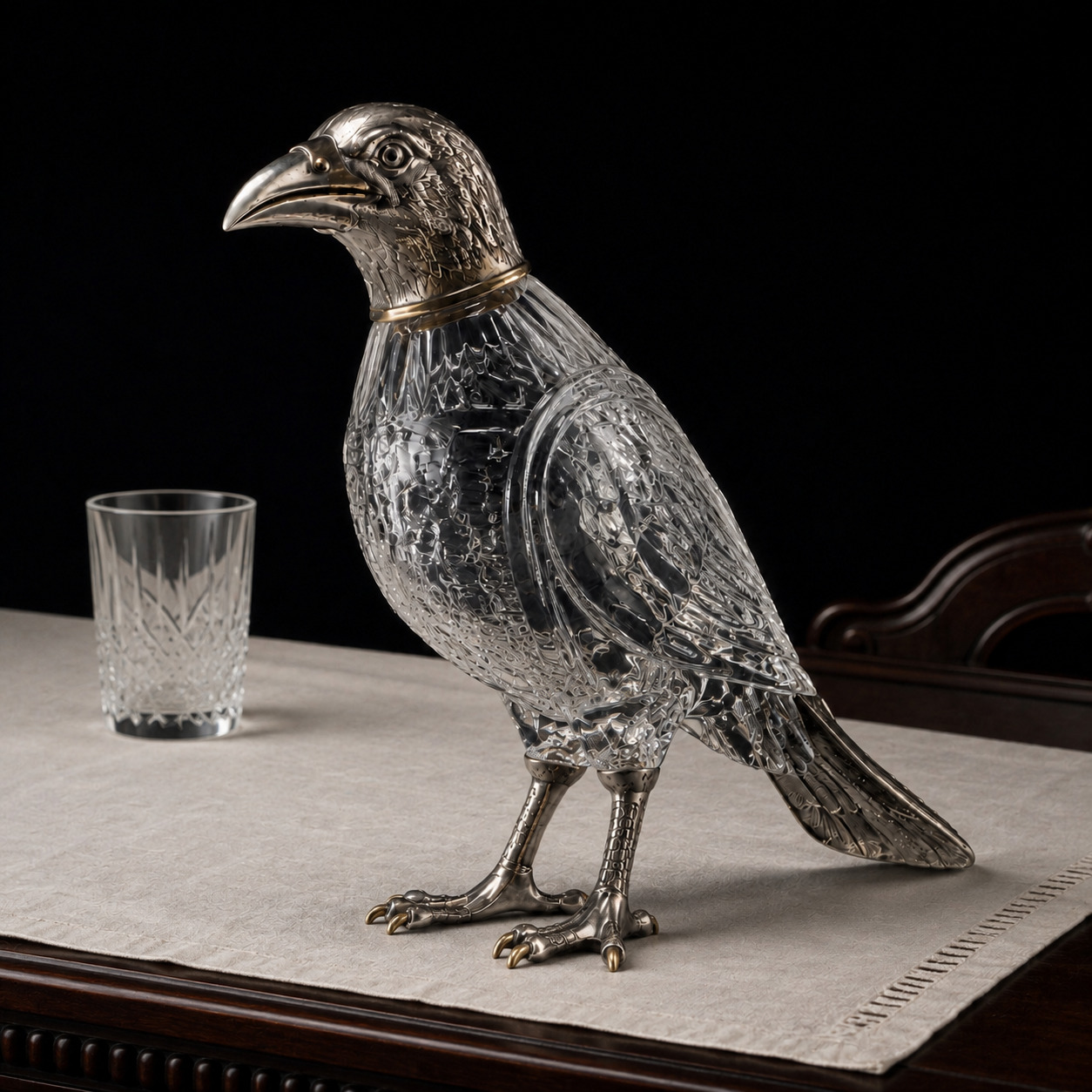
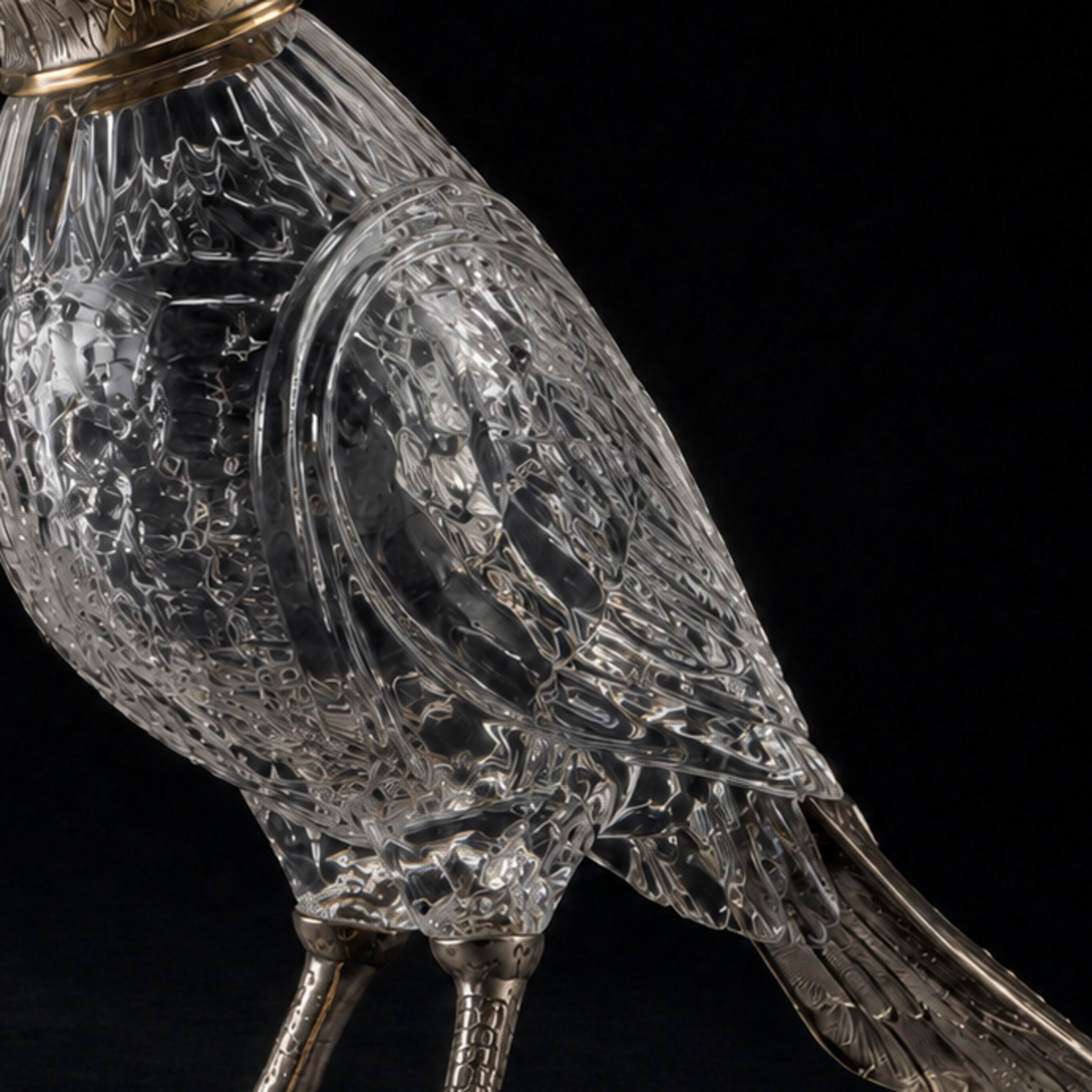
In December 1881, an ornamental design for a crow-shaped bottle was registered under number 375007. A surviving parcel-gilt silver-mounted glass example associated with William Leuchars & Sons brings that entry into three dimensions: a clear-glass body becomes the bird’s torso and wings, while silver forms its head, beak, feet, feathered belly and tail.
The object sits at an unexpected edge of the Leuchars record. The historic firm is most readily associated with dressing cases, writing cases and the organisation of personal possessions. The crow jug demonstrates a wider appetite for useful objects made memorable through form, material and wit.
A bird assembled from two crafts
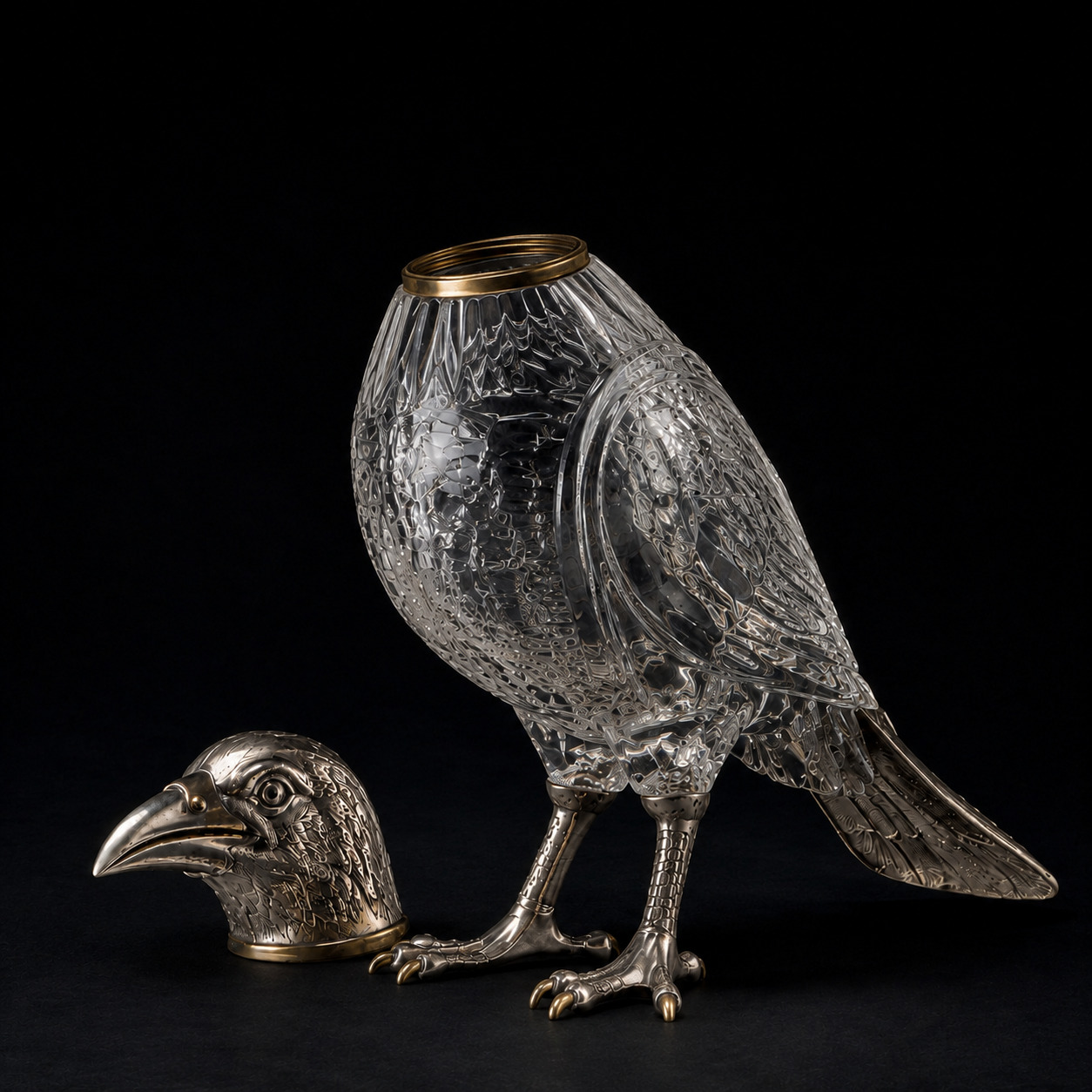
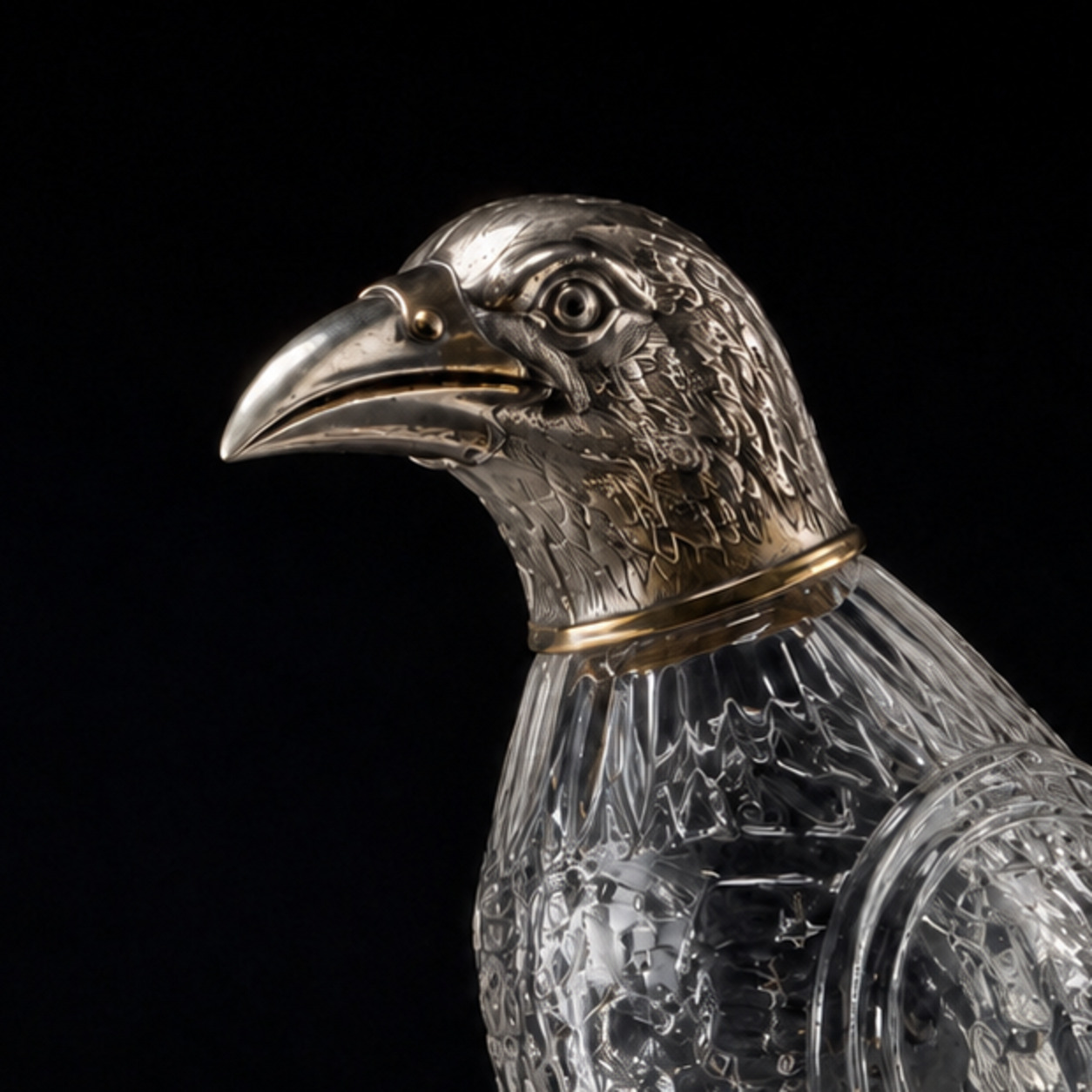
Sotheby’s describes the body as clear glass shaped to suggest the crow’s body and wings. It rests on a modelled silver base chased as gilt feet, a feathered belly and tail. The removable head screws into a feathered collar and incorporates a gilt beak, glass eyes and a gilt interior.
The result depends on the meeting of two specialist materials. Glass gives the vessel its capacity, translucency and rounded volume. Silver supplies the recognisable features and the mechanical closure. Neither element completes the bird alone.
The recorded height is 21.5 centimetres. That compact scale is enough to give the object presence without losing its function as a pouring vessel. Its humour is controlled by precise construction: the bird’s anatomy also explains how the jug stands, opens and pours.
Registered design number 375007
Sotheby’s identifies the design as number 375007, registered on 22 December 1881 as an ornamental design for a bottle. A specialist table compiled by the Kent Collection places it in the Patent Office sequence BT 43/50 as a Class 1 metal design for a crow.
The National Archives explains that Victorian ornamental-design registration protected decorative elements against unauthorised copying. Applicants submitted a representation, while a corresponding register recorded the number, proprietor, address, date and sometimes a description.
The distinction between proprietor and designer matters. The registered proprietor was often a manufacturer or retailer and was not necessarily the person who drew, modelled or physically made the object. Registration therefore provides unusually strong evidence that the Leuchars business claimed a protected commercial interest in the crow design, but it does not yet identify a named individual designer or the workshops responsible for the glass and silver components.
Marks on the surviving example
The 2022 catalogue records full marks inside the removable head, part marks on the base, a design registry mark and French import marks. Together, those marks connect the physical vessel to systems of assay, registered design and international circulation.
The French import marks are particularly apt for a firm then trading in both London and Paris. They do not establish the jug’s original purchaser or journey, but they show that this example moved through a regulated cross-border market.
Novelty in the West End
Animal-form silver-and-glass jugs appeared in quick succession during the early 1880s. The specialist registration sequence places owls, ducks, drakes, parrots and the Leuchars crow within months of one another. It was a compressed field of observation, adaptation and commercial response.
Sotheby’s interprets the Leuchars crow as a rapid answer to neighbouring London firms experimenting with figural claret jugs. That interpretation is plausible within the dated registration sequence, but the surviving evidence is better used to establish timing than motive. What can be said securely is that Leuchars registered a distinct crow design and that an 1881 marked example survives.
From fitted cases to designed objects
The crow jug expands the useful meaning of the Leuchars Archive. Case making was one expression of the firm’s ability to combine materials, specialists and functions. This vessel applies a related intelligence to the table: glass, silver, gilding and a screw closure are coordinated into an object that is practical, sculptural and immediately legible.
Its value to the present record is not that it proves an uninterrupted modern design lineage. It shows instead that the historic Leuchars business operated within a sophisticated network of retailing, registration and specialist production, and that novelty could be disciplined by construction.
The present-day Leuchars house is distinct from the historic firm. The Leuchars Archive records this crow jug as part of the documented design history associated with the name.
