Evidence note. This record is centred on Science Museum Group object A179321. The museum describes the medicine chest as by Leuchars of London and dates it circa 1830, while separately naming Chubb and Son’s Lock and Safe Company Limited in the maker field. Where the surviving catalogue does not establish who made each component, this article retains that uncertainty.
One fitted case, twelve bottles
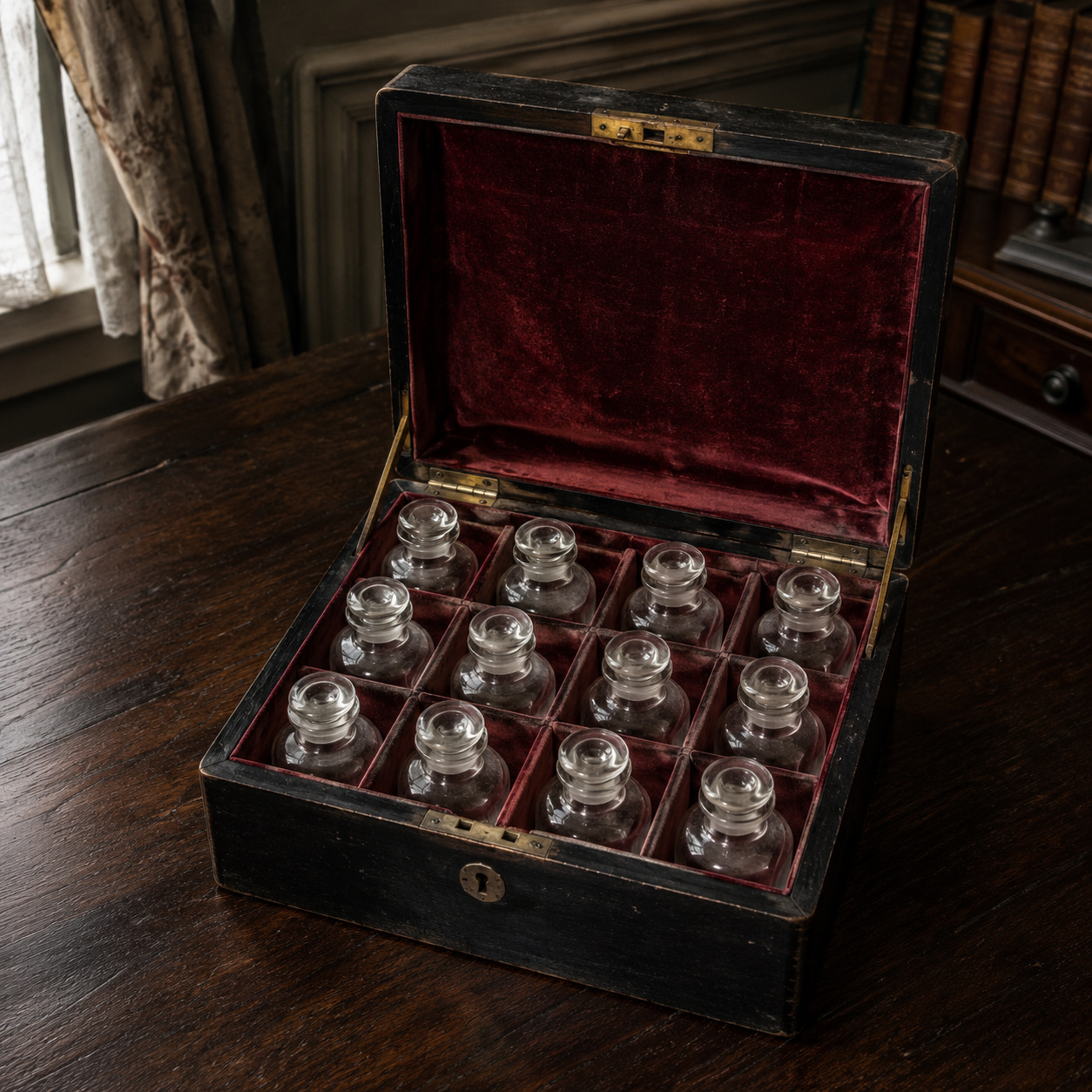
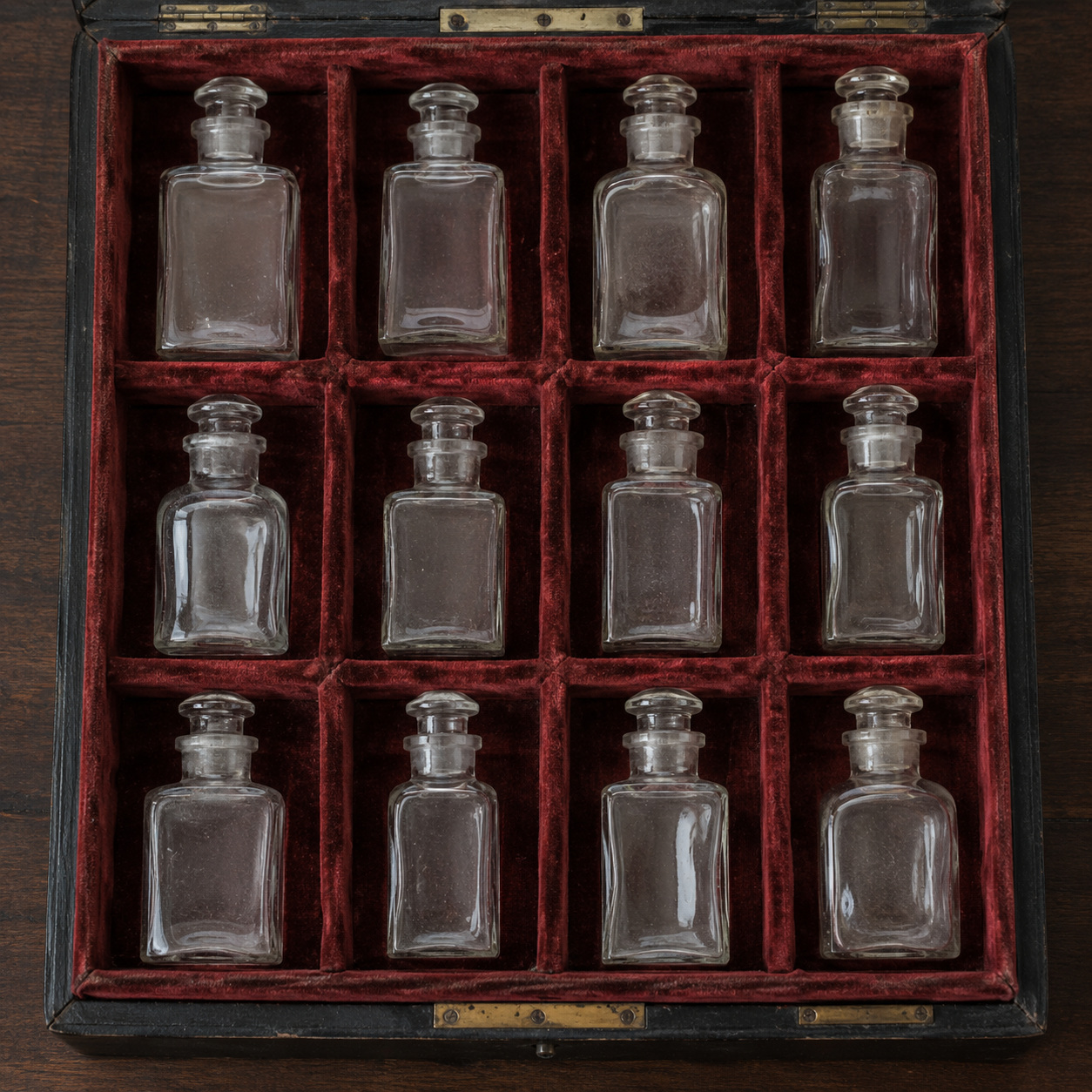
The Science Museum Group preserves a compact medicine chest associated with Leuchars of London. Dated circa 1830, it measures 274 millimetres high, 229 millimetres long and 230 millimetres wide. Inside are twelve glass bottles from Dinneford of New Bond Street.
The object belongs to the same broad world of fitted organisation as the dressing cases and writing cases for which Leuchars became known. Here, however, the contents were pharmaceutical. Bottles were gathered into one ordered enclosure so that fragile containers and their contents could be stored, protected and carried together.
Decoration beyond utility
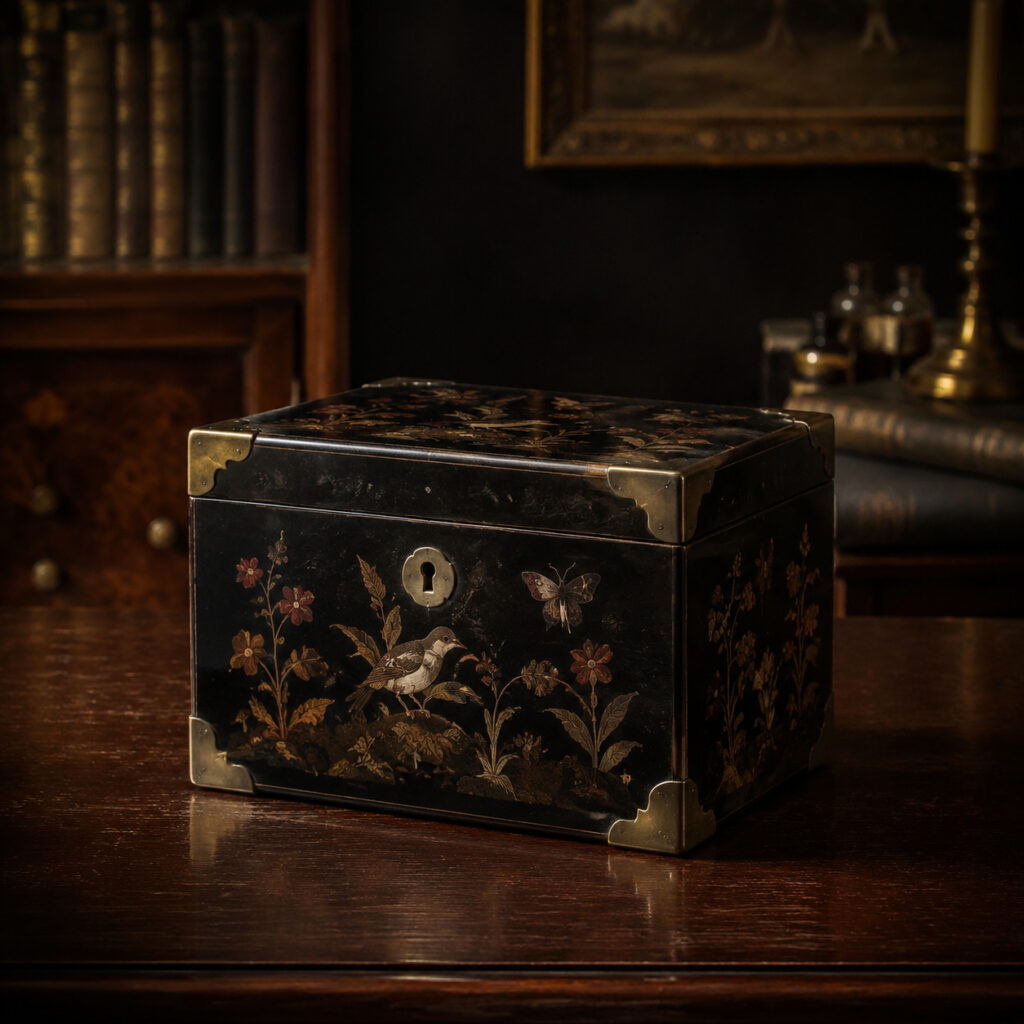
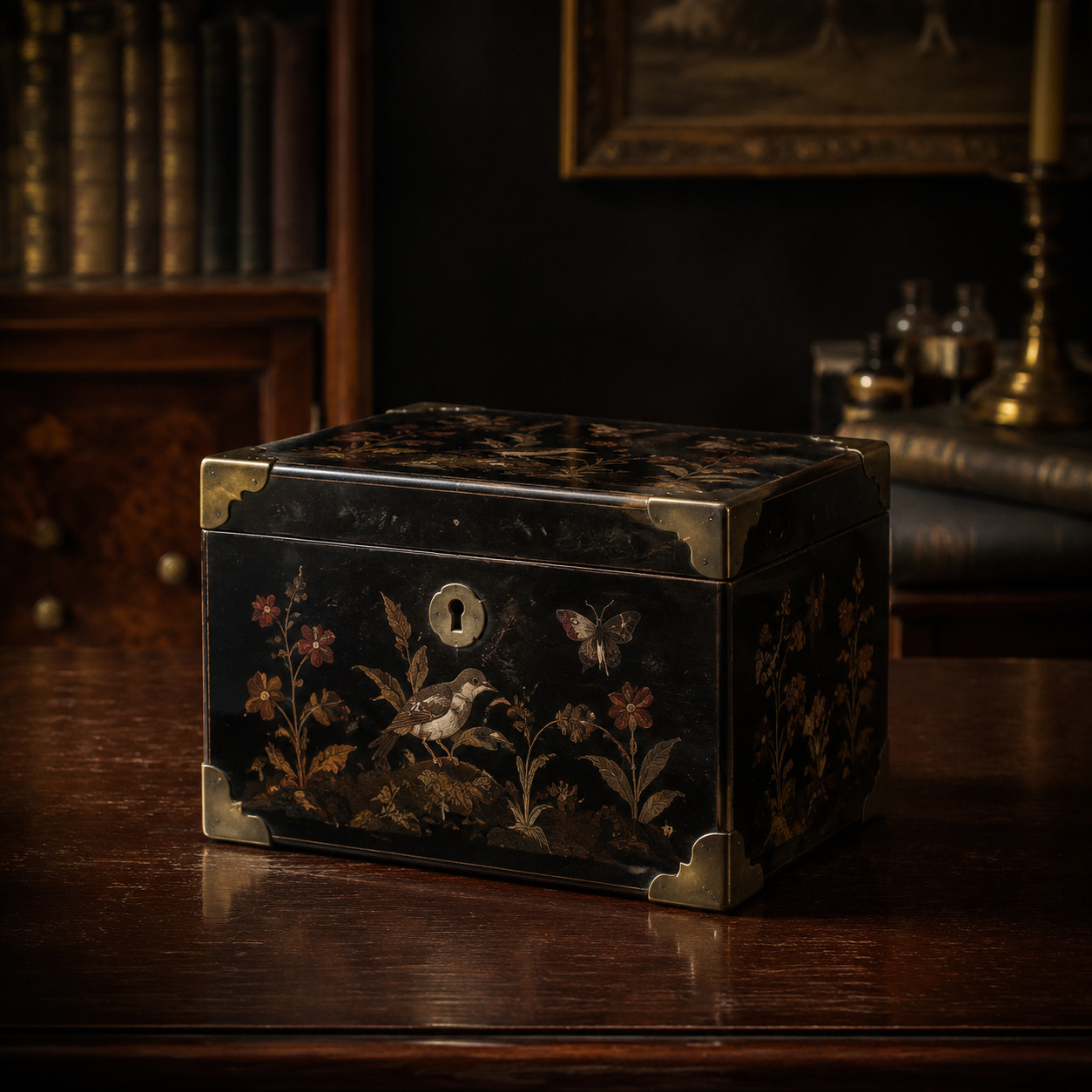
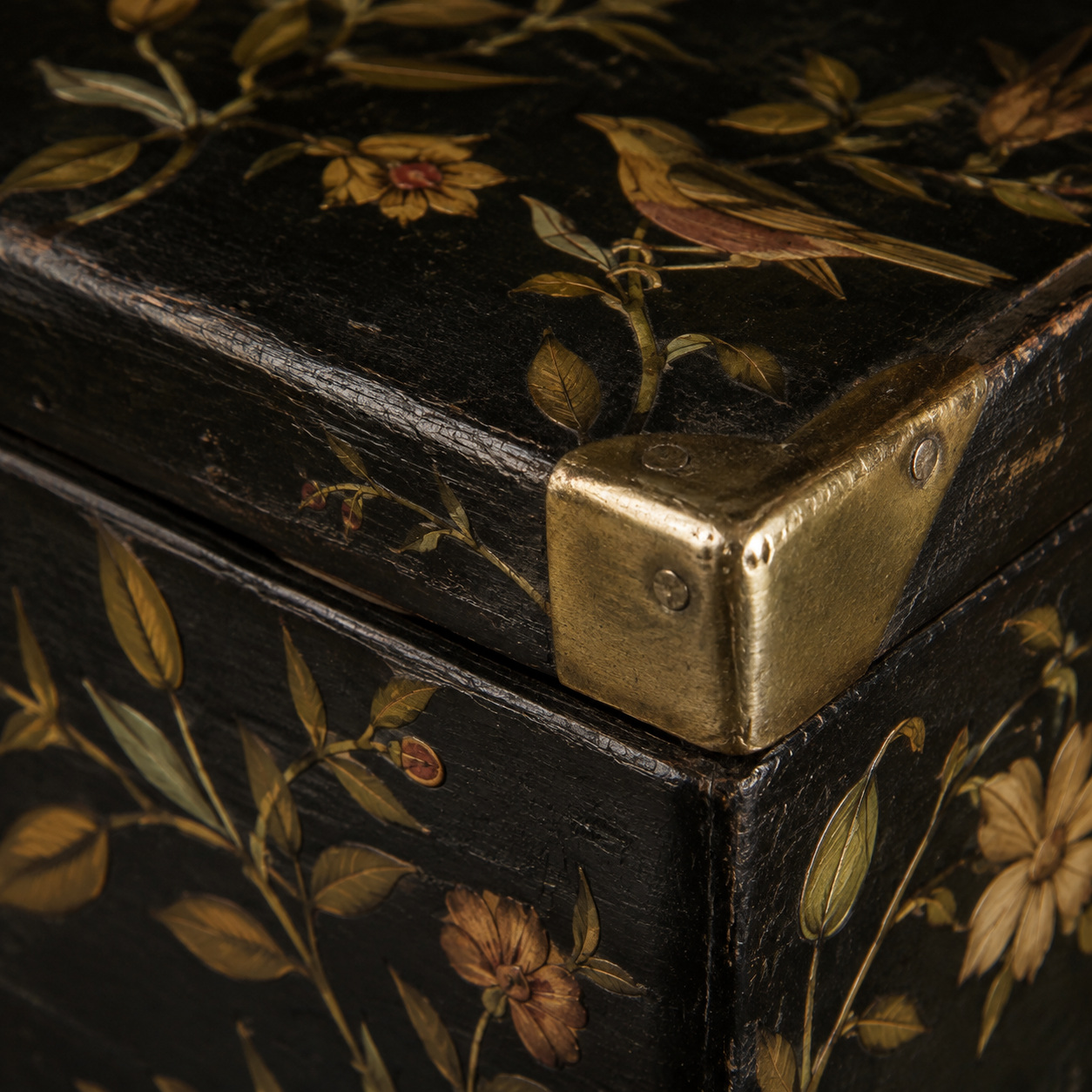
The museum describes the chest as covered in inlaid flora-and-fauna decoration. Its recorded materials include inlay, brass, lacquer and red velvet lining.
That combination matters. A medicine chest could have been treated as purely practical equipment, yet this example was given a decorative exterior and a coloured fitted interior. The case was not only a container. It gave structure and finish to an assortment of functional objects.
The result sits comfortably within the Leuchars vocabulary: a rigid outer form, an interior organised around use and a level of finish appropriate to an object kept in a private room or carried among personal possessions.
A record with three specialist names
The Science Museum catalogue does not offer a single uncomplicated maker attribution. Its description calls the chest “by Leuchars of London”. The bottles are associated with Dinneford of New Bond Street. The maker field names Chubb and Son’s Lock and Safe Company Limited.
Those entries should not be collapsed into a claim that one business made every component. A fitted chest could bring together cabinet work, lock making, glass bottles, pharmaceutical preparation, lining and retail presentation. The object may therefore preserve the work of several specialists coordinated within one finished article.
An 1843 London directory records Charles Dinneford as a chemist at 172 New Bond Street. A separate Science Museum medicine chest from later in the century records Chubb and Son as maker and another business as supplier. That comparison does not resolve A179321, but it shows why the separate roles of maker, supplier and retailer should remain open.
Medicine organised for private life
The twelve bottles turn the case into a system. Each vessel had to be held securely, accessible when needed and protected from movement. The red velvet lining provided a softer boundary between glass and the harder structure of the chest, while brass and a specialist lock contributed to closure and security.
The museum has separately catalogued two rectangular clear-glass bottles with glass stoppers from the chest. Their surviving emptiness prevents any reconstruction of their original contents. The record therefore supports a study of organisation and material design more securely than a detailed account of the medicines once carried.
An early Leuchars object
The circa-1830 date places the medicine chest within the period when Lucy Leuchars is documented at 38 Piccadilly as a writing-desk and dressing-case maker. The museum entry identifies Leuchars of London but does not name Lucy or give a Piccadilly address, so the object should not be presented as her personal design.
It nevertheless broadens the surviving record of the business operating in her period. Before the exhibition medals of the 1850s and 1860s, the Leuchars name was already associated with a fitted object that combined decorative surface, specialist hardware and an interior arranged around use.
What the object establishes
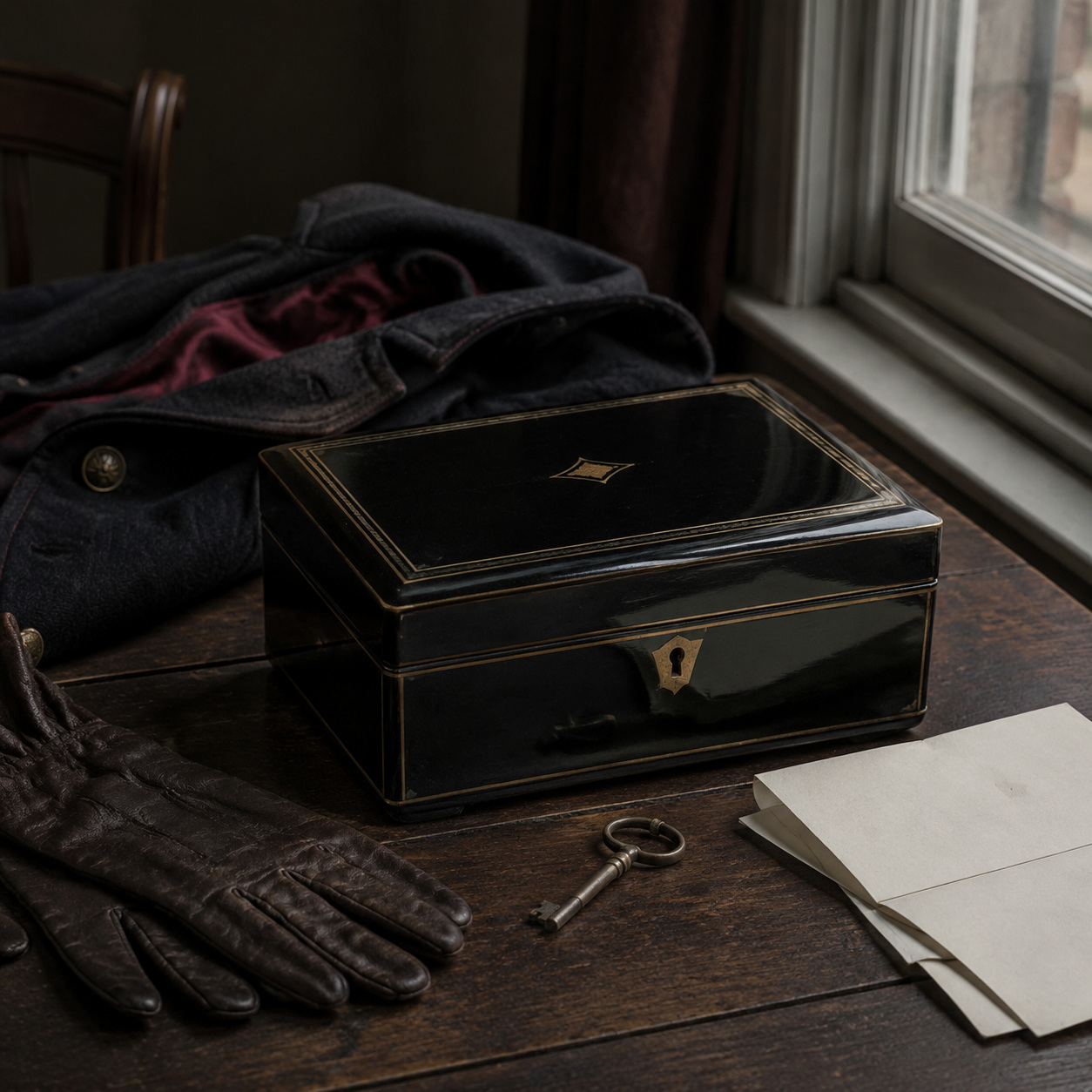
A179321 establishes that a decorated medicine chest associated with Leuchars of London survives in a national museum collection. It records twelve Dinneford bottles, an attribution to Chubb in the maker field, detailed materials and exact dimensions.
It does not identify its first owner, its journey into the Wellcome collection or the original contents of every bottle. Those absences are part of the record. The value of the chest lies not in an invented biography, but in the physical and documentary evidence that remains.
The present-day Leuchars house is distinct from the historic firm. The Leuchars Archive records this object as part of the documented history associated with the name.
