
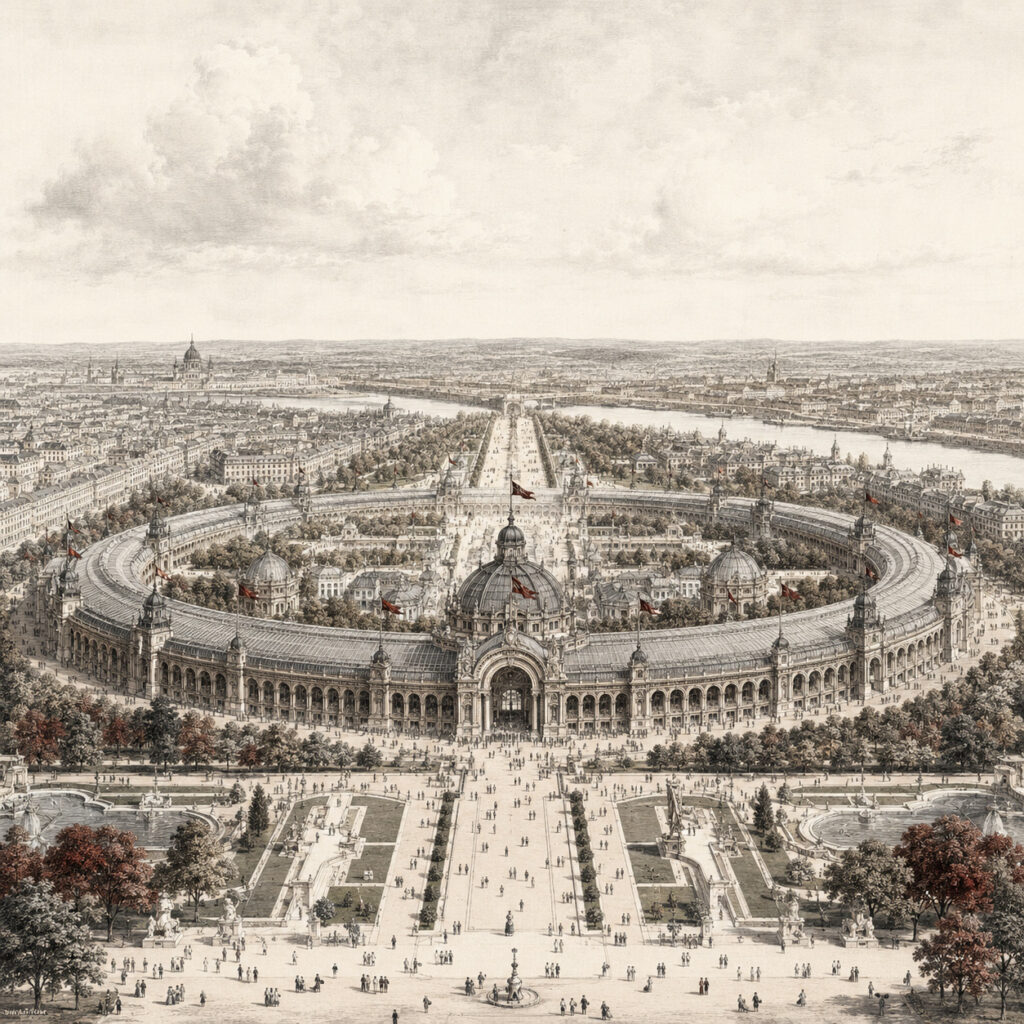
Evidence note: This record reconstructs William Leuchars’s participation in the Paris Exposition Universelle of 1867 from a contemporary illustrated account and institutional exhibition records. The precise contents and present locations of the firm’s exhibits remain unverified. The historic firm and the present-day Leuchars house are distinct.
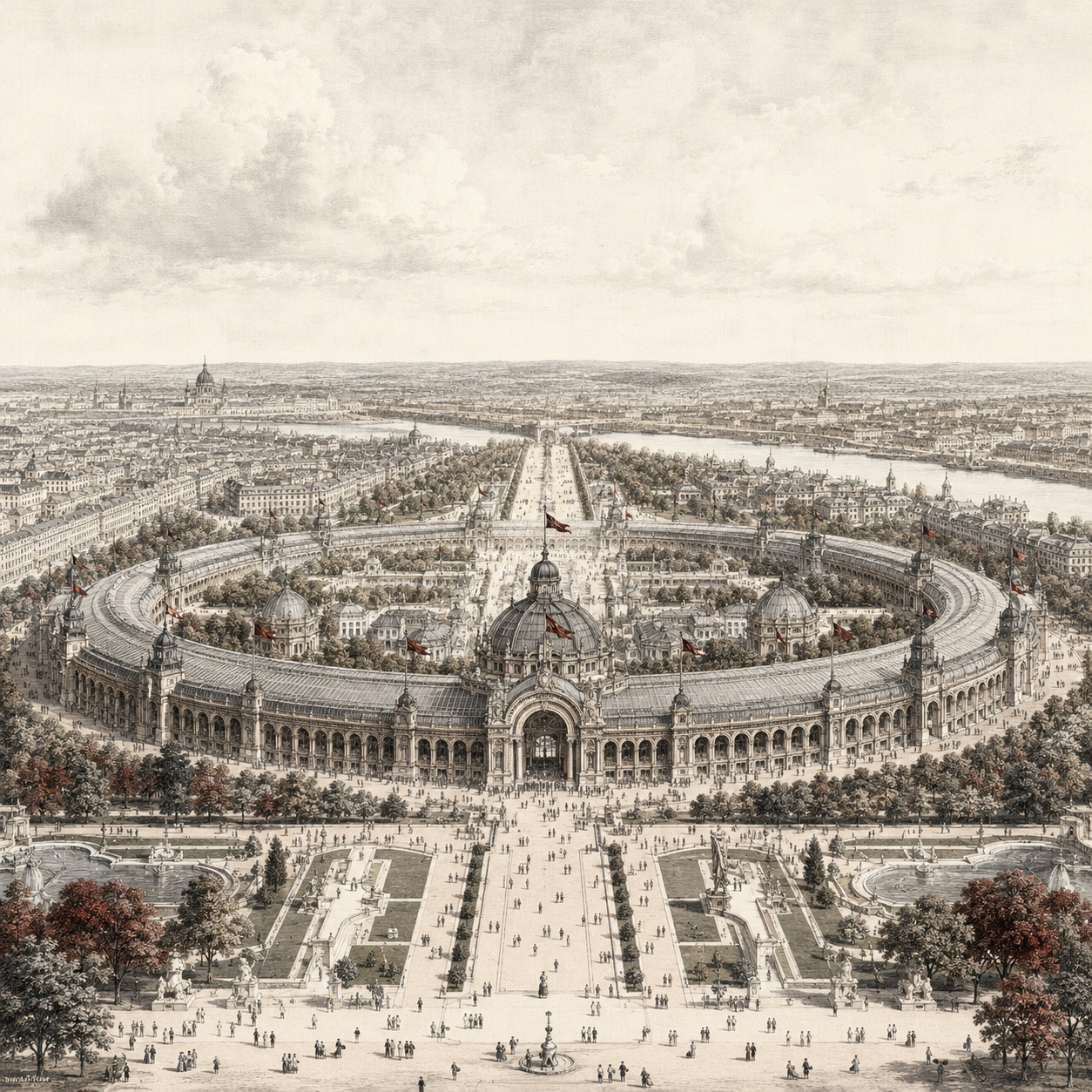
Five years after the International Exhibition in London, William Leuchars appeared before another international audience at the Exposition Universelle of 1867 in Paris. A contemporary French account records both the jury’s silver medal and the qualities for which the display was noticed: richness, taste and, above all, durability.
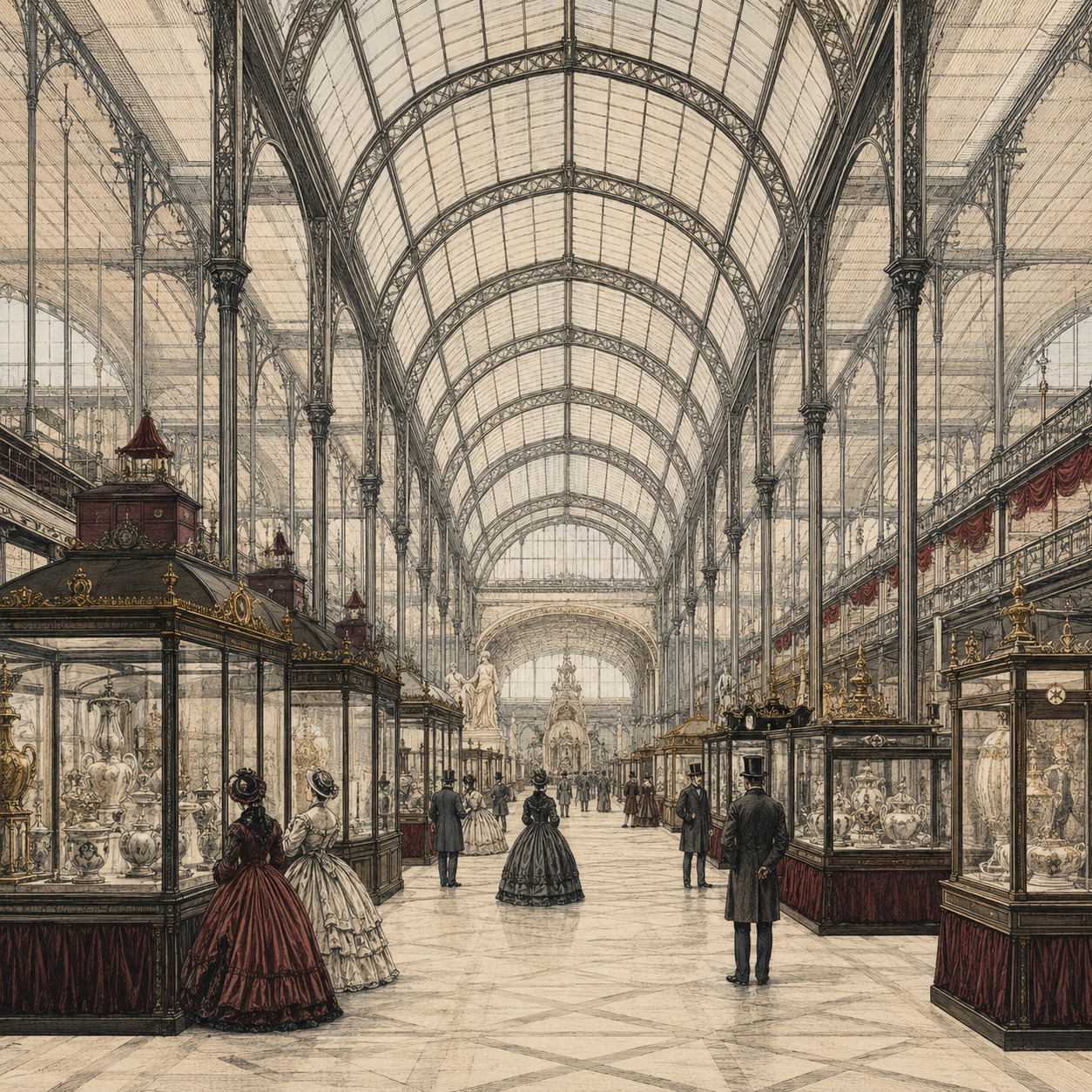
A London display in Paris
The account identifies Leuchars as a London exhibitor, refers to a vitrine of products and specifically discusses the firm’s dressing cases. It does not provide an inventory of individual objects. What survives is therefore a critical description of the group rather than a catalogue of identifiable pieces.
The writer characterised the products as possessing a distinctly English richness and luxury. Care and taste were praised in the arrangement and execution of the cases, but the commentary did not stop at appearance.
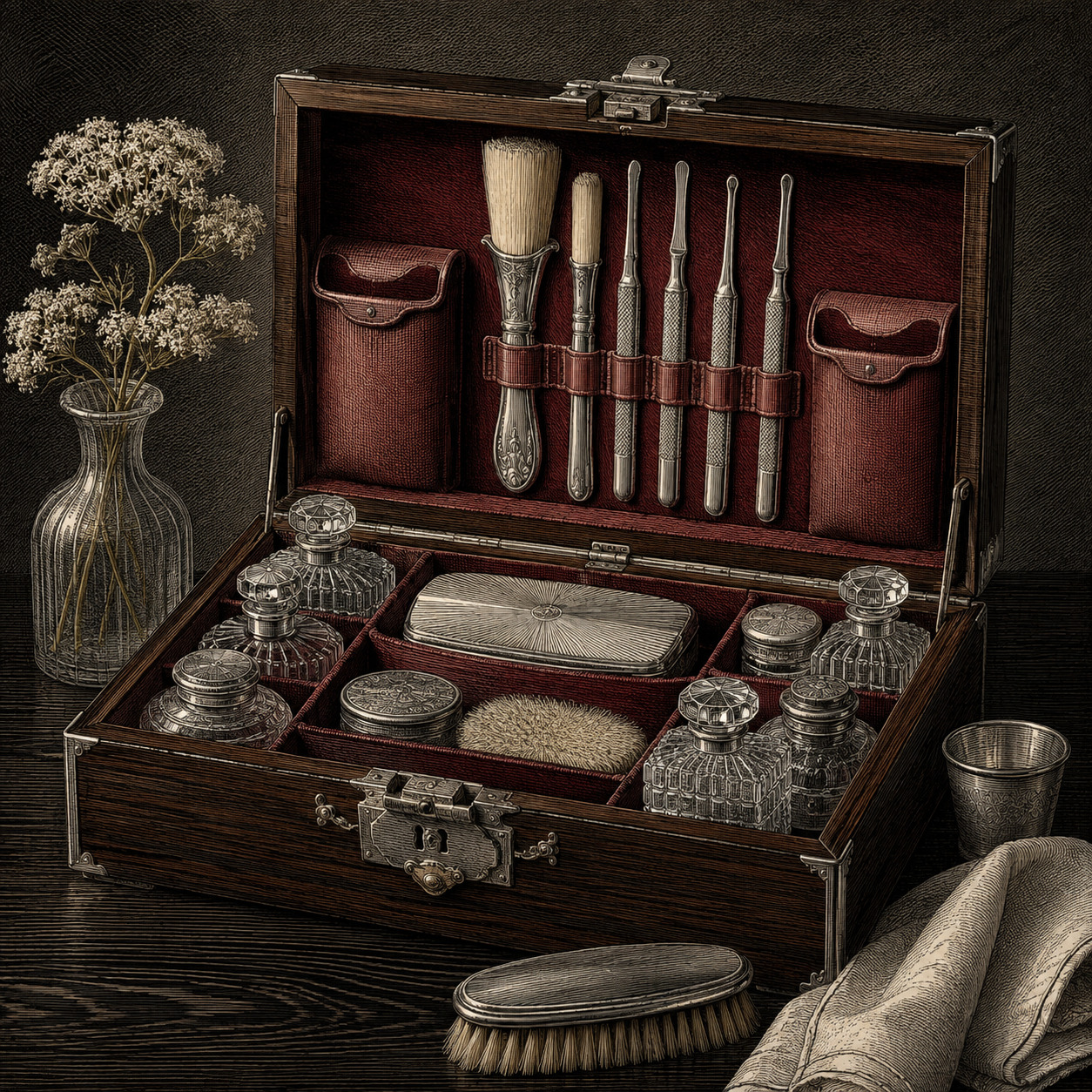
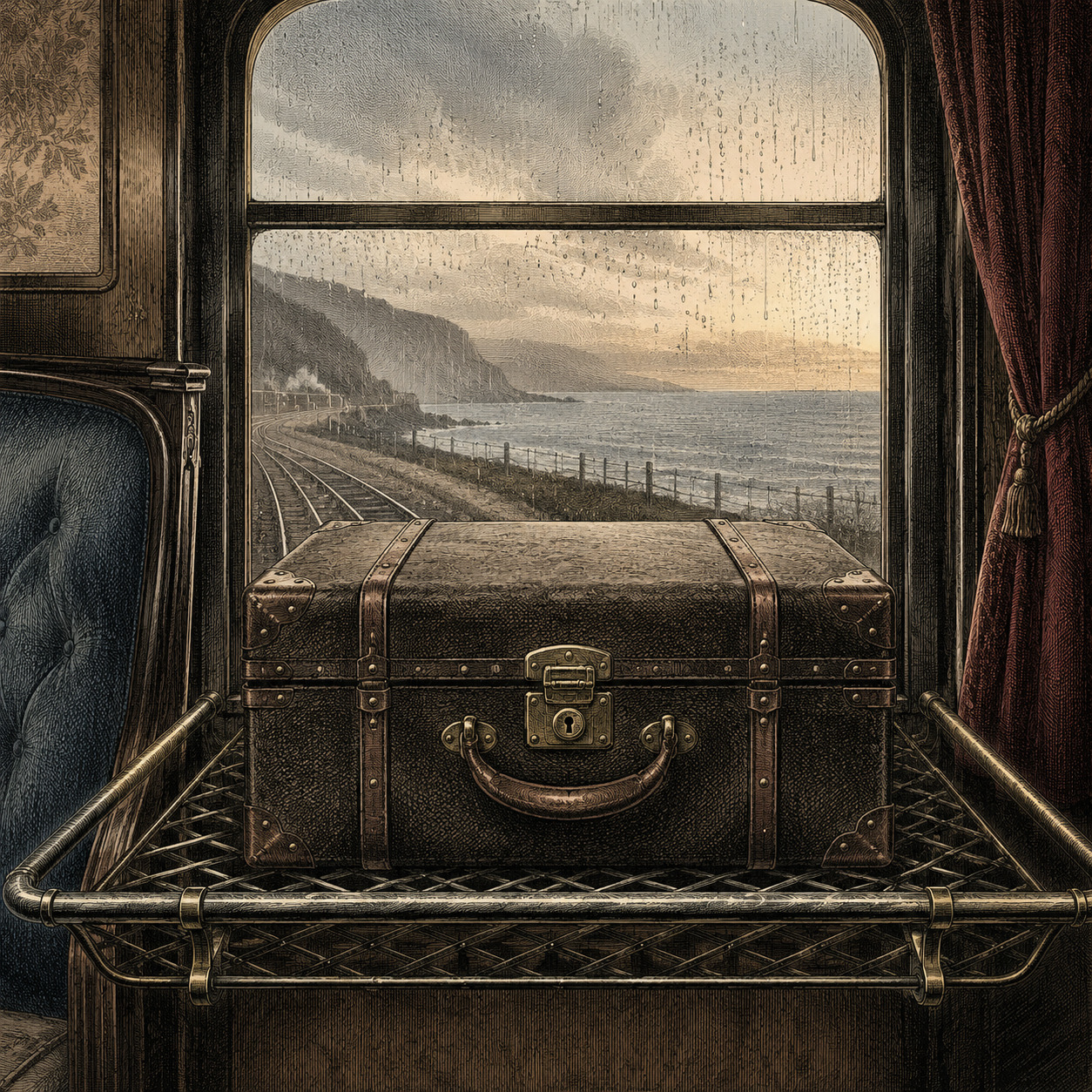
Luxury made for travel
Solidity was presented as the distinguishing quality. The cases were described as capable of resisting damage and the ordinary accidents of travel. The account went so far as to imagine them crossing the seas, travelling around the world and returning to London apparently unchanged.

That flourish should not be read as a tested guarantee. It is nevertheless revealing. In the eyes of a contemporary observer, the value of a Leuchars case lay not only in expensive materials or decorative finish, but in the coordination of luxury with dependable construction.
The silver medal
The same account states that the international jury awarded Leuchars a silver medal. This places the 1867 display after the firm’s documented recognition in London in 1851 and 1862, while marking the beginning of a stronger Parisian chapter.
Two official award publications have been identified, but their available optical character recognition is too corrupted to establish the exact Leuchars entry safely. Until a printed entry is visually verified, the medal is attributed here directly to the contemporary illustrated account.
What the record establishes
The surviving evidence establishes William Leuchars as a London exhibitor recognised in Paris in 1867. It also records a period judgement that joined taste and luxury with the practical demands of travel.
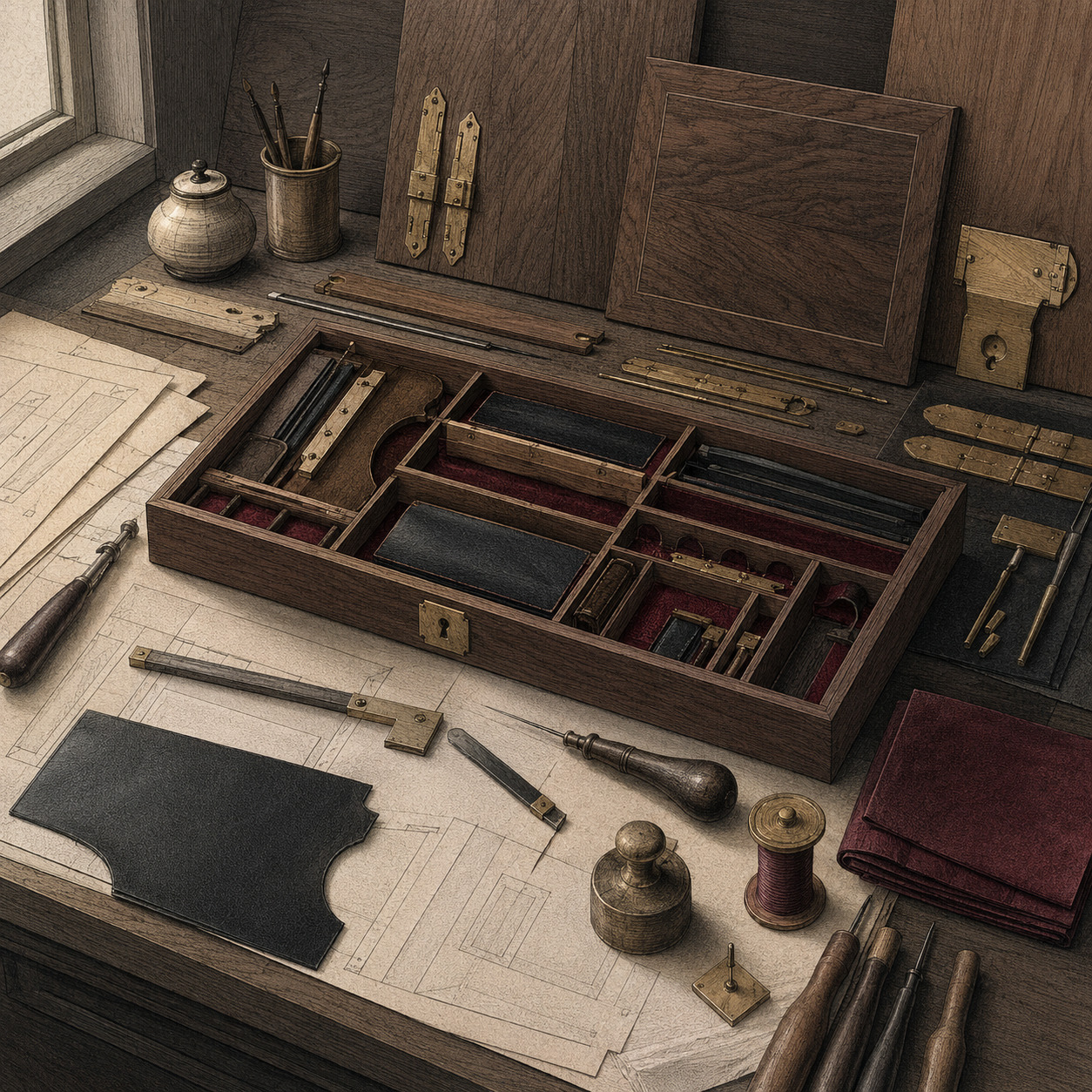
It does not identify the individual exhibits, their materials or their present whereabouts. Those limits matter. They keep the record focused on what the source actually reveals: a historic reputation for fitted organisation, visual refinement and robust construction.
The present-day Leuchars Archive
The Leuchars Archive is maintained by the present-day Leuchars house as an evidence-led record of objects, documents and design associated with the name. It does not claim uninterrupted corporate continuity or ownership of the historic firm’s archive.
Sources
- François Ducuing (ed.), L’Exposition Universelle de 1867 illustrée, volume II, Paris, 1867, page 420; passage signed Prosper Poitevin. Heidelberg University Library.
- Liste générale des récompenses décernées par le jury international, Imprimerie Impériale, Paris, 1867. Internet Archive digitisation. The precise Leuchars entry remains to be visually verified.
- The seven supporting images are original AI-assisted editorial illustrations created for The Leuchars Archive. They are interpretations rather than documentary evidence.
