Evidence note: This record draws on the official 1863 jury report and a contemporary illustrated account of the International Exhibition of 1862. The historic firm documented here is distinct from the present-day Leuchars London.
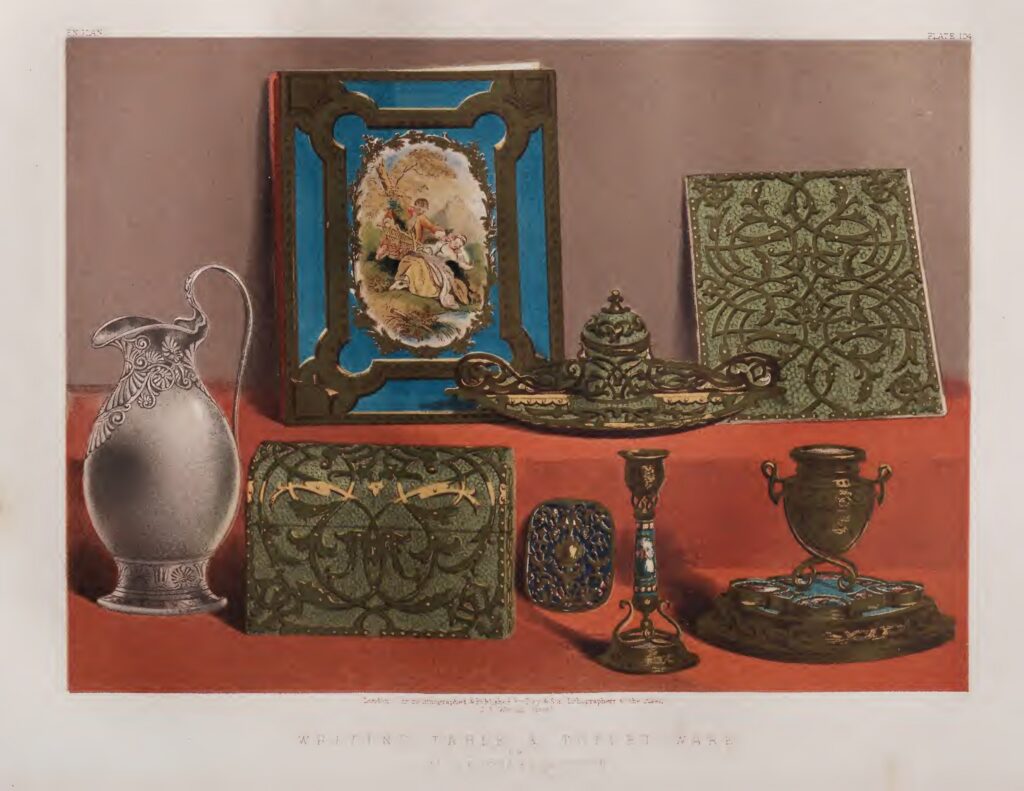
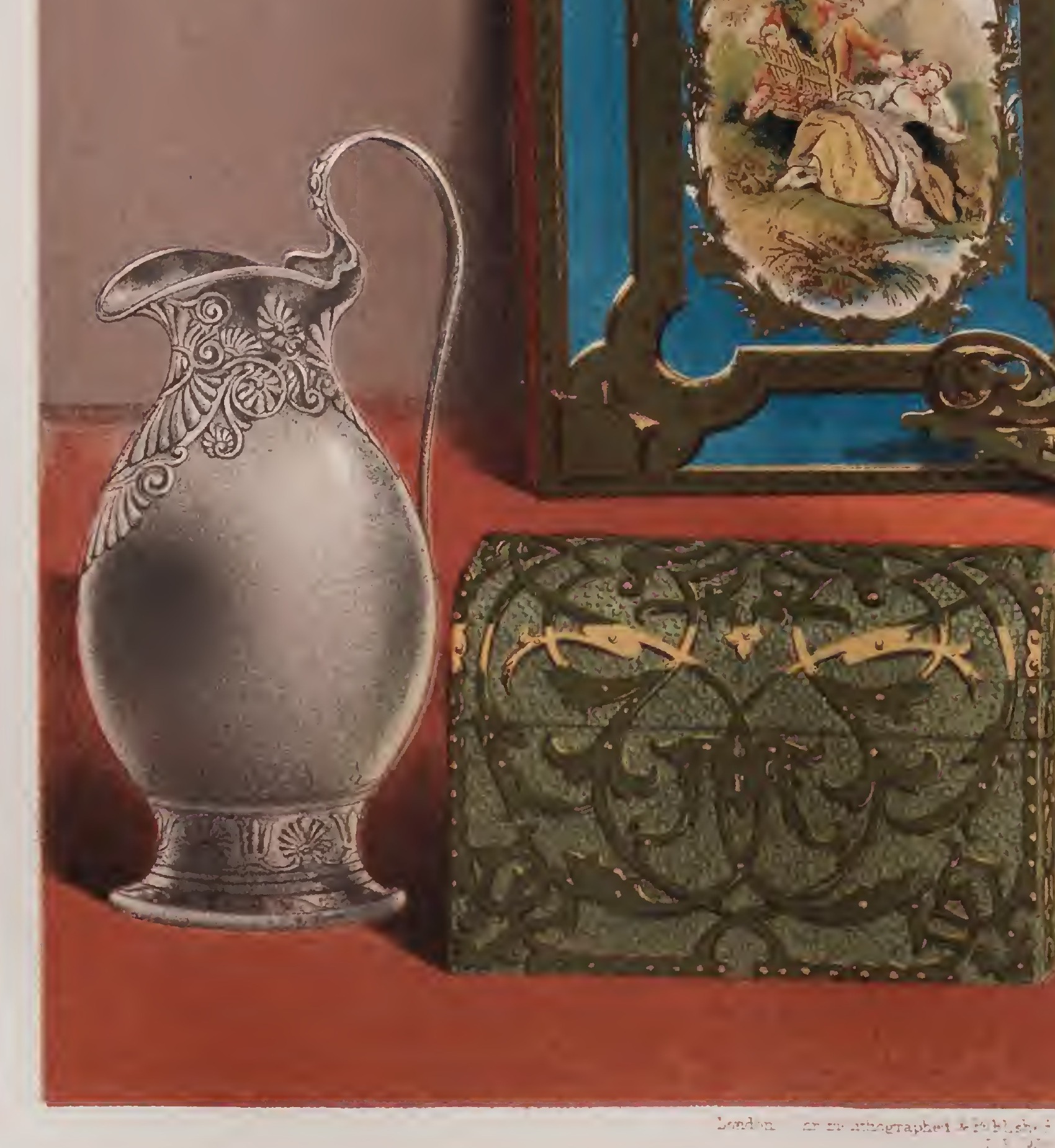
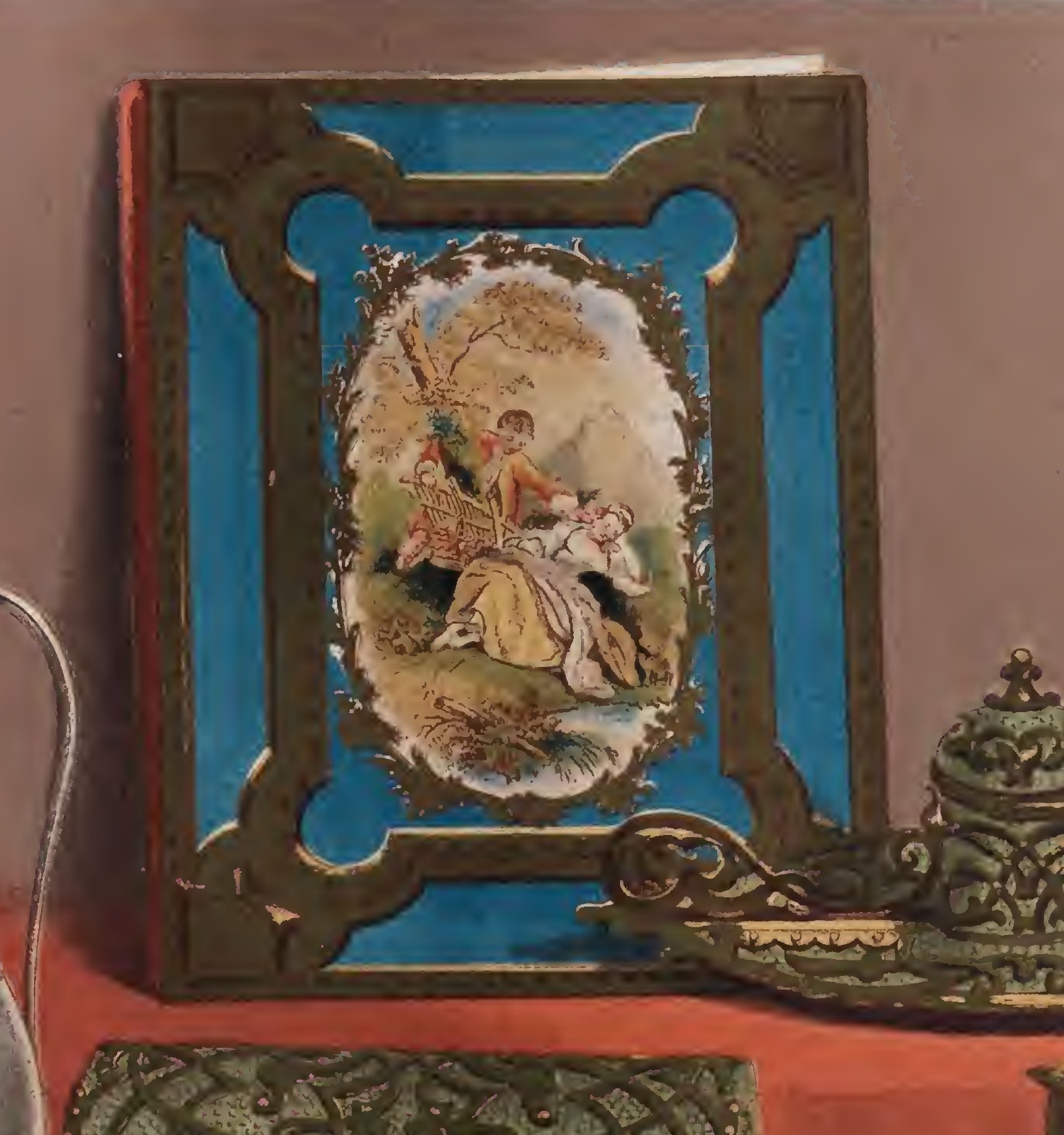
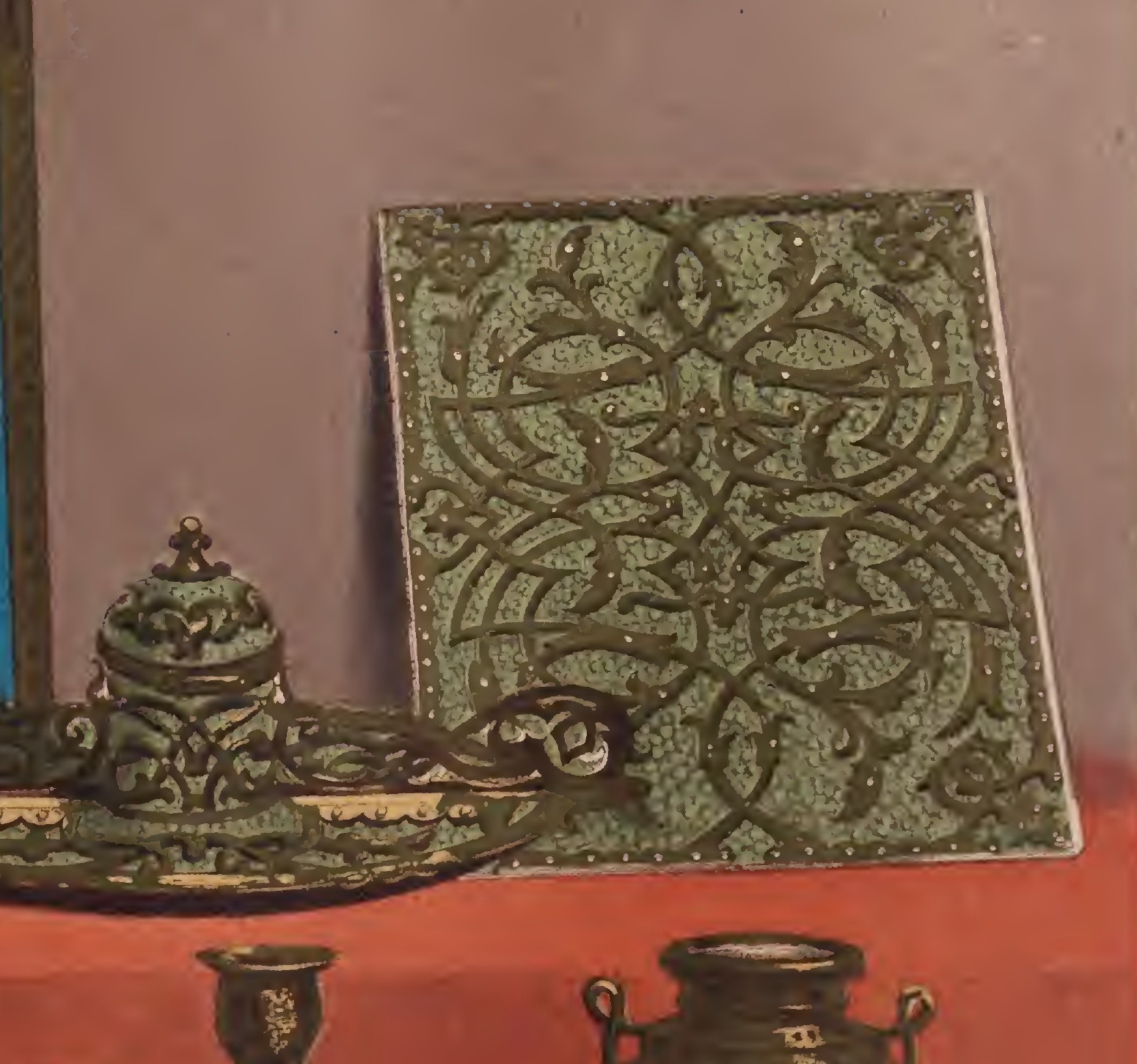
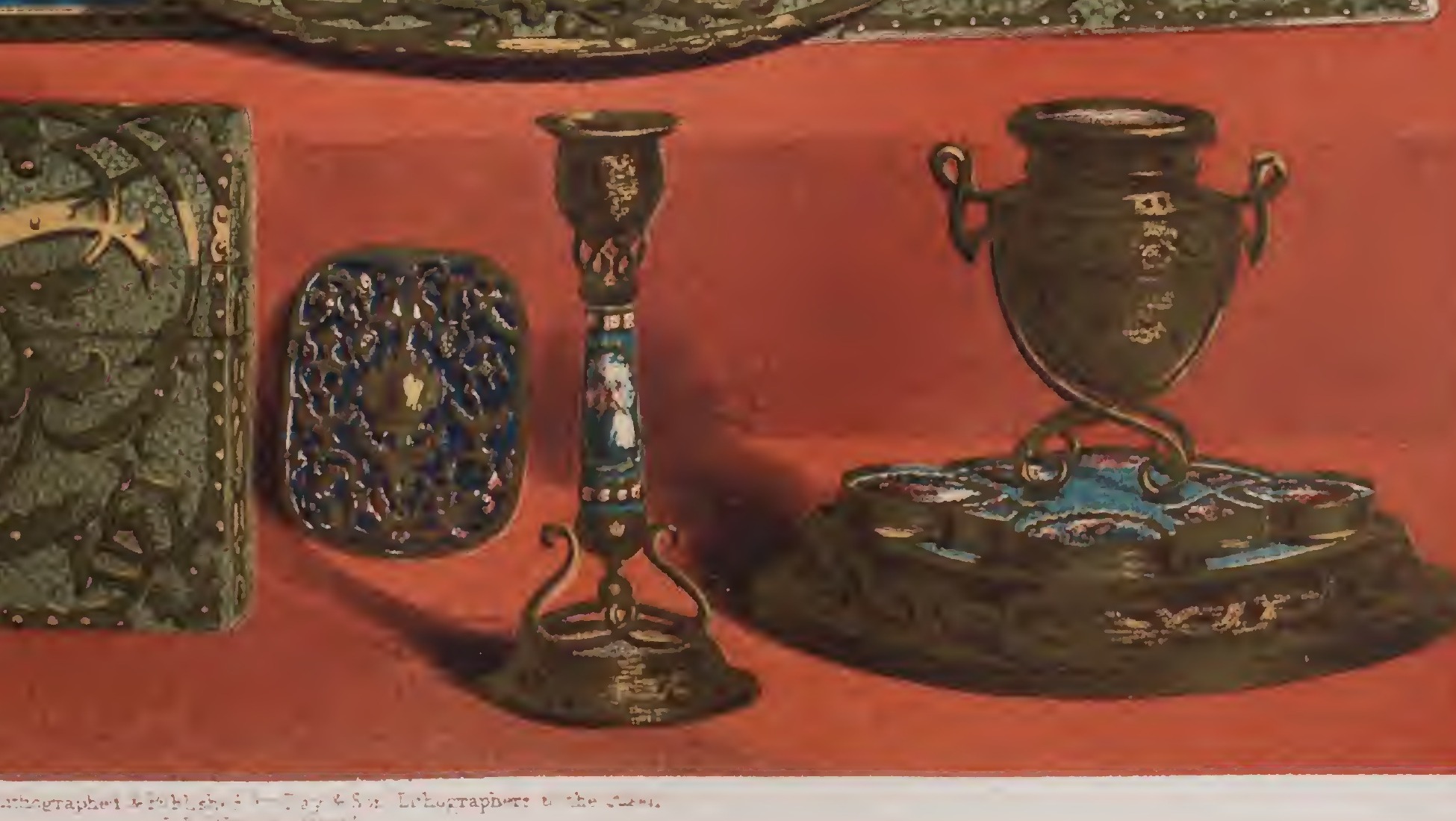
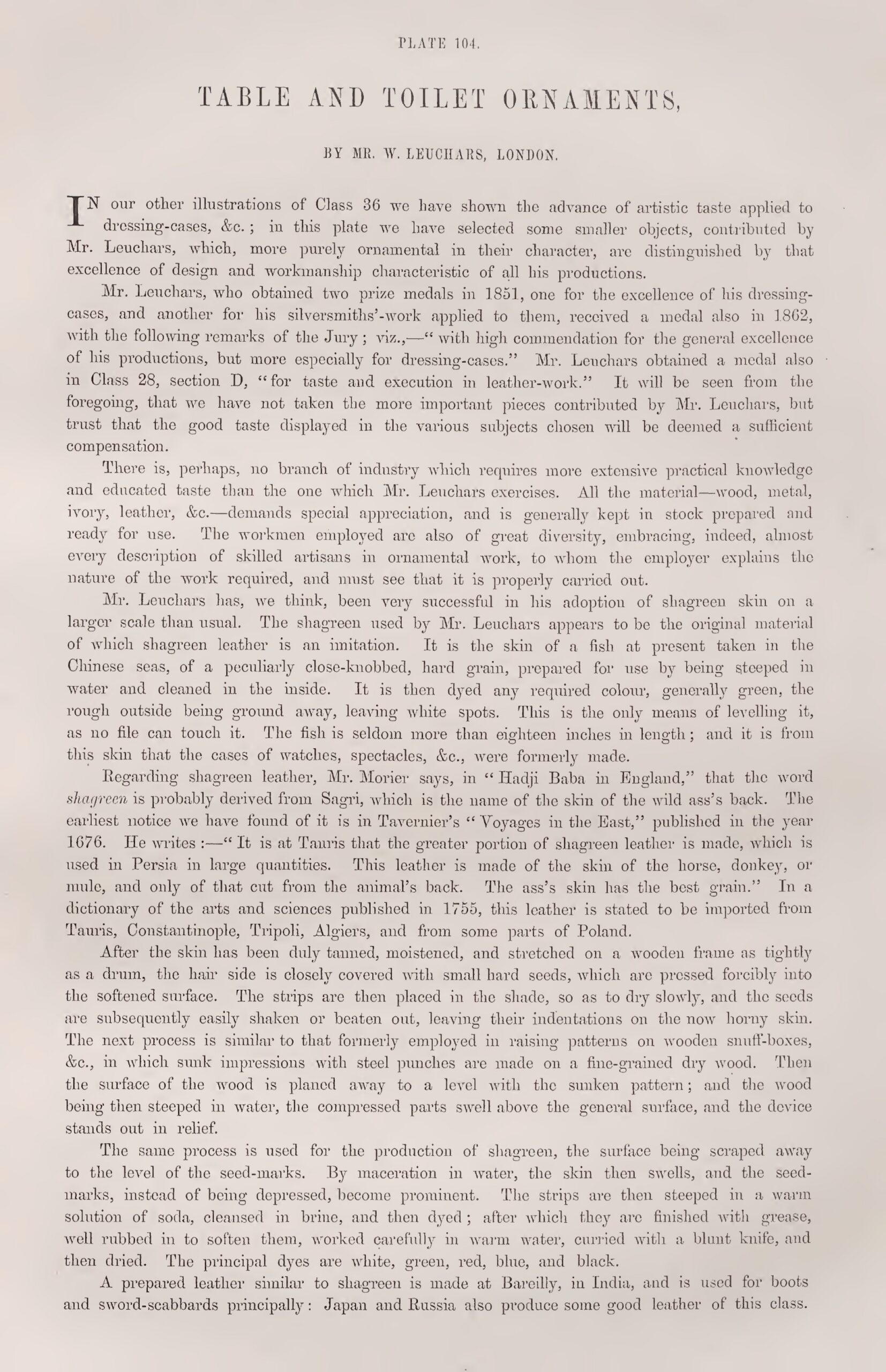
At the International Exhibition held in London in 1862, the historic Leuchars firm was represented by work extending across dressing cases, leatherwork and objects for the table and toilet. A contemporary publication devoted Plate 104 to “Table and Toilet Ornaments, by Mr. W. Leuchars, London”.
The objects selected for Plate 104
The coloured plate presents nine ornamented pieces. They include an ewer and several framed, rectangular, vessel-like and mounted objects. The publication does not identify the pieces individually, and the illustration alone cannot establish their precise functions, materials, makers, dimensions or present locations.
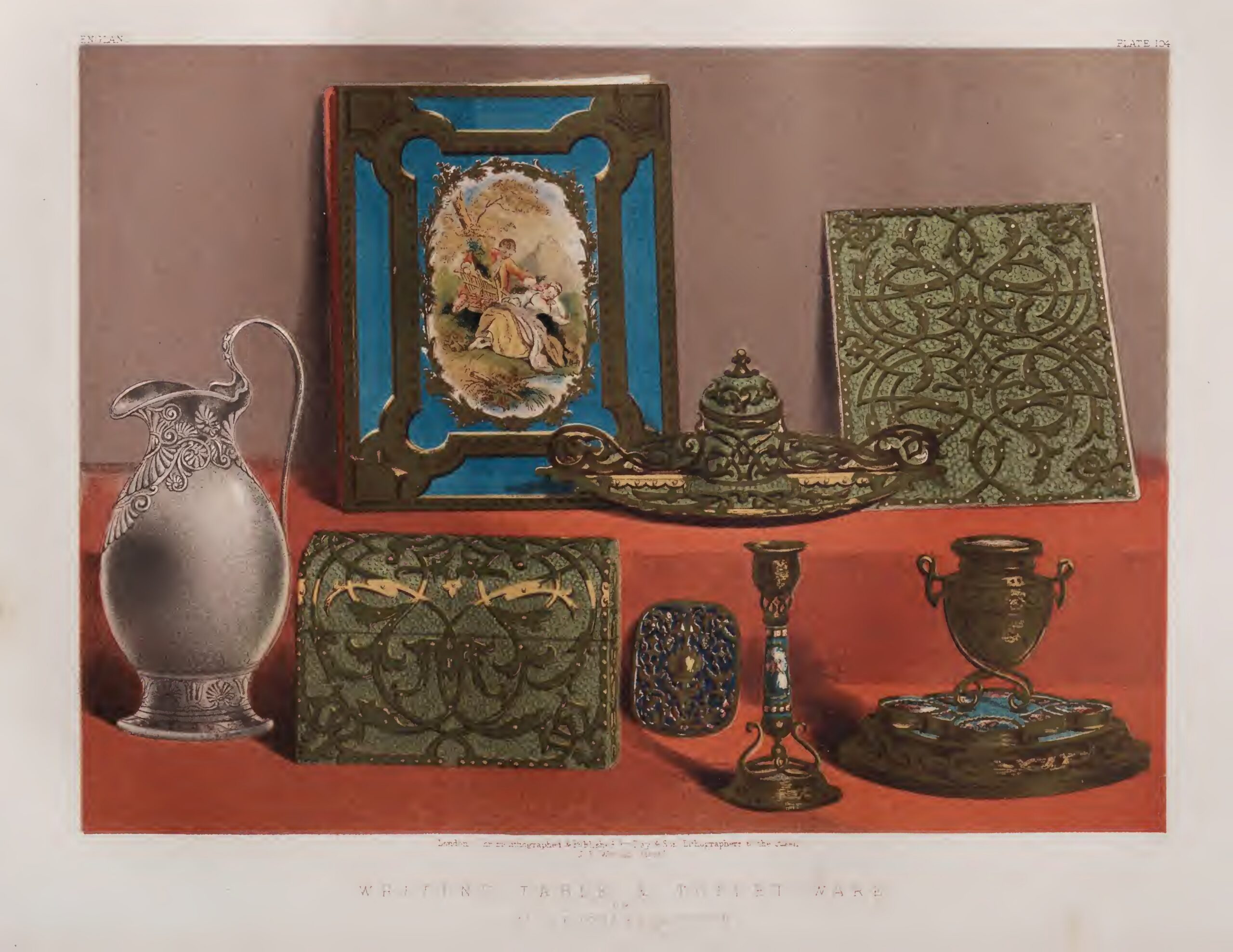
The accompanying account says that the smaller objects selected for illustration were contributed by Leuchars and were distinguished by their design and workmanship. It also notes that they were not necessarily the firm’s most important exhibits.
Recognition by the juries
The official jury report records the exhibition recognition directly. W. Leuchars received high commendation for the general excellence of his productions, particularly dressing cases. A further medal in Class 28, Section D, was awarded for taste and execution in leather work.
Waring’s contemporary account places the 1862 recognition alongside two medals received in 1851: one for dressing cases and another for the silversmiths’ work applied to them. The official 1862 lists and Waring’s account therefore provide related but distinct evidence.
Design and material knowledge
Waring described this field as a demanding multi-material practice. Wood, metal, ivory and leather could meet within the work, requiring both design judgement and the coordination of several specialist crafts. His extended discussion of shagreen and leather preparation shows the importance contemporaries attached to material knowledge and finish.
The nineteenth-century text’s zoological explanation of shagreen is not repeated here as modern scientific fact. The source is useful as evidence of contemporary material understanding, but modern identification would require separate specialist verification.
Evidence and limits
This record documents the historic firm described in sources published after the 1862 exhibition. Leuchars London is a present-day house studying the documented history of the name. The evidence does not establish uninterrupted corporate continuity, ownership of the exhibited objects, an inherited corporate archive or present-day manufacture.
Sources
- Official jury report, Class XXXVI medal list, page 3.
- Official jury report, Class XXVIII, Section D, page 12.
- John Burley Waring, Masterpieces of industrial art & sculpture at the International Exhibition, 1862, volume 2, London, 1863, Plate 104.
- Heidelberg University Library record for Plate 104.
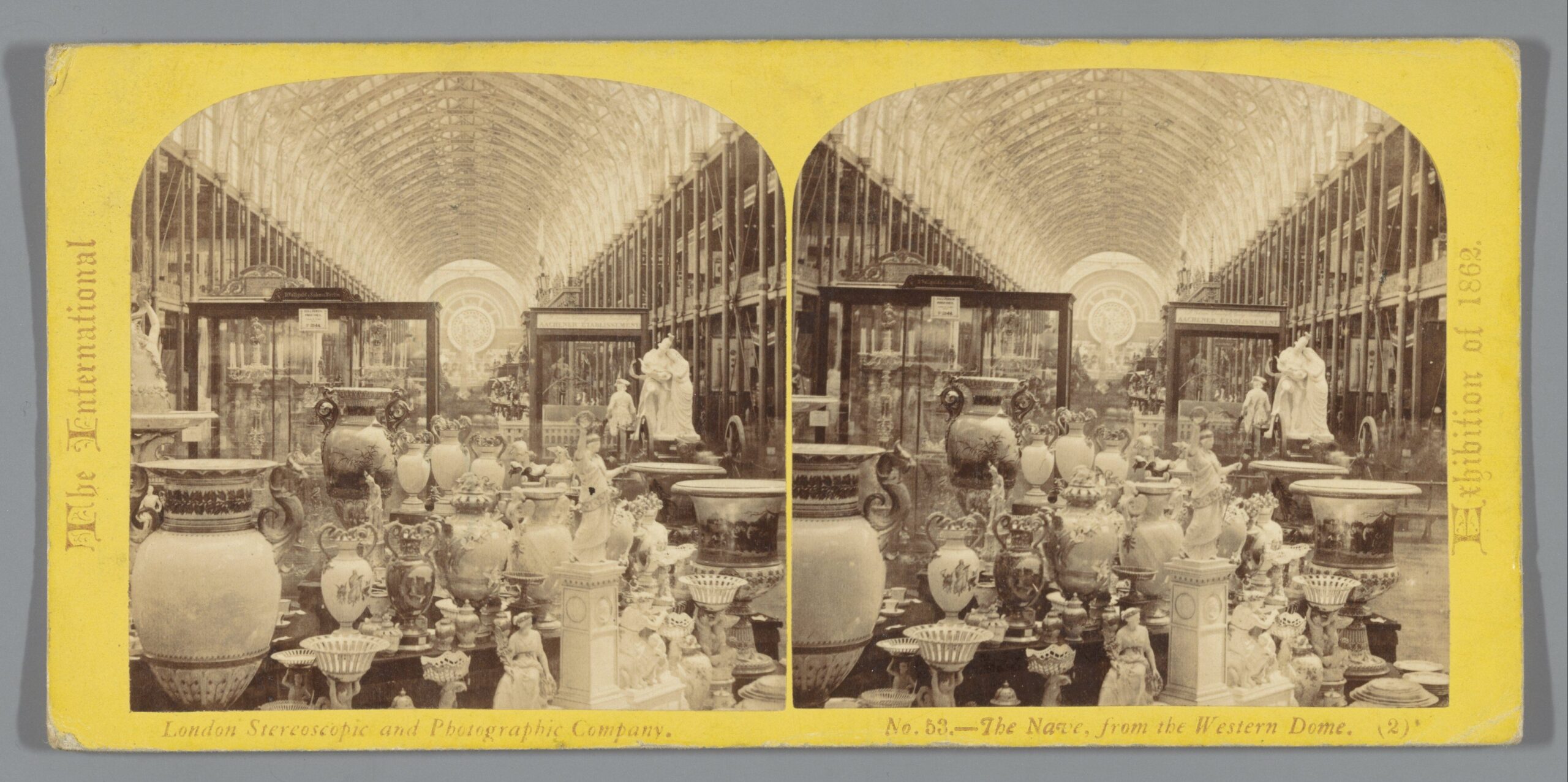
- Rijksmuseum, RP-F-F10853, William England’s stereoscopic view of the exhibition nave, 1862.
