
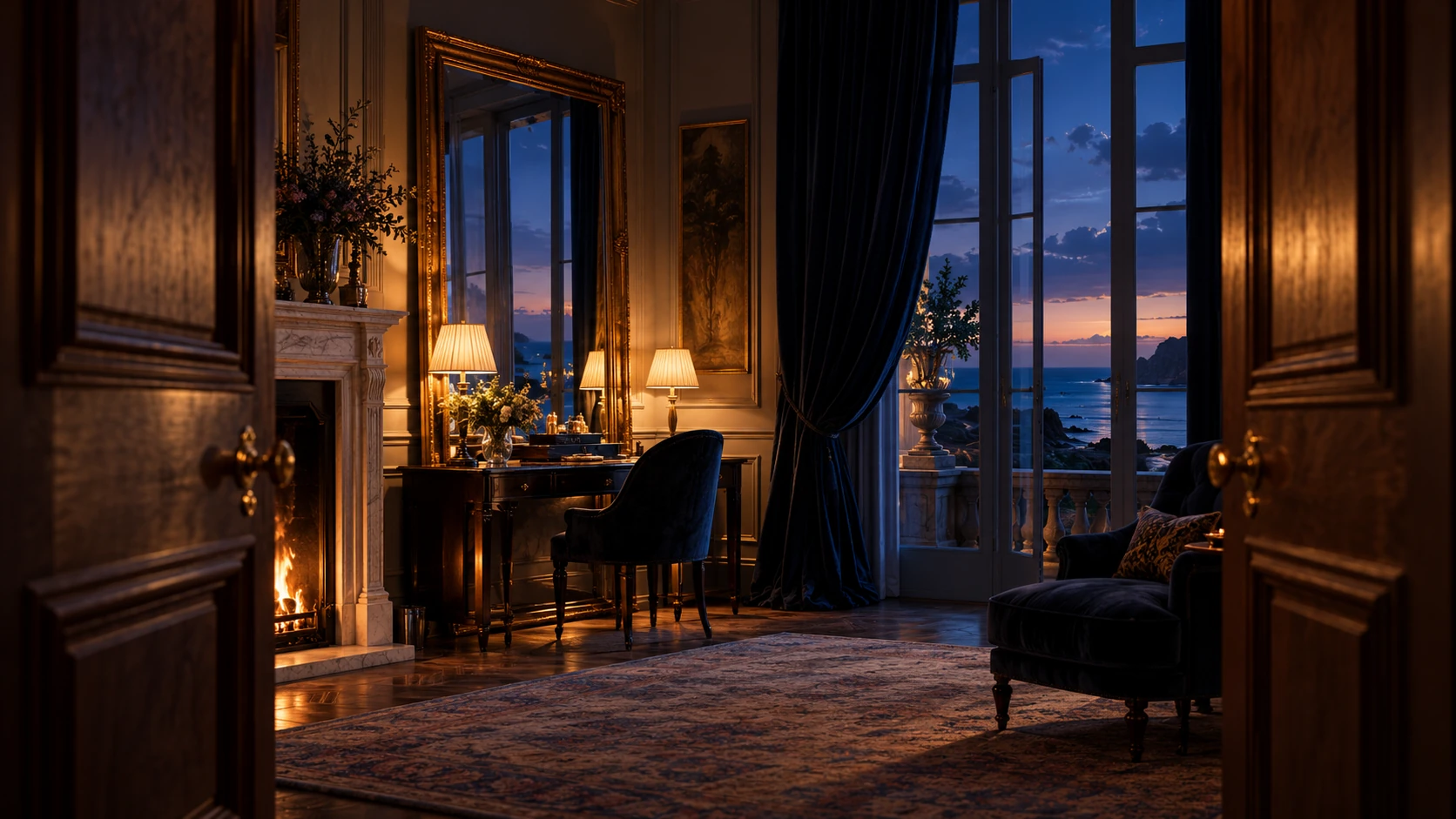
A dressing case brings the objects of a personal routine into one arrangement.
Brushes, bottles, mirrors and smaller implements differ in shape, material and purpose. The case gives that variety a common setting, with an interior considered around the objects it contains.
Its character lies in the ensemble: the exterior, the fittings, and the relationship between one piece and the next.
The fitted interior
One case.
Many objects.
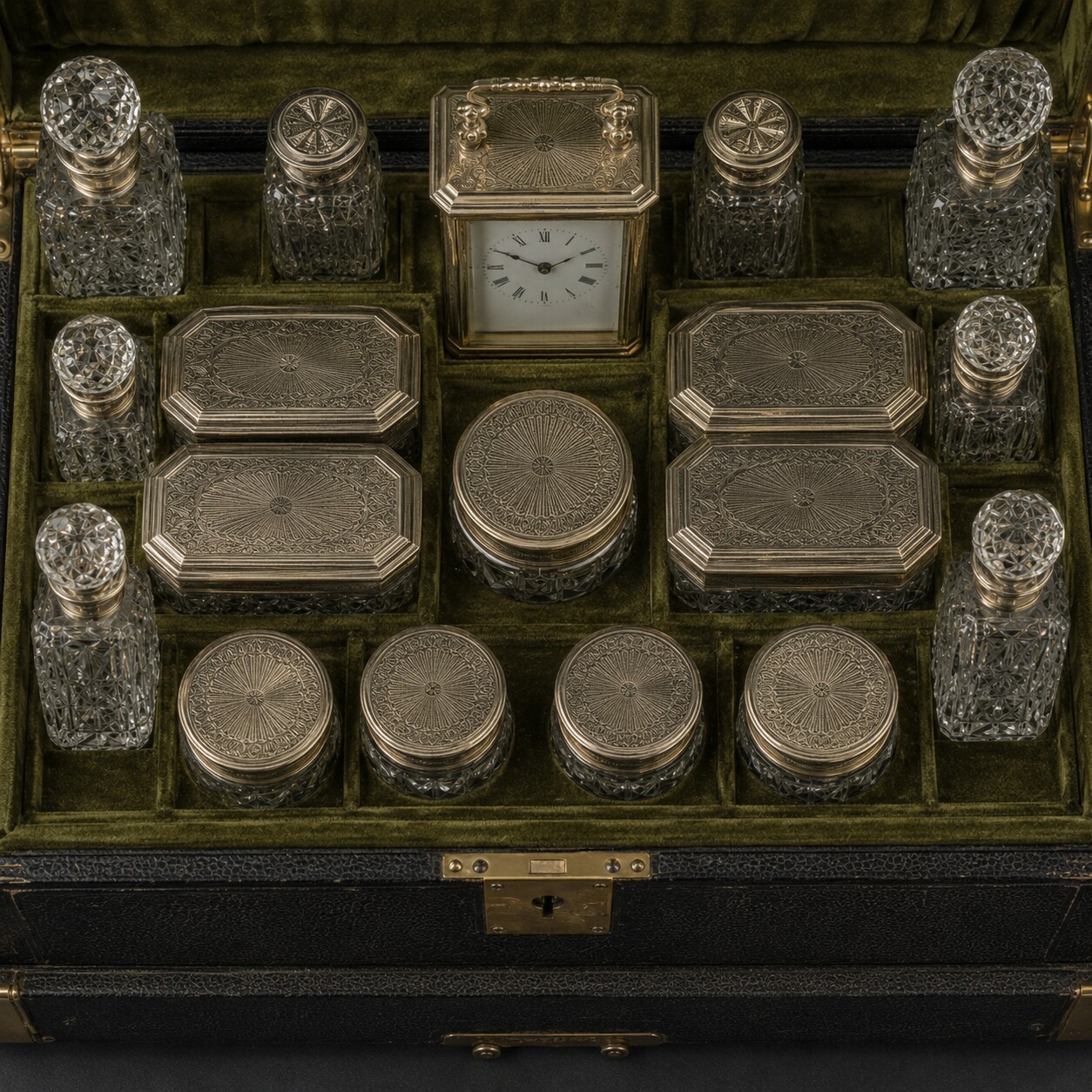
Glass vessels, covered boxes, a clock: distinct forms brought into a common setting. The space between them matters as much as the objects themselves.
A case may reveal itself gradually, through trays and compartments. Access is part of its design, as well as storage.
The Fitted InteriorSeveral disciplines
Glass. Metal. Leather.
Case makers, glassworkers and metalworkers can contribute to one ensemble. In the service reconstructed above, the catalogue records Aucoc marks on the silver covers and Leuchars & Son Geffroy Sr on the clock. Neither identifies a single maker of the whole.
Materials & Details
Private life and travel
A routine, carried.
A room changes. Familiar objects remain. The dressing case connects the intimacy of a personal routine with the anticipation of a journey.
Explore travelA travelling service in the Archive
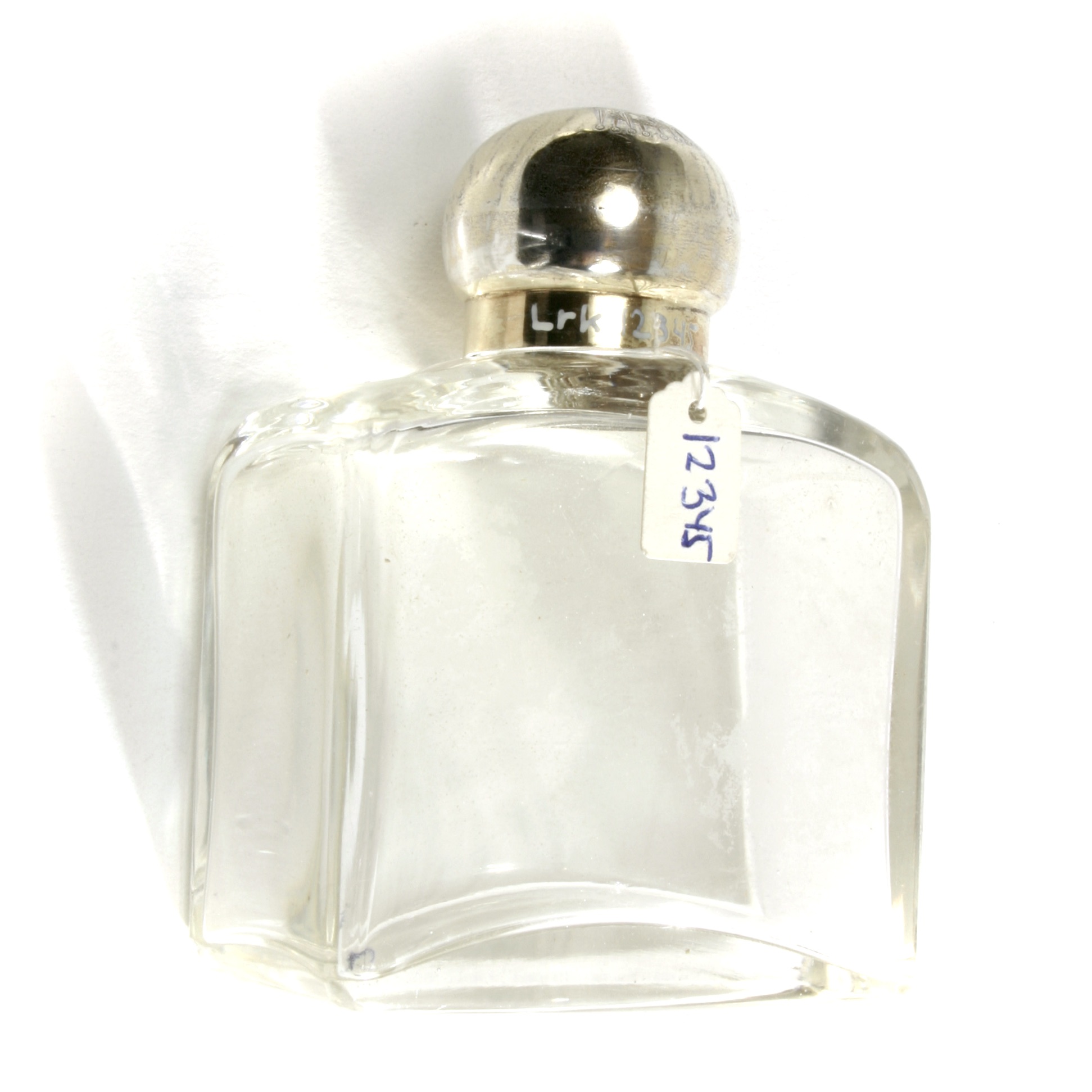
The illustrated bottle belongs to the museum group examined in Archive Record 007. Read the record for its museum sources, dating and attribution. It is a historical reference, not current stock. Photograph: Livrustkammaren/SHM, CC BY 4.0.
The opening room and ocean-liner scene are imagined campaign settings. To understand an original case, begin with an inventory of its surviving contents: a complete-looking arrangement does not establish that every piece belongs to the original set. Reading an original.
Leuchars London
A question about a case?
For an existing dressing case, begin with its dimensions, marks and surviving contents.
For a contemporary enquiry, describe the objects to be held and how the case will be used.
