
An object has several stories: who made it, who supplied it, how it was used and what has happened to it since.
These stories may overlap, but they are not interchangeable. A name on a case, a hallmark on a silver component and an address on a label can each establish something different.
The Leuchars Archive and individual object descriptions should make those distinctions clear, allowing the evidence to be read at the level of the whole object and its parts.
01 / Marks
Begin with
what is present.
Record the wording exactly, including the name, address and the part on which it appears. Distinguish a stamped case name from a paper label, an engraved retailer’s address and a maker’s mark on a separate component.
A Leuchars mark establishes an association with the marked part. Further evidence is needed before attributing the complete manufacture of a fitted ensemble to the same business.
Photographs should show both the mark and its position within the object.
02 / Construction
The case
and its components.
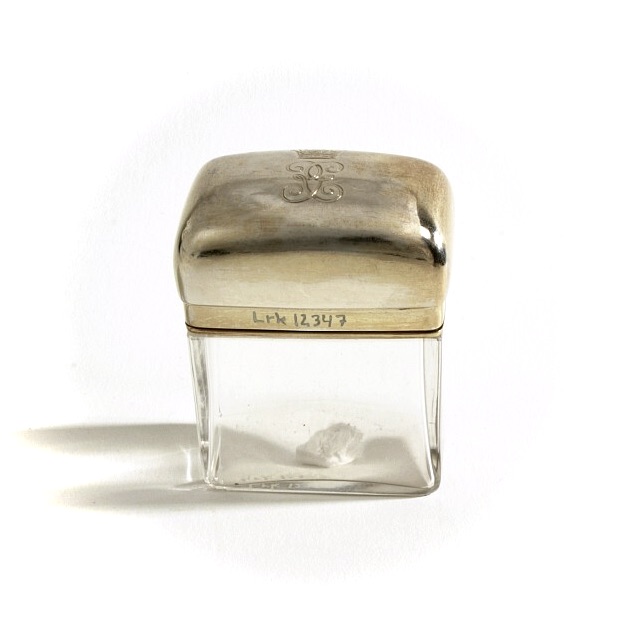
Look at the covering, structure, lining, fittings and contents as related parts. Their materials and construction may support a coherent date or reveal changes to the arrangement.
A fitted set can include components from different specialist makers. Replacement contents, later additions and alterations should be distinguished where the evidence allows.
Materials and details03 / Date
A date,
or a date range.
A dated document, hallmark, address or museum catalogue may support the dating of a particular part or object. The date of a component does not by itself establish when every part was assembled or sold.
Where the evidence supports only a period or approximate date, that degree of confidence should remain visible in the description.
Reading a document
A date on paper.
An object still to identify.
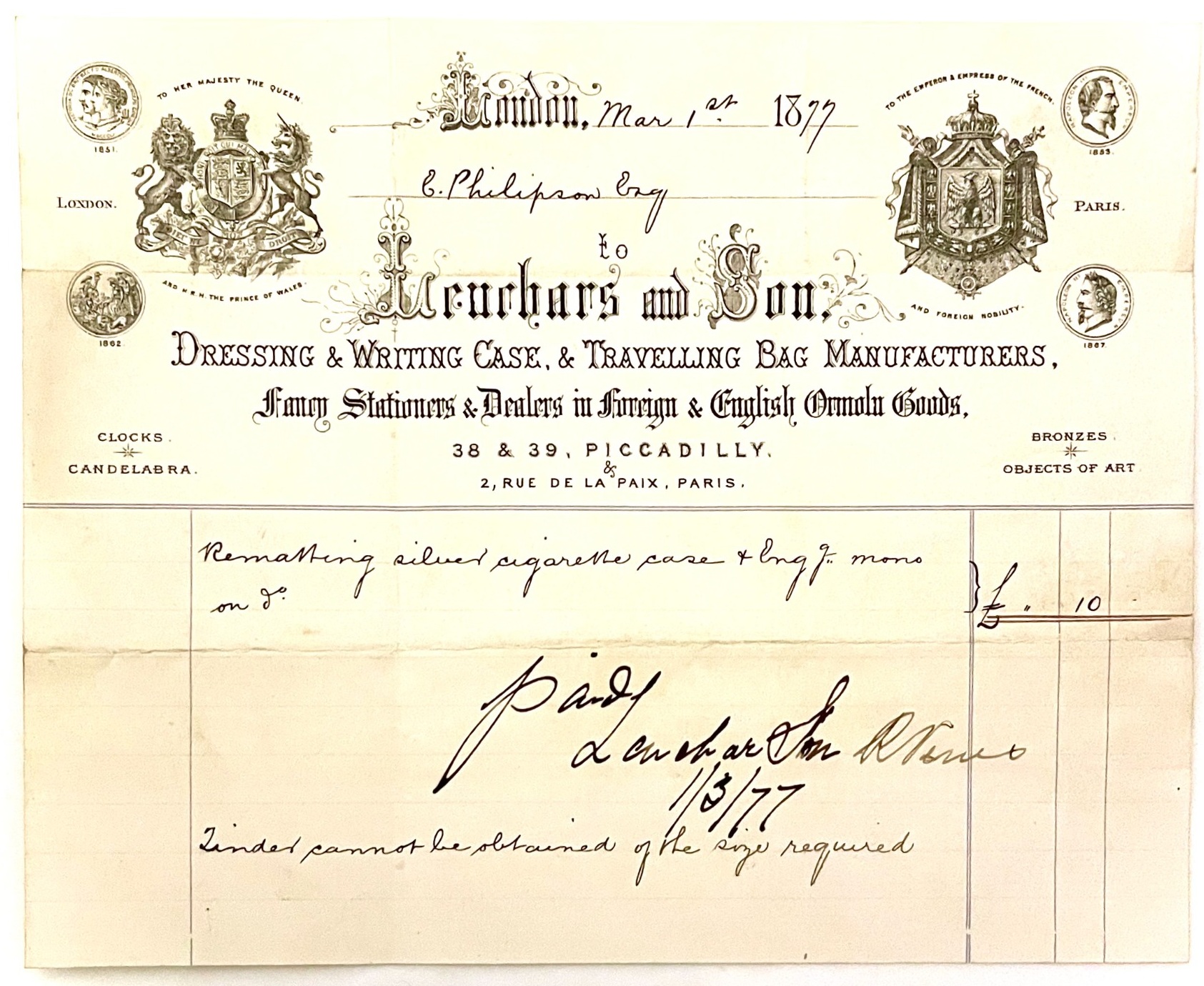
This bill records work on a silver cigarette case. It gives a date and a customer name; the opening word remains uncertain, and the case itself has not been identified.
The document is evidence of a transaction. Connecting it to a surviving object would require further evidence.
Examine the bill and its transcription04 / Provenance
The documented
route of an object.
Provenance concerns an object’s ownership and passage through time. An invoice, inventory, collection record, inscription or family document may contribute to it.
A reported tradition is different from a documented transfer. Both can be recorded, with the nature and limits of the information made clear.
Documented objects in the Archive05 / Condition
What survives.
What has changed.
Wear, loss, repair and restoration form part of an original’s present condition. Descriptions should distinguish observable condition from work known to have been undertaken.
A replacement lining, repaired hinge or incomplete interior may matter to understanding and use. The relevant detail belongs beside clear photographs of the particular object.
Care and maintenanceThree kinds of object
A historical reference is studied through its sources. A museum or collection object in the Archive is not implied to be owned by Leuchars London or available for purchase.
A historic original offered for sale requires a description of that individual piece: attribution, date confidence, dimensions, contents, marks, condition, known restoration and availability.
A contemporary Leuchars piece requires its own account of design, materials, actual making and available options. Historical references may inform it, but do not establish its age or manufacturing origin.
Making an enquiry
Bring the details
together.
Describe the object, its dimensions, exact marks and condition, together with any documents or known history. State which part of the object raises your question. Photographs may help an enquiry develop, but an image or a mark alone may leave questions unresolved.
The contact route is for enquiries about the object and its evidence. Any inspection or further work must be agreed for the particular piece.
Ask about an objectRead the evidence in practice.
Crown Prince Gustaf’s travelling service brings together recorded materials, different marks, a personal monogram and museum provenance. The record identifies its catalogue sources and the questions that remain open. Photograph: Livrustkammaren/SHM, CC BY 4.0.
Franz Joseph I’s travelling writing kit offers a different route into provenance. The study follows the ownership history recorded by Dorotheum, with the auction catalogue clearly identified as the source. Read it alongside the museum record to see how different kinds of documentation contribute to an object’s history.
Leuchars London
