
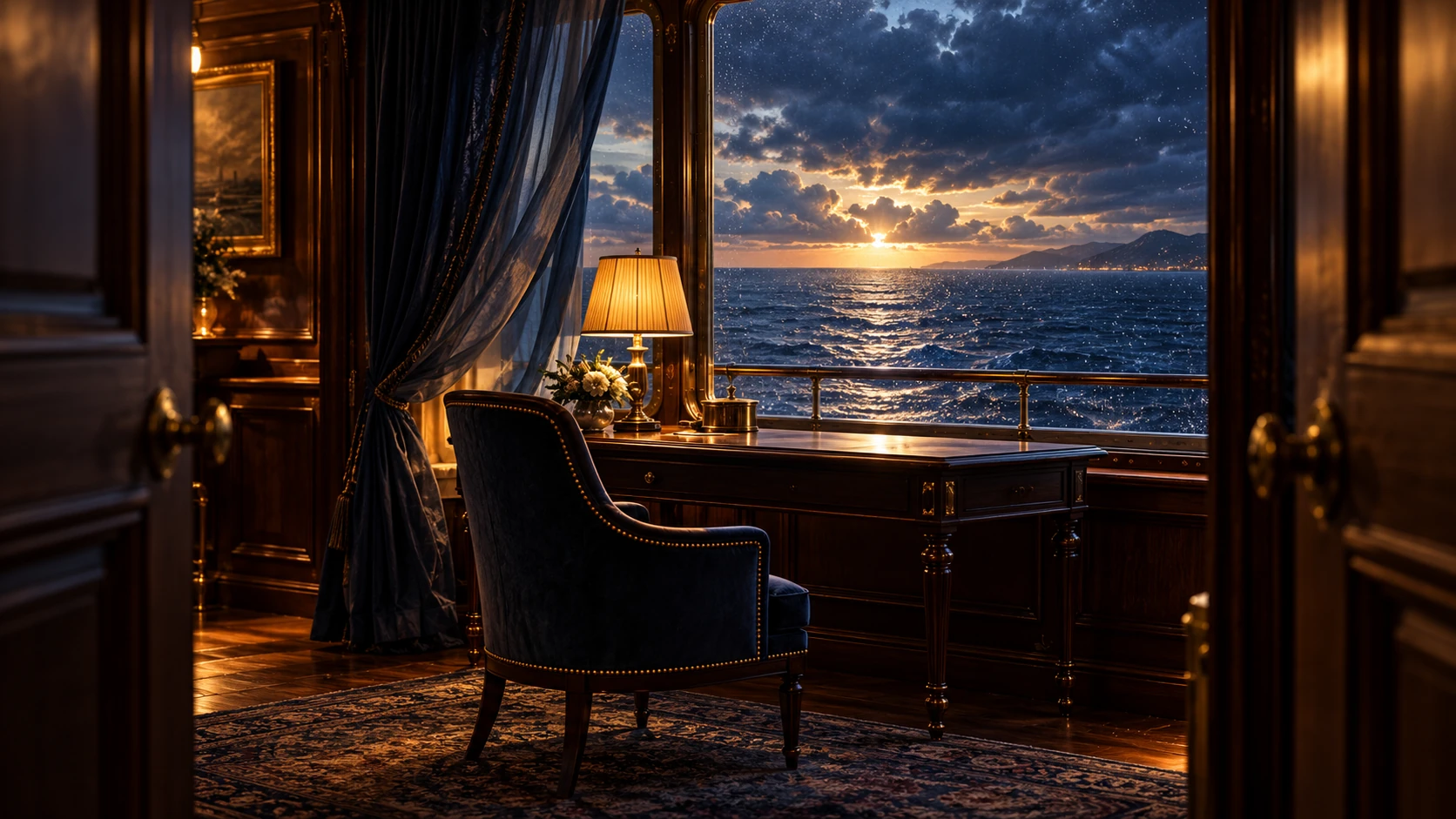
A desk need not remain in one room.
Paper, correspondence and writing instruments make a portable world of their own. A writing travel case considers how these materials are kept, reached and used away from the study.
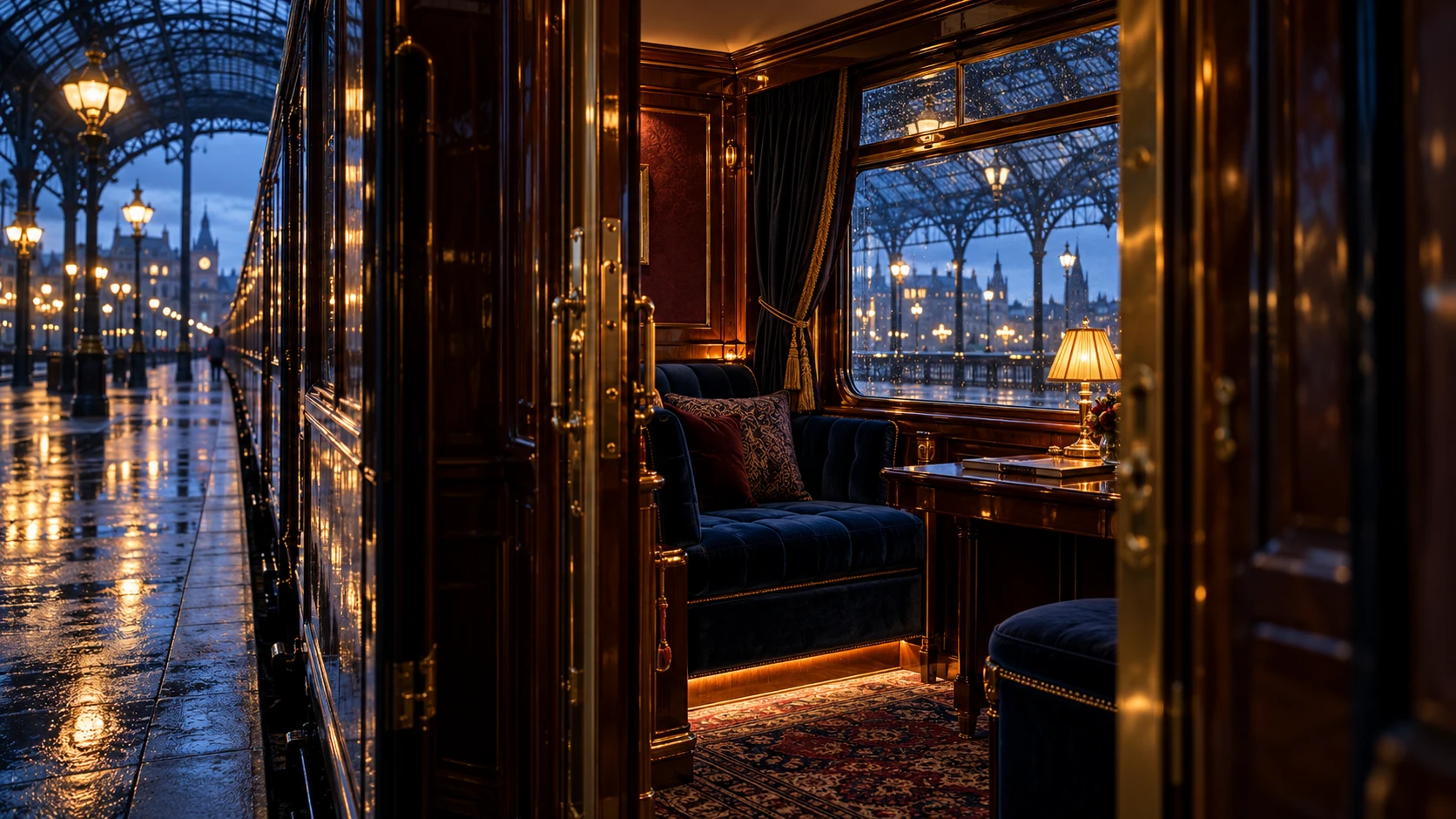
Between departure and arrival
A little time to write.
A journey leaves room for a letter, a note, a thought worth keeping. Paper and instruments brought from home make a temporary study wherever there is a quiet surface and a moment to pause.
The order of correspondence
Kept for an answer.
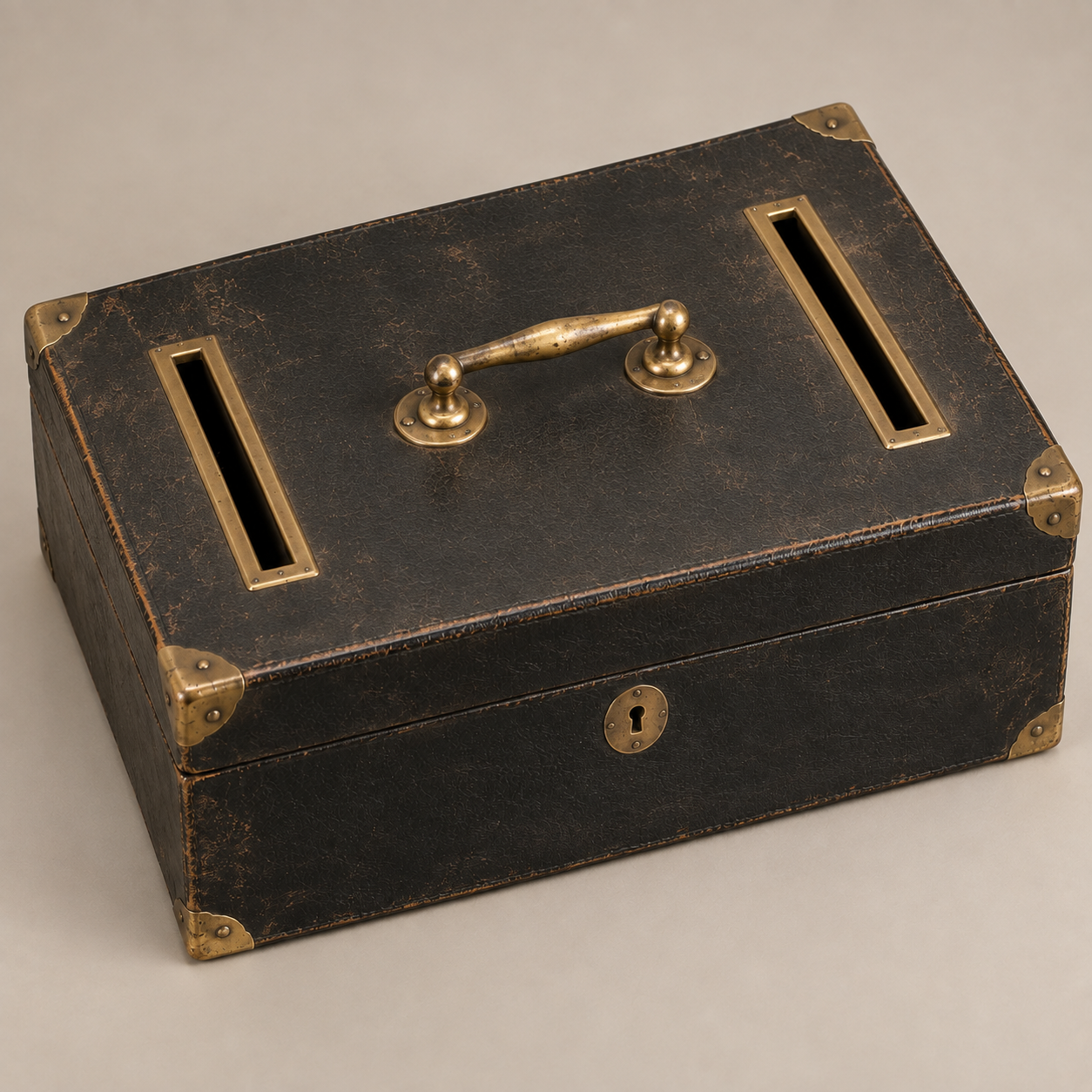
“Answered” and “Unanswered”: two words recorded in the auction description of a W. Leuchars-labelled correspondence box. They organise papers by the attention still required.
This is a box for keeping correspondence, rather than evidence of a portable writing surface. Its former owner and journeys are unknown.
Read the correspondence-box recordFrom the surface to the interior
A place for the papers.
The slots receive a letter; the interior gives it a place. This reconstructed view opens the correspondence box to imagine the space within.
Keeping papers and writing on them are different needs. Some cases store correspondence; others unfold into a writing surface. Check how the parts rest and move before use, without forcing joints or assuming an old surface remains sound.
Explore writing cases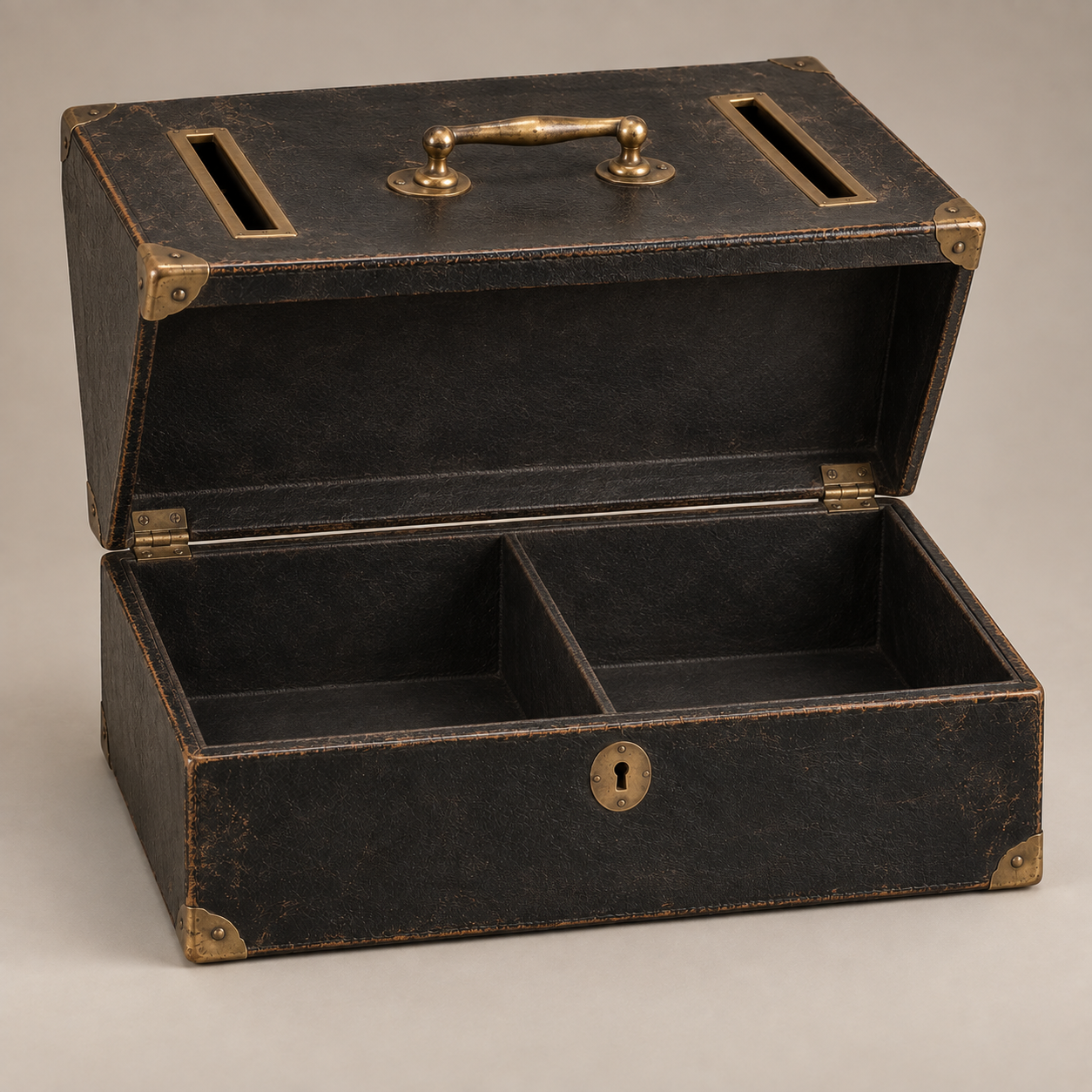
The study and railway scenes are imagined settings within the Leuchars world. The correspondence-box images are editorial reconstructions, not documentary evidence. Historical objects, marks and attribution limits are recorded in the Archive. Availability, materials and condition of any offered piece are stated in its individual description.
Look closer
A particular object.
A personal question.
For an enquiry about a case, an object or a mark, begin with the details you can see.
