

A place to write. A place to keep what is written.
A writing case gathers paper, instruments and correspondence around an individual way of working. Its interest lies in the balance between storage and a surface for use.
A correspondence box, an instrument case and a folding writing surface have related purposes, but different forms. The contents and construction of each object should tell its particular story.
From the Archive / The life of a letter
Answered.
Unanswered.
Some papers ask for action. Others belong to the record.
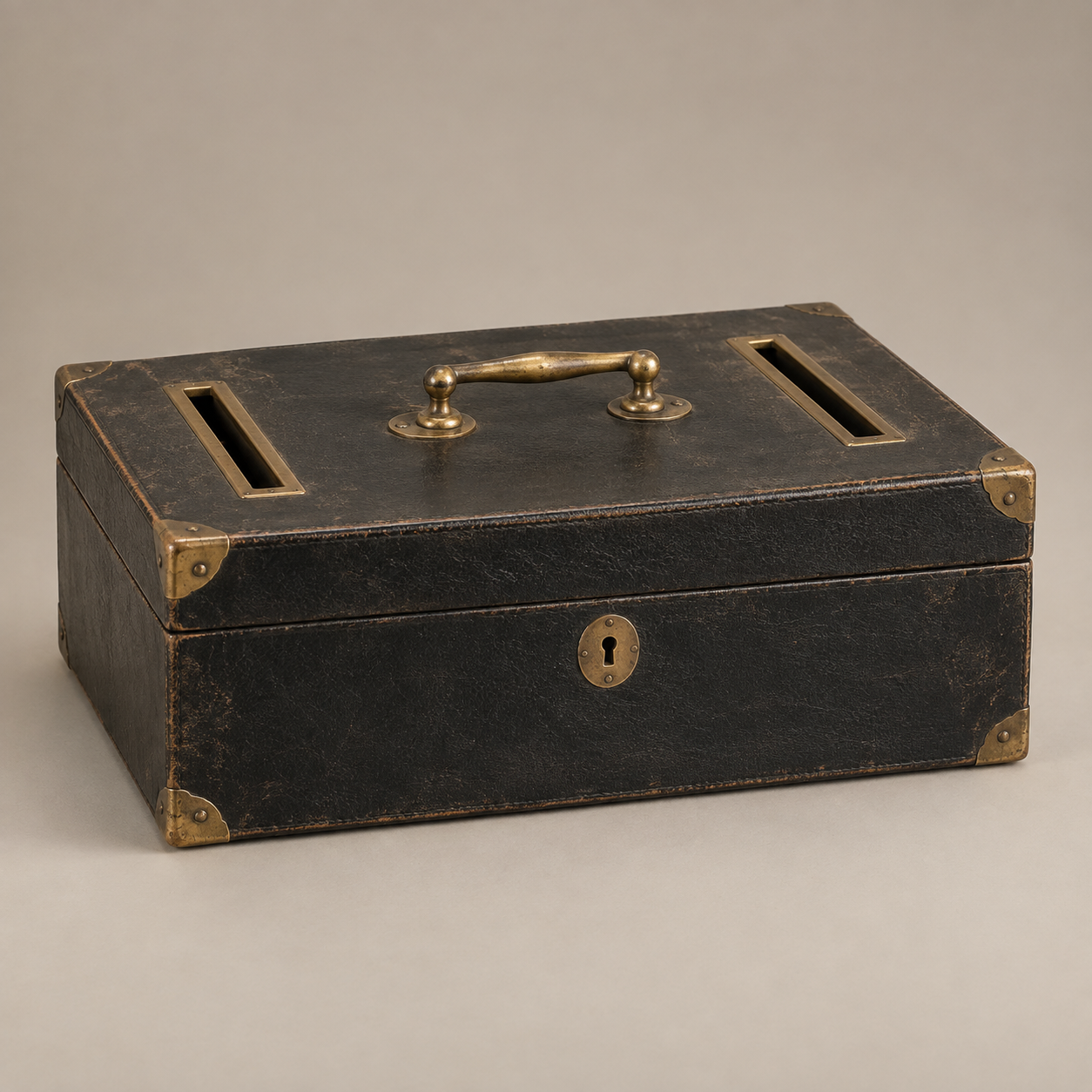
Austin Auction Gallery described a late-nineteenth-century black leather correspondence box with a central brass handle, two mail slots and a W. Leuchars label. Its catalogue records the words “Answered” and “Unanswered”.
The reconstructed views below interpret that arrangement. Explore the Archive for the label, lock and limits of the surviving evidence.
- Catalogue period
- Late 19th century
- Arrangement
- Two mail slots
- Archive
- Record 012
Receiving / Keeping
The life of a letter.
Seen from above, the box offers two openings. Opened, it reveals a division within. These reconstructed views explore the relationship between receiving correspondence and giving it a place.
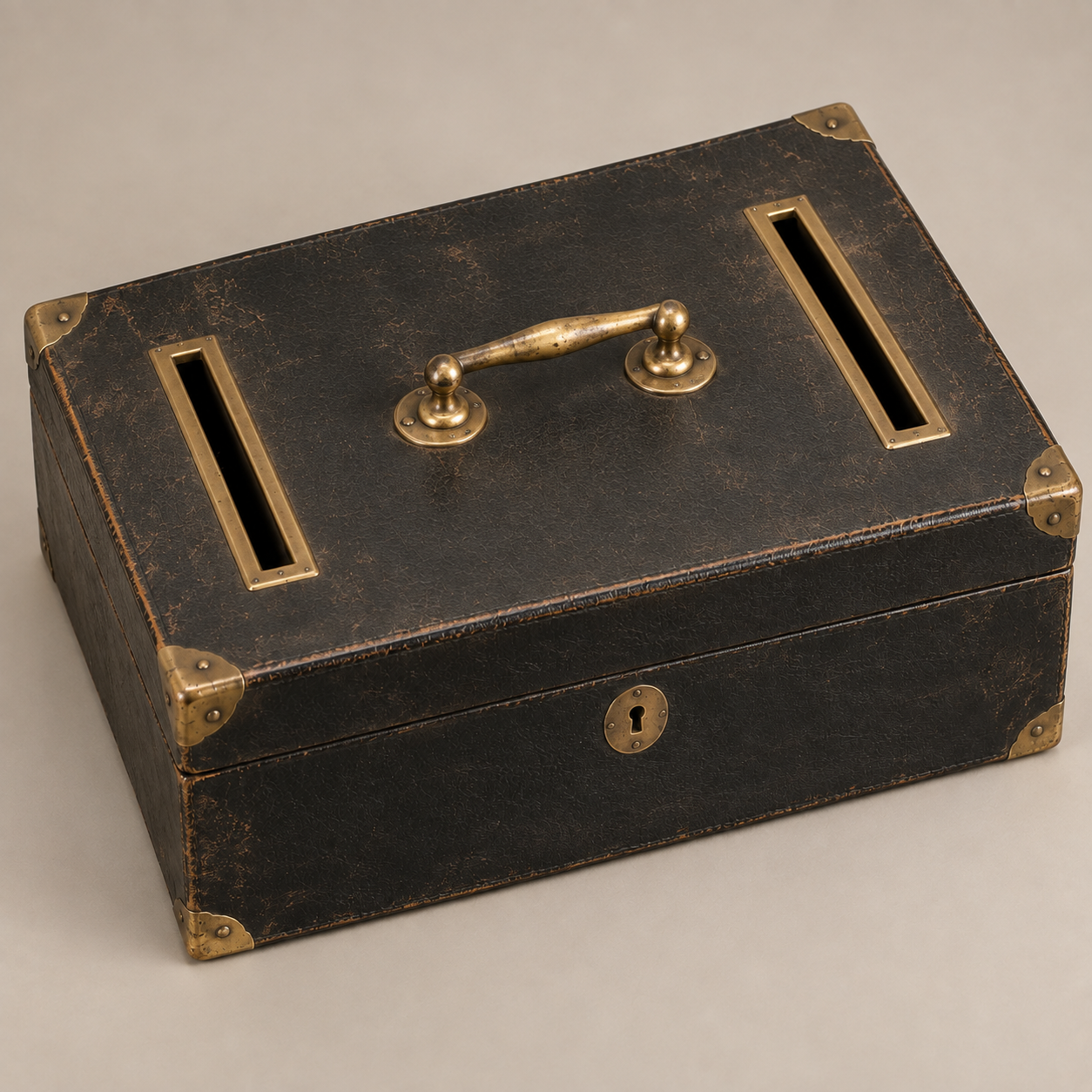
An invitation to reply.
The catalogue’s “Answered” and “Unanswered” suggest an order based on attention: what still asks something of us, and what can be kept.
Read the correspondence record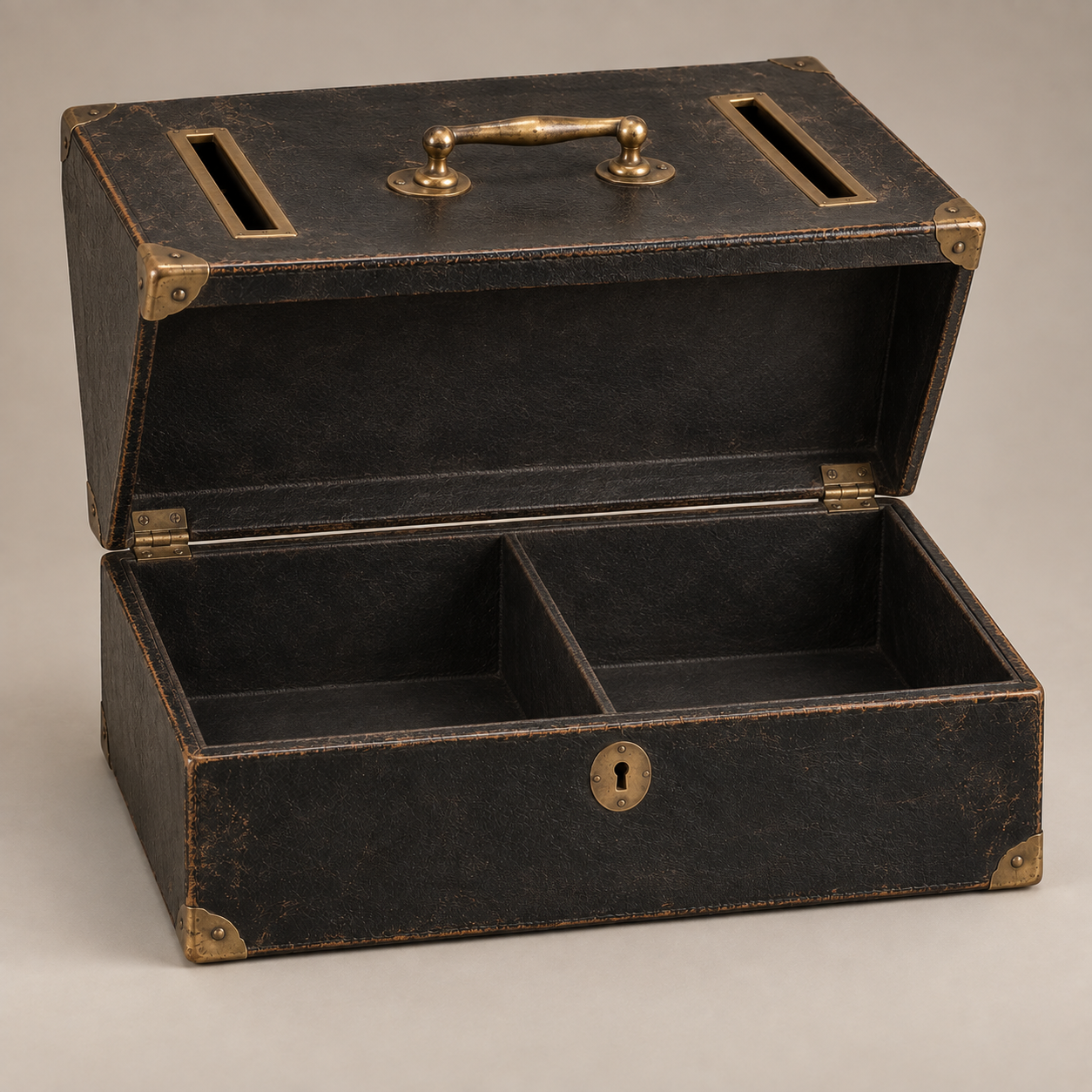
A place for what remains.
A letter, a card, a note worth returning to. The divided interior brings the story from the surface of the box to the papers it might hold.
Explore the fitted interiorBeyond the correspondence box
From keeping to writing.
A correspondence box stores papers; a writing case may also provide a surface for use. Paper size, instruments, weight and access shape that different brief, whether at a table or away from the study.
For an existing case, assess its construction and condition before putting old fittings or hinges into regular service.
Looking at an original
Inside the case.
Look for surviving fittings, later additions, marks and signs of alteration. A vacant recess is evidence of an arrangement, but does not by itself identify the missing object.
Dating and attribution should be tied to the evidence that supports them.
Provenance & AuthenticityCampaign image: an imagined world of travel, created for Leuchars.
Leuchars London
A question about a case?
For a historic writing case, include dimensions, visible marks and a description of the interior.
For a contemporary enquiry, begin with the instruments, paper format and intended use.
