
The case begins with the watch.
A watch has a shape, a weight and a way of being worn. Its place within a case should respond to all three. A fitted interior is an arrangement of space, support and access, rather than simply a row of compartments.
Before departure
The moment of choosing.
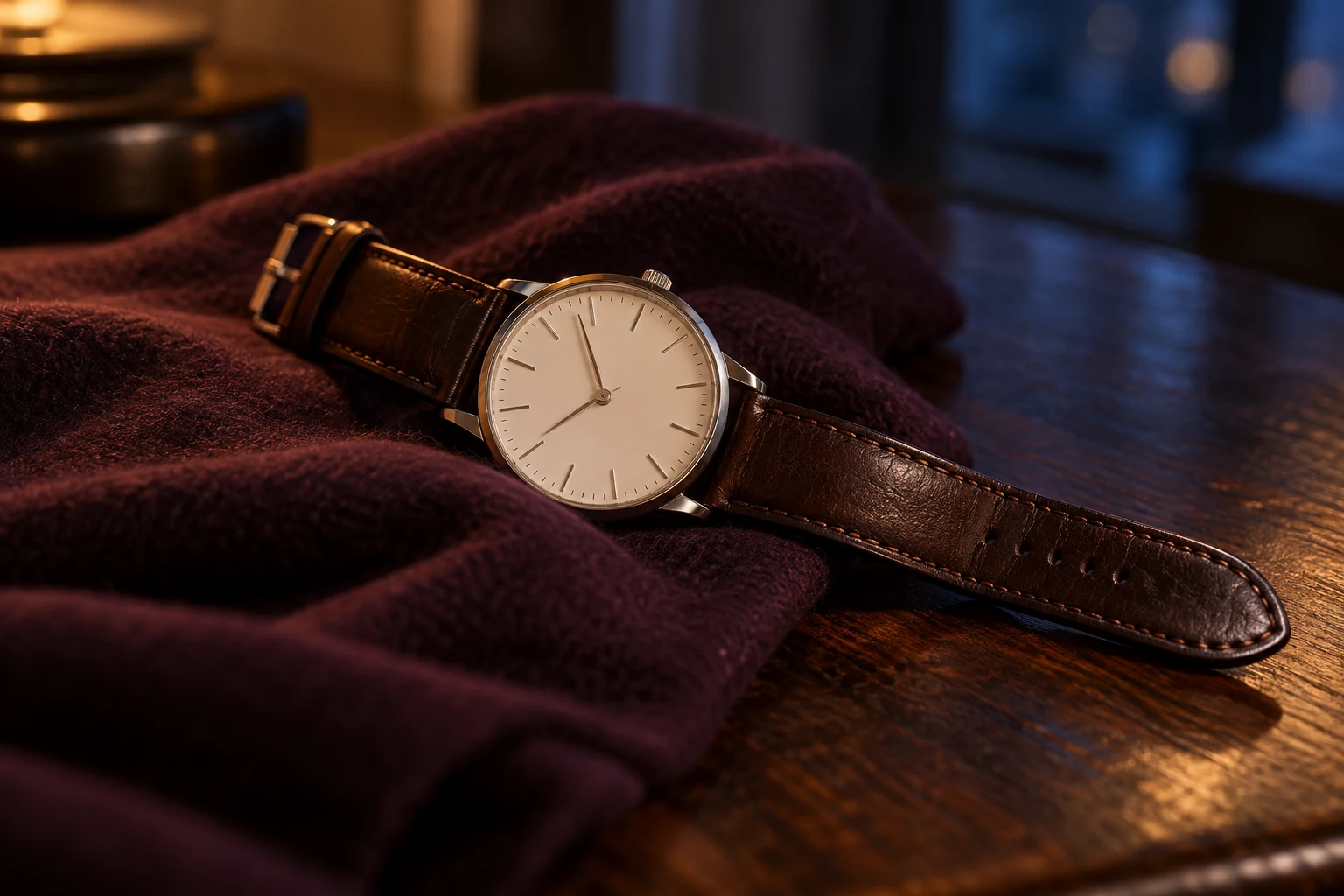
A strap unfastened. A familiar weight, ready for the wrist. Choosing a watch is a small part of preparing to leave; the case gives that personal rhythm a place to begin.
Watches on a journeyThe interior
Shape and support.
A closed bracelet and an open strap ask different questions of a support. Diameter, thickness and crown position matter, alongside space between neighbouring watches.
For travel, consider the closure and how the watch is held when upright. Protection depends on the particular construction; a case is not automatically waterproof or impact-proof.
Timekeeping in the Archive
A clock within the ensemble.
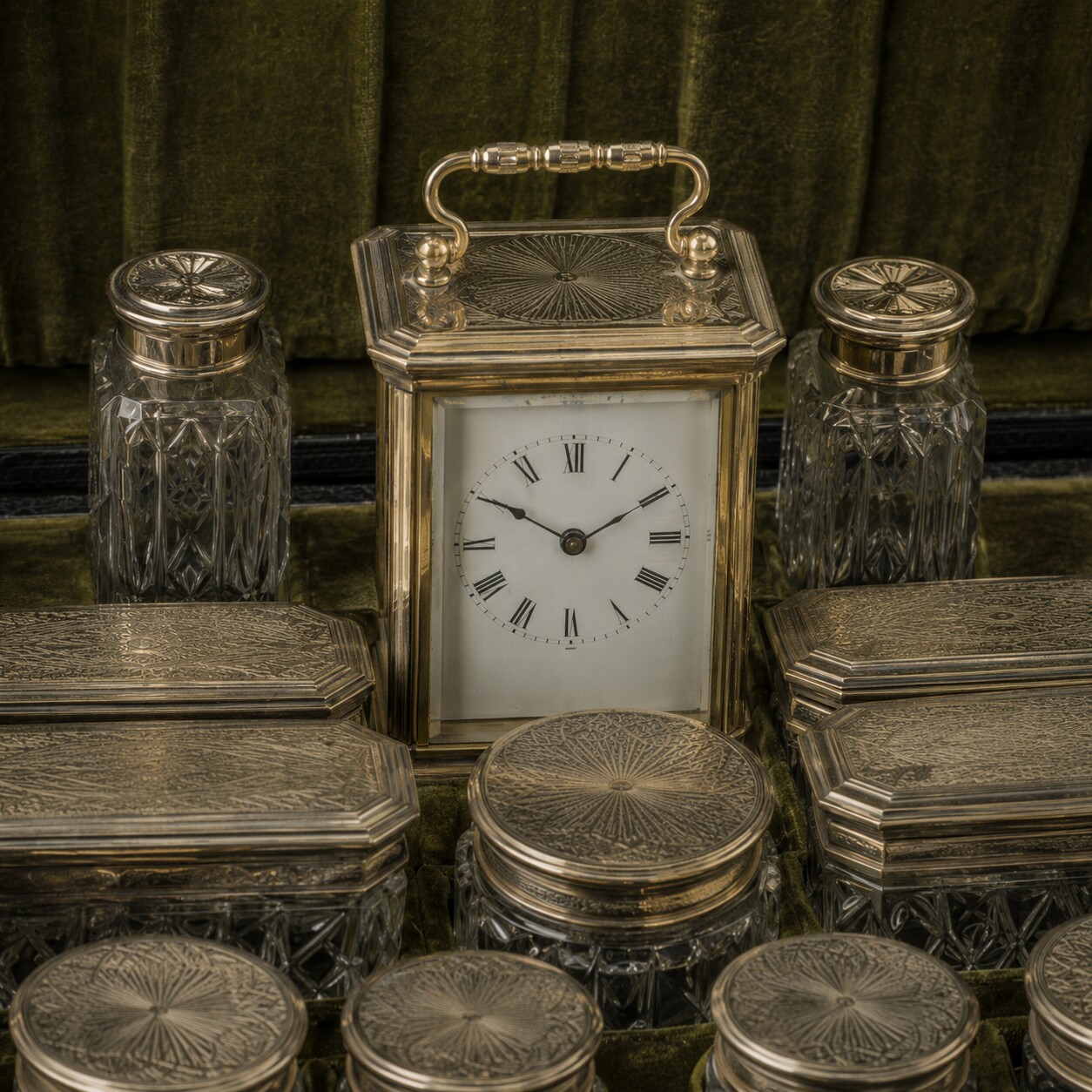
The travelling service recorded by Christie’s includes a clock bearing the wording Leuchars & Son Geffroy Sr. Aucoc marks are recorded separately on the silver covers.
The inscription associates the clock with the Leuchars name; it does not establish a single maker of the complete service.
Read the object recordThe historic object
Reading an original.
Marks, lining, fittings and repairs help explain what survives. A travelling clock, pocket-watch holder and modern wristwatch case each has its own form and history.
The opening stair hall and wristwatch still life are generated campaign imagery. The watch is not a Leuchars product or historical object. The clock study is an editorial reconstruction; its source and attribution limits are recorded in Archive Record 010. Availability, materials and condition of any offered piece are stated in its individual description.
Look closer
A particular object.
A personal question.
For an enquiry about a case, an object or a mark, begin with the details you can see.
