

Small objects, carried close.
A chain or chatelaine makes a personal arrangement visible. Objects suspended from it are chosen for use, ornament or both, connected by the way they are carried and brought into the hand.
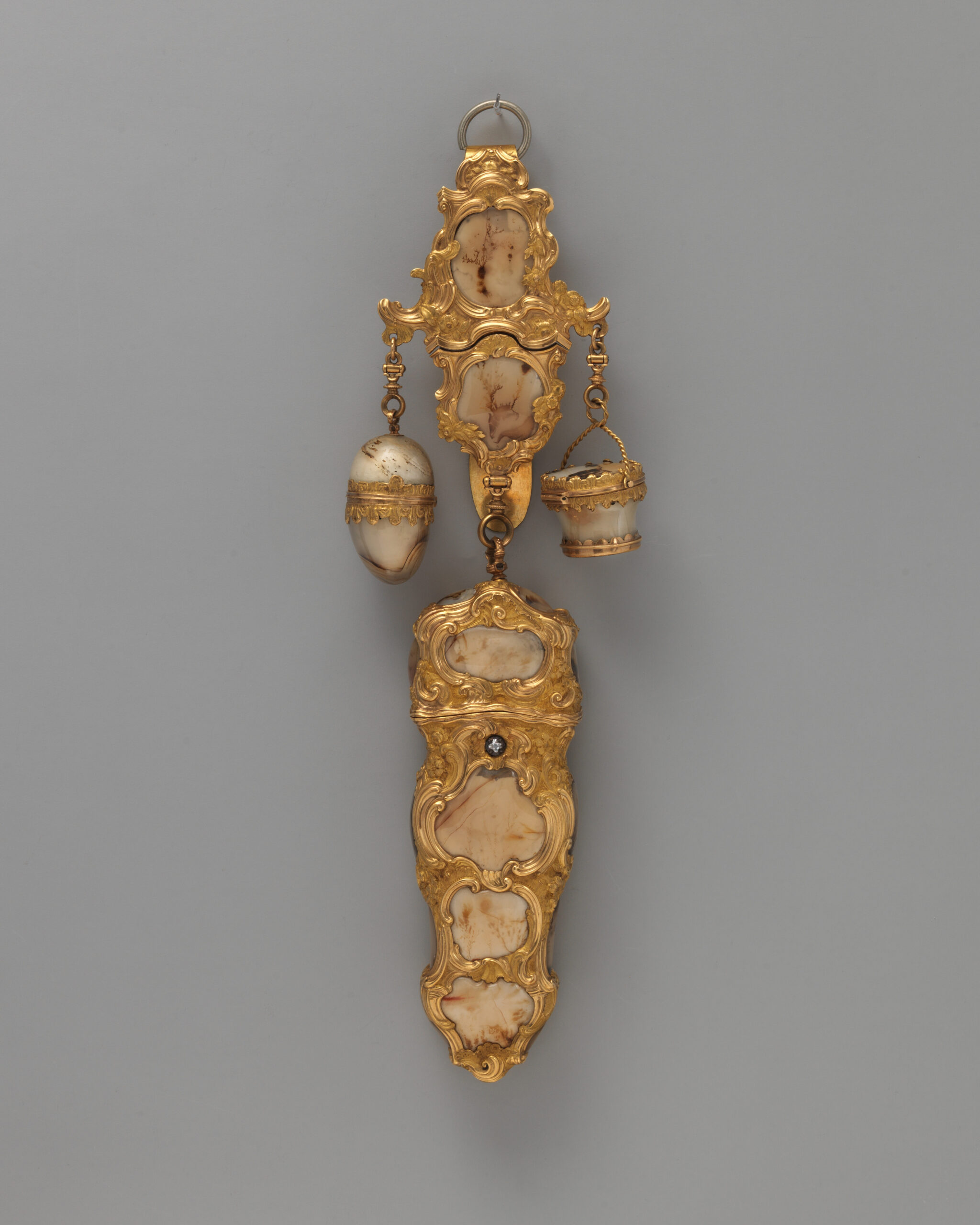
Historical comparison · 1750–60
A personal arrangement.
One attachment. Several small objects. Follow the links from the upper fitting to the central case and the two containers at its sides.
This eighteenth-century example brings ornament and practical purpose together. The Met describes chatelaines as waist-hung holders for sewing, writing or toilet implements.
Explore the museum record01
Connections and fittings.
Rings, clips and hinges are small working structures. Wear at their meeting points can affect the whole assembly. A historic fitting should be examined before an object is worn; a secure-looking connection is not necessarily a sound one.
02
Objects with separate stories.
Pieces may have been added, removed or exchanged over time. Different marks and dates need not make a group uninteresting, but they should be recorded. Association should not be mistaken for a single maker or an original complete set.
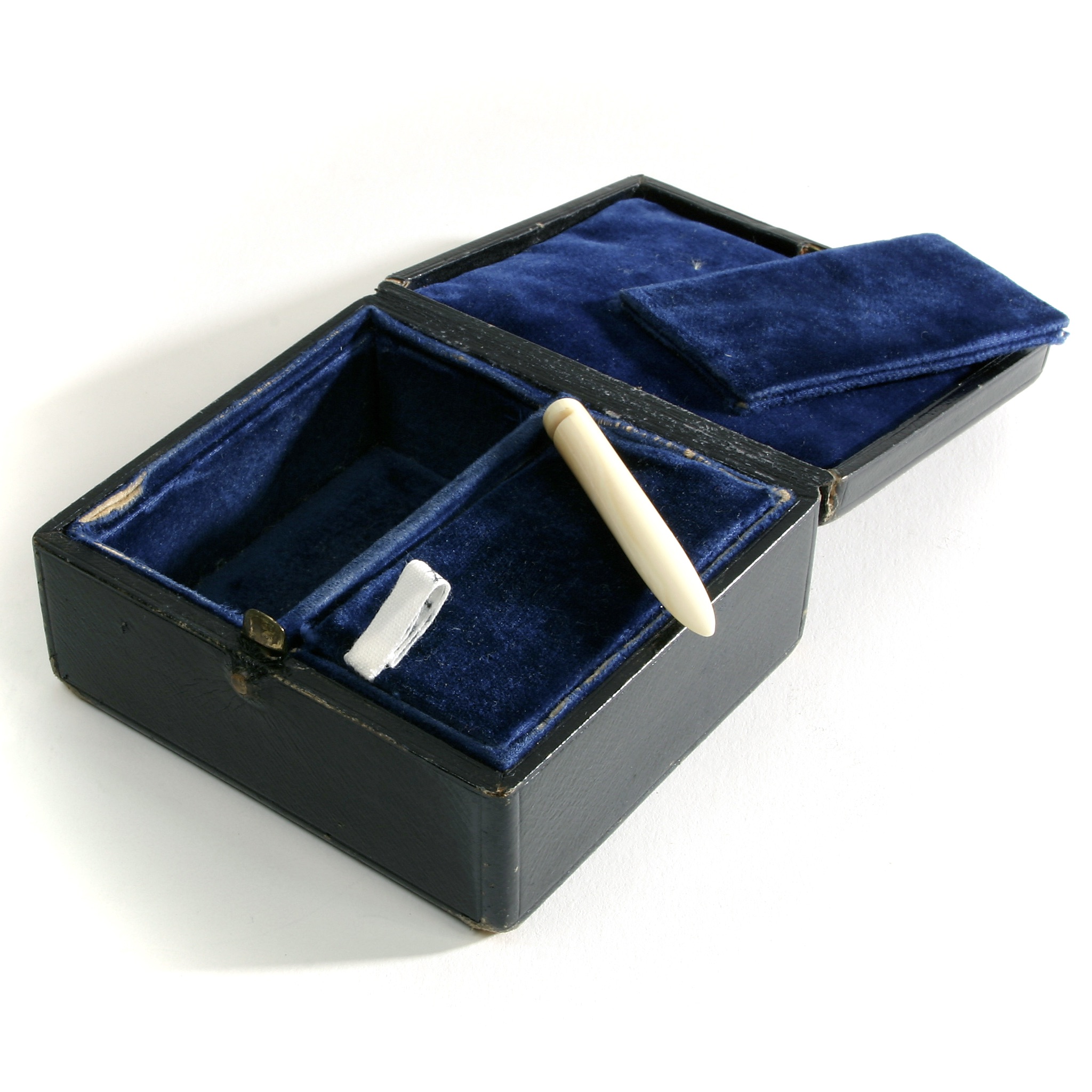
From the body to the case.
Carried objects and fitted cases share a design question: how to keep something close and accessible. The case holds the arrangement while it rests; a chain or chatelaine gives the arrangement a different kind of movement.
Discover the fitted interiorThe campaign opening is an imagined scene within the Leuchars world. The museum chatelaine is shown as a historical comparison, not as a Leuchars object or an available piece. Leuchars documentary objects and their sources are identified in the Archive. Availability, materials and condition of any offered piece are stated in its individual description.
Look closer
A particular object.
A personal question.
For an enquiry about a case, an object or a mark, begin with the details you can see.
