
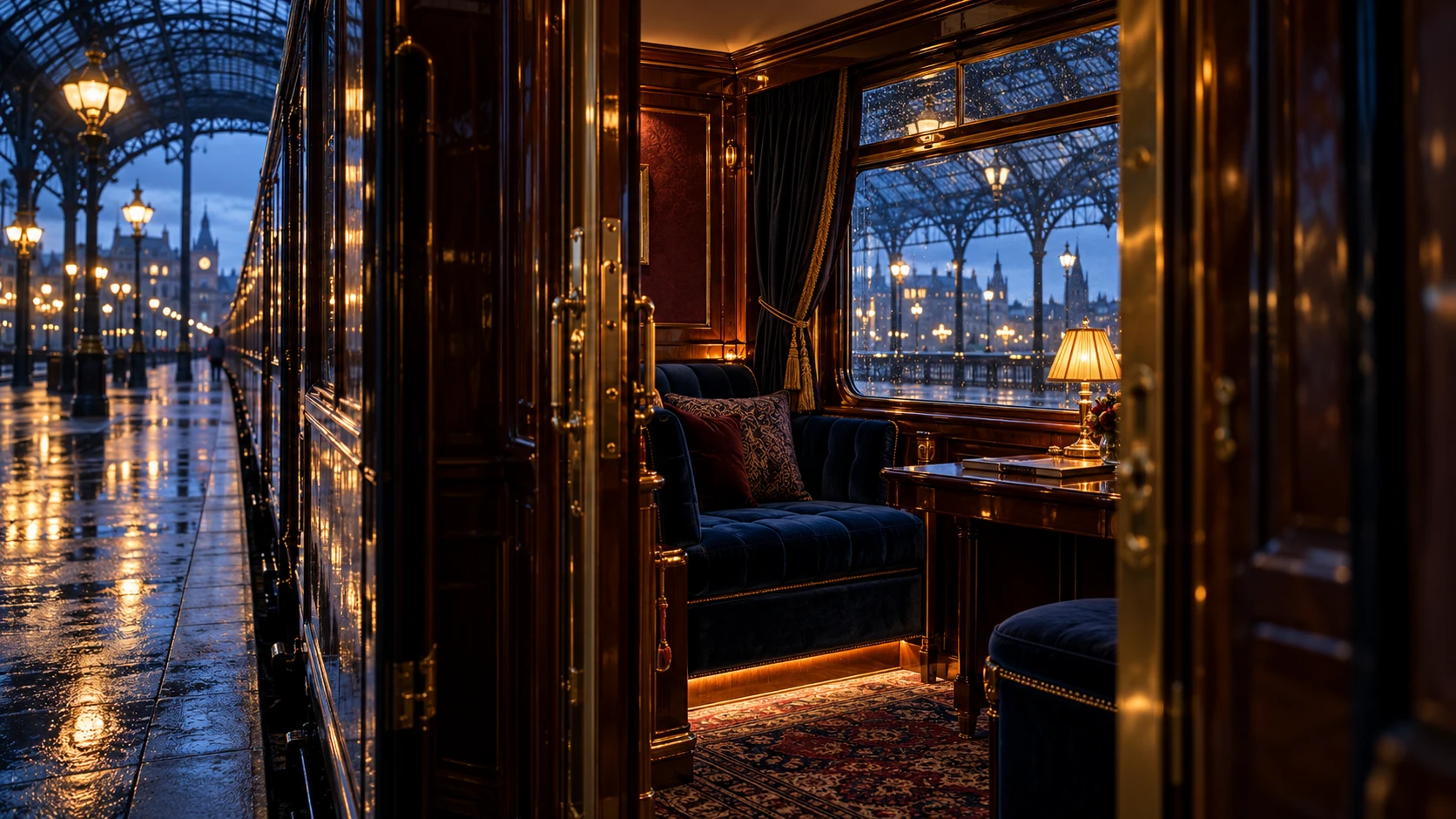
A case gives its contents a place.
A bottle, a brush, a writing instrument: each asks for a different space. The fitted interior makes those differences visible.
01 / Arrangement
A place for each object
A fitted case is more than a box divided into smaller boxes. Its arrangement follows the particular shapes, dimensions and uses of its contents. Compartments, pads and removable parts can make an interior legible as soon as it is opened.
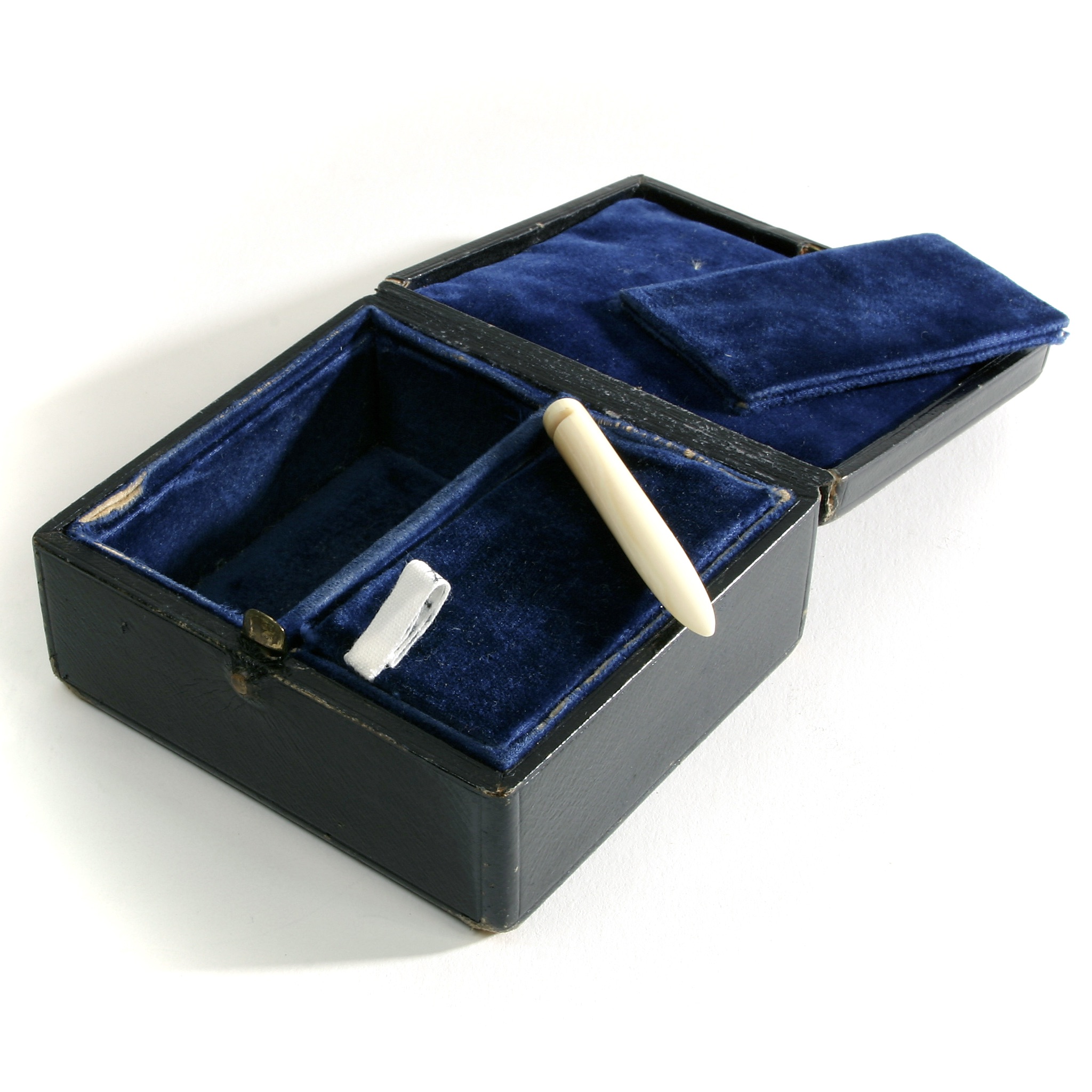
In the black-leather case shown here, blue velvet lines two compartments, with removable pads recorded by Livrustkammaren. The pads introduce another layer: lift one part and the space beneath becomes available. The interior is discovered through a sequence of small actions.
02 / Materials
Different materials.
A common purpose.
Glass, metal, leather and lining each contribute a different character to the personal object. A rigid container, a fitted cover and a soft interior answer different practical needs.
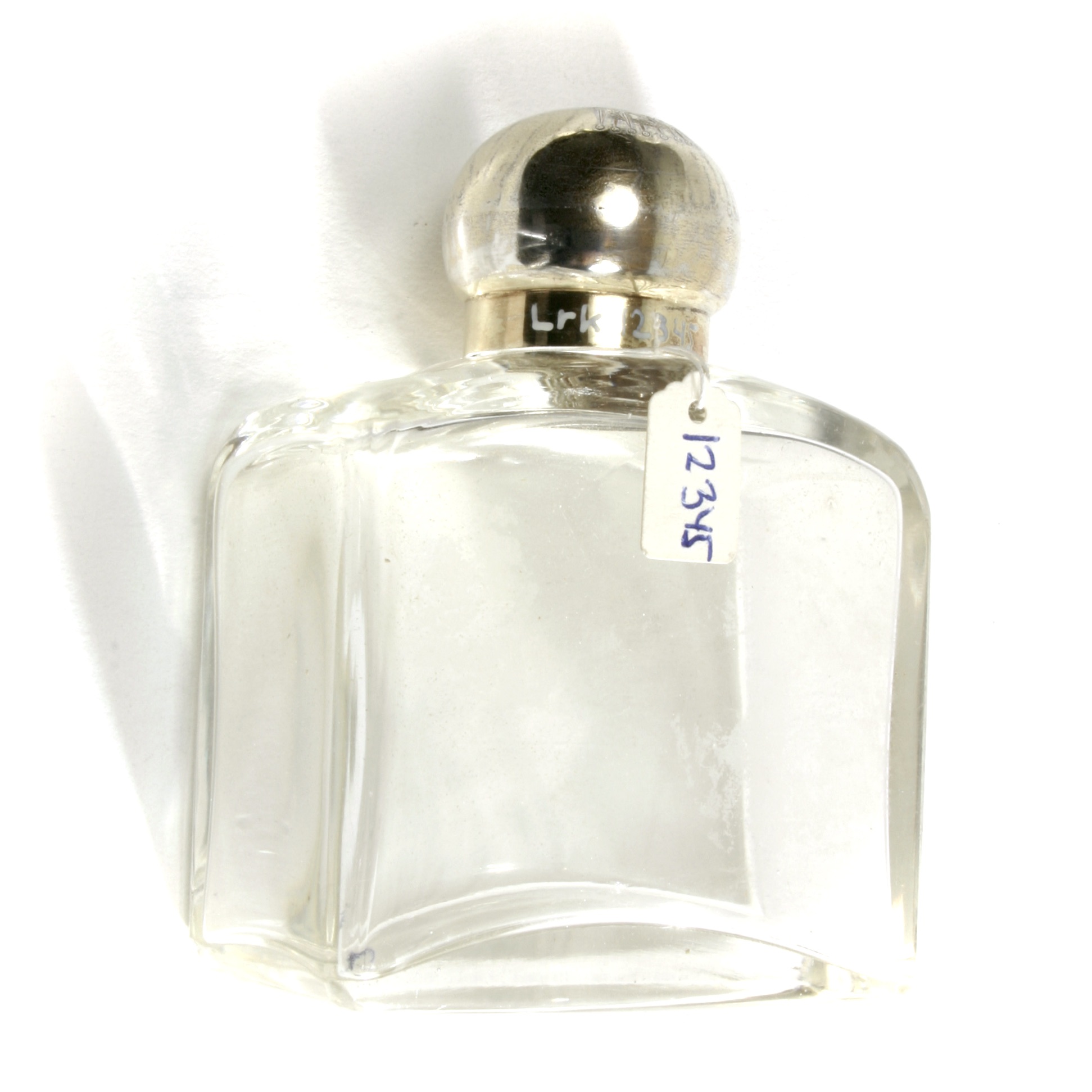
The surviving pieces of a travelling service bring these contrasts into view. Each component contributes to the ensemble through its shape, surface and use; the Archive follows their individual makers and marks.
The craft of the fitted case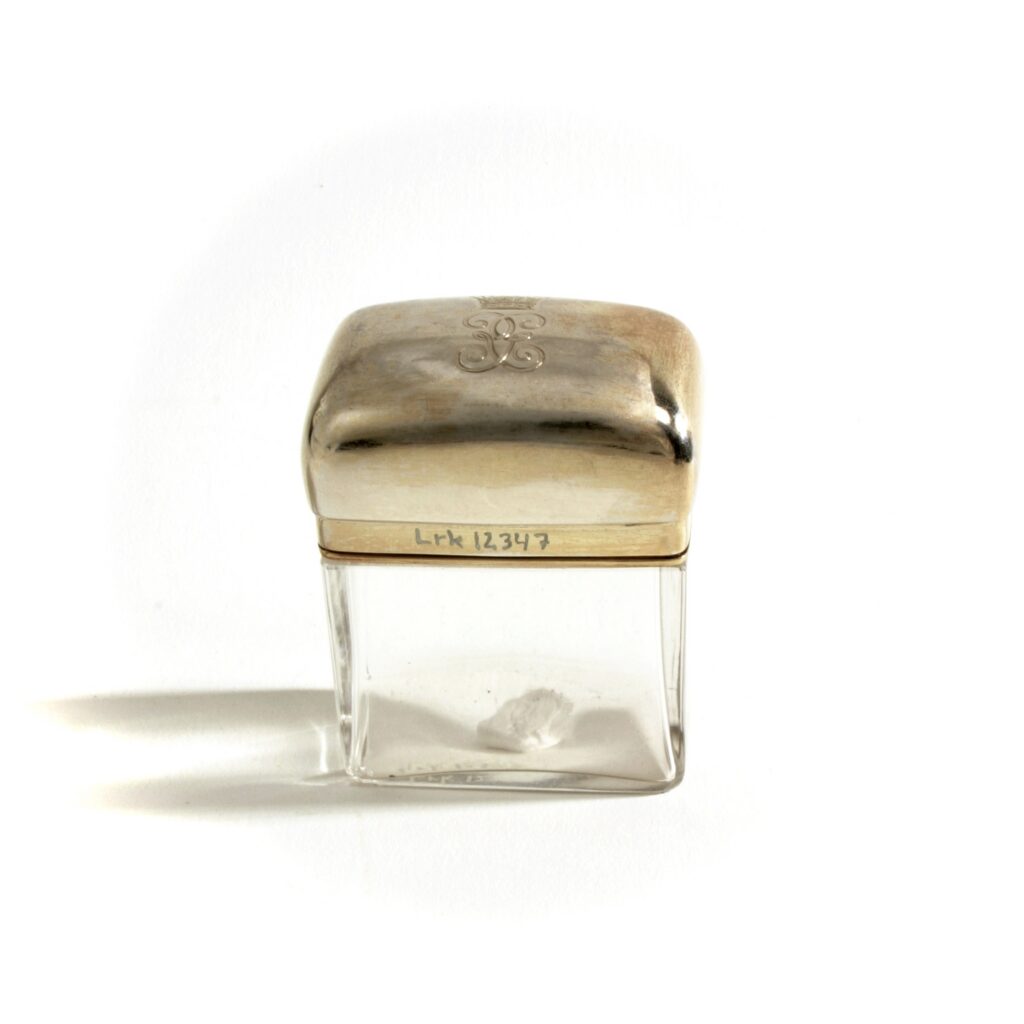
03 / Identity
Personal, in the detail
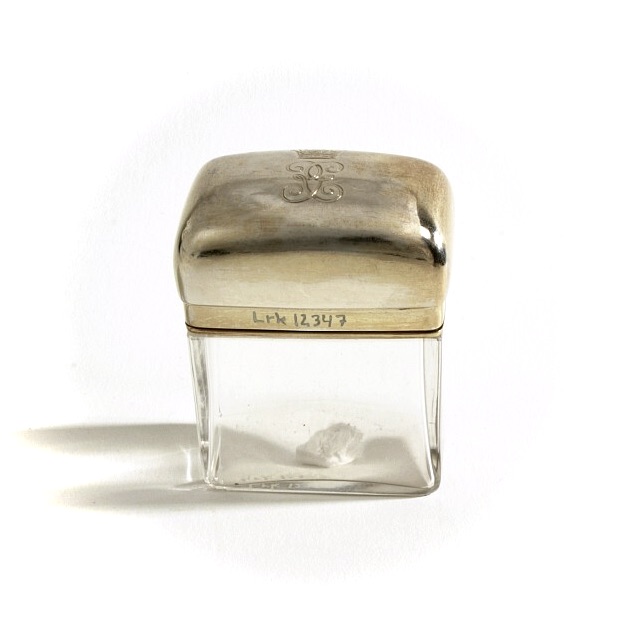
Ownership can be expressed in a monogram, a mark or the choice of contents. In the museum group associated with Crown Prince Gustaf, a crowned mirror monogram recurs across several pieces.
A repeated monogram gives separate objects a shared identity. A bottle, a jar and a personal implement become recognisable as part of one owner’s world. Makers’ marks and addresses tell a complementary story, linking individual components to their commercial history.
04 / Use
From room to journey
The dressing table, the writing desk and the travelling case share a concern with what should remain close at hand. A portable interior carries an arrangement from one place to another.
A familiar arrangement can make an unfamiliar room feel settled: the writing instrument returned to its place, the bottle close to hand, the lid opened at the beginning of a day. For contemporary design, that intimacy begins with a practical question: what does its owner want to carry, and how should it be kept?
The object behind the essay
The historical examples on this page come from the existing Leuchars Archive record of Crown Prince Gustaf’s travelling service, based on Livrustkammaren catalogue entries. The complete original inventory and placement of its components remain unestablished. The objects are museum references, not items offered for sale.
Read the full record, museum sources and image credits. All four photographs: Livrustkammaren/SHM, CC BY 4.0. The design commentary is a contemporary Leuchars editorial interpretation.
Continue the journey
A world within.
