Evidence note
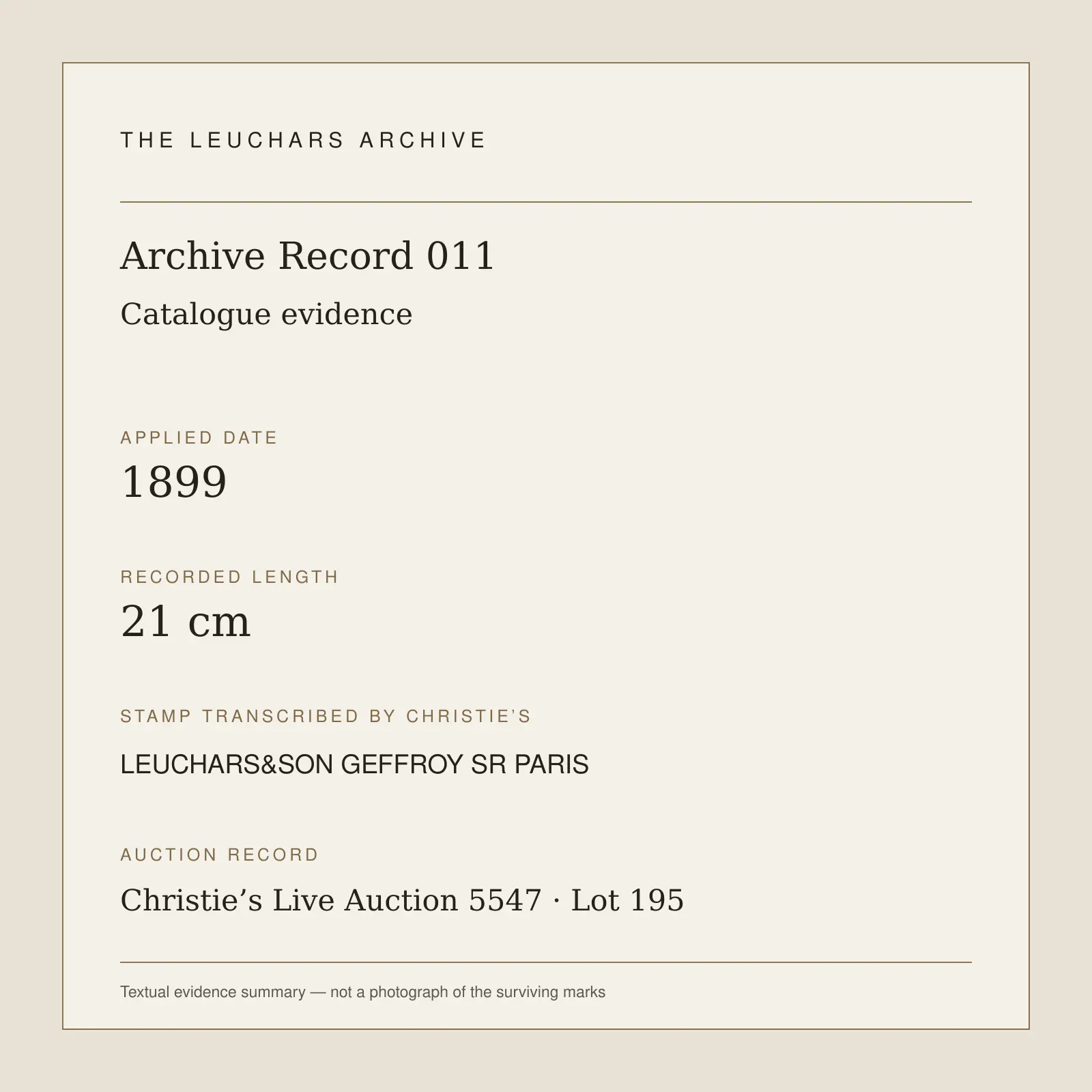
This record is based principally on Christie’s catalogue entry for lot 195 in its 14 October 2008 sale of objects from the estate of the Count and Countess of Paris. The auction record supplies the description, dimensions, marks, applied cipher and date, and stated wedding-gift provenance. An Archives Nationales authority record independently confirms that Jean and Isabelle d’Orléans married on 30 October 1899. The separate maker’s mark has not been identified from a legible image, and the Christie’s photograph is not reproduced here.
Image note
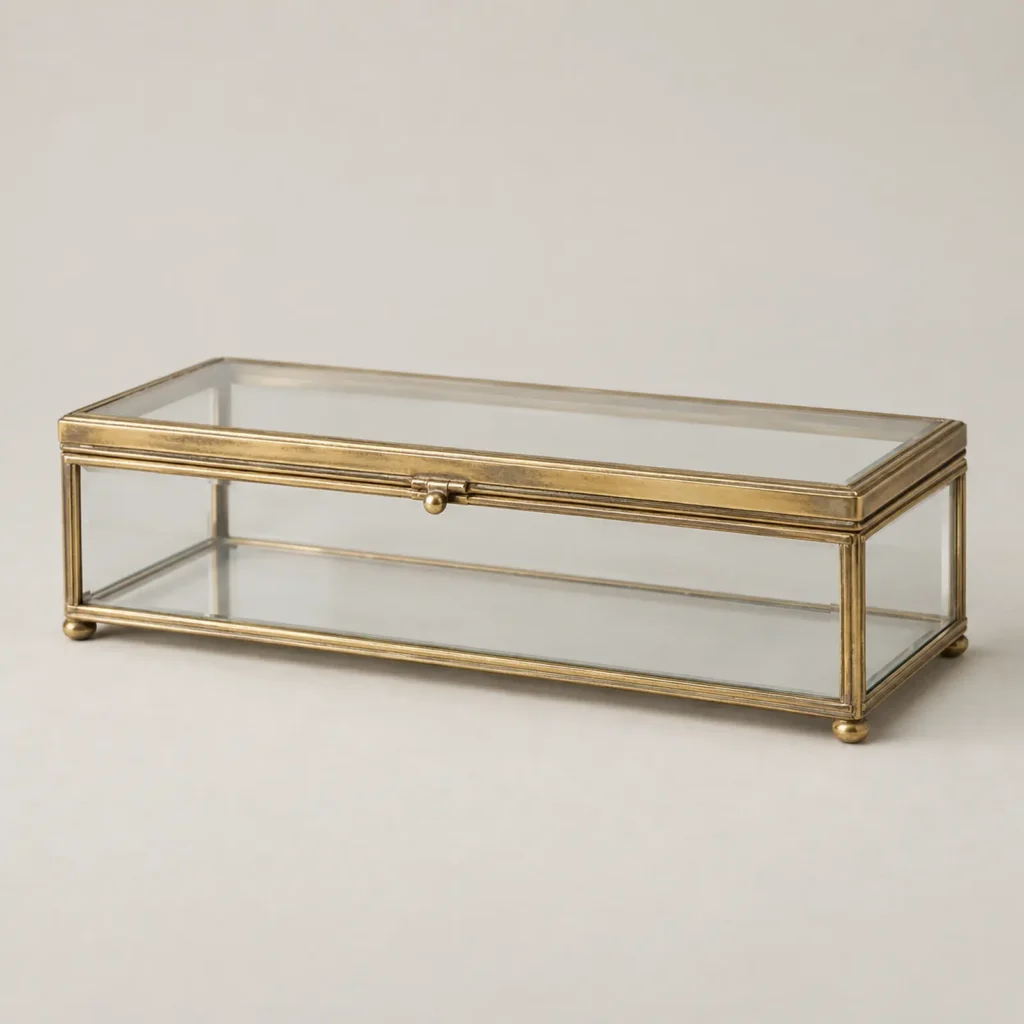
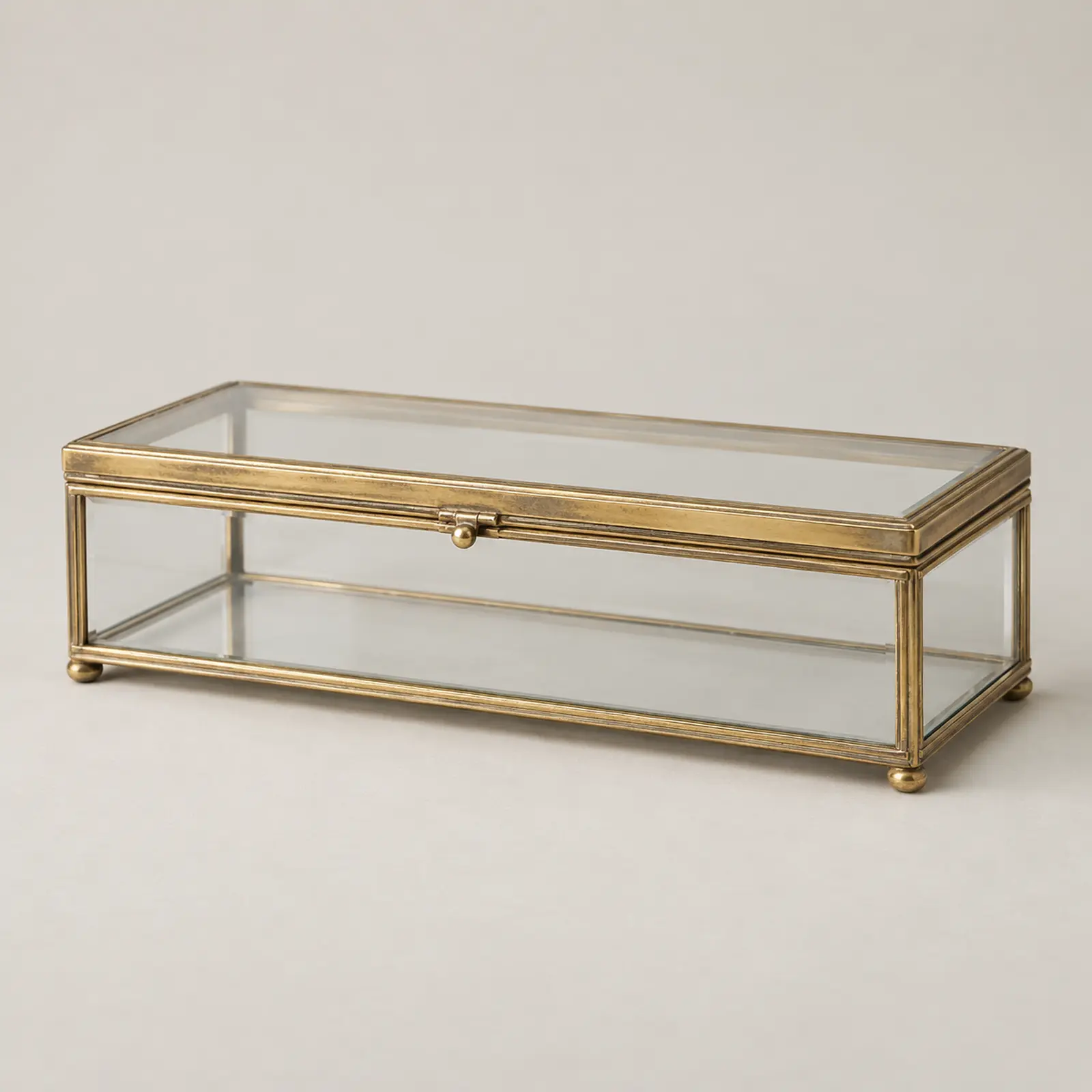
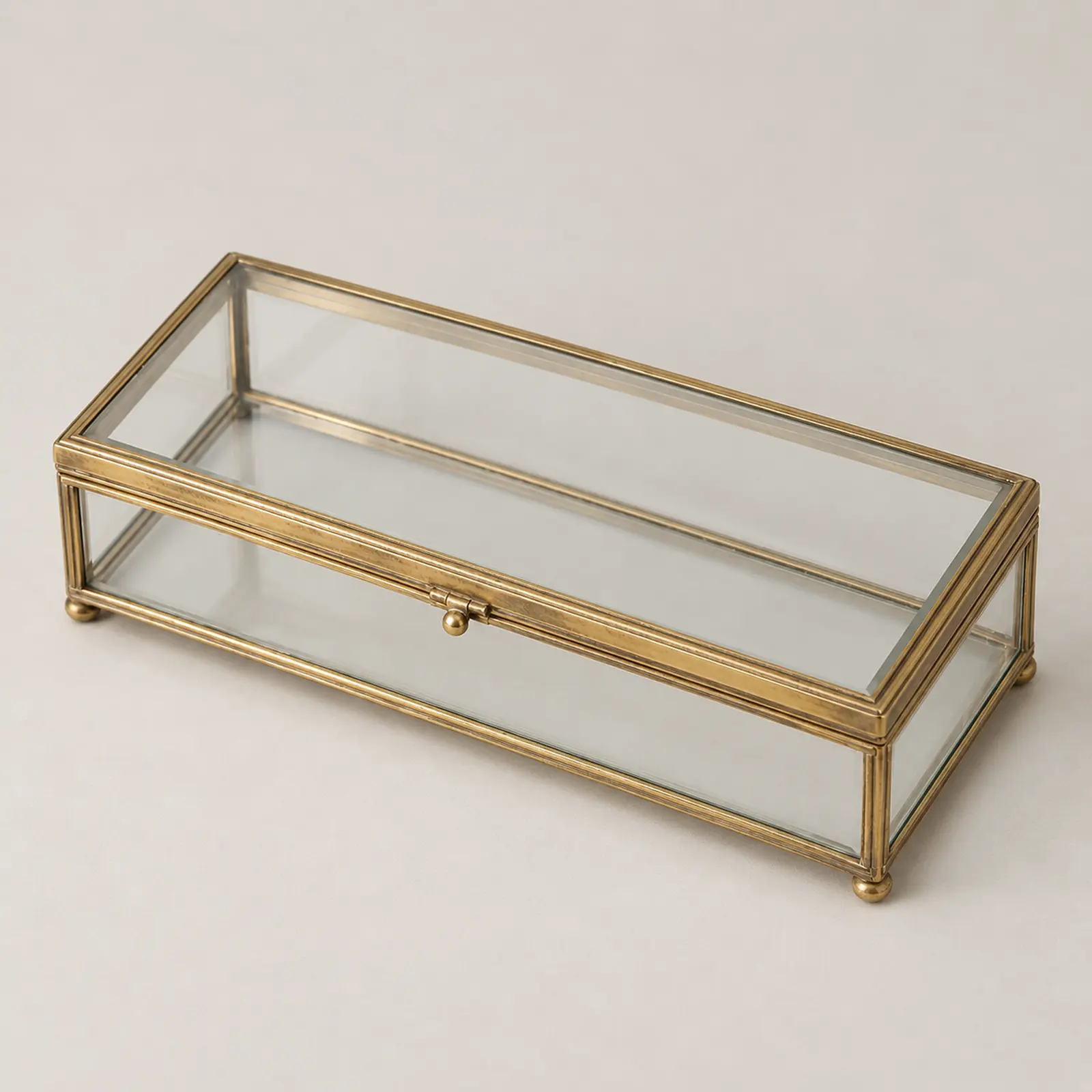
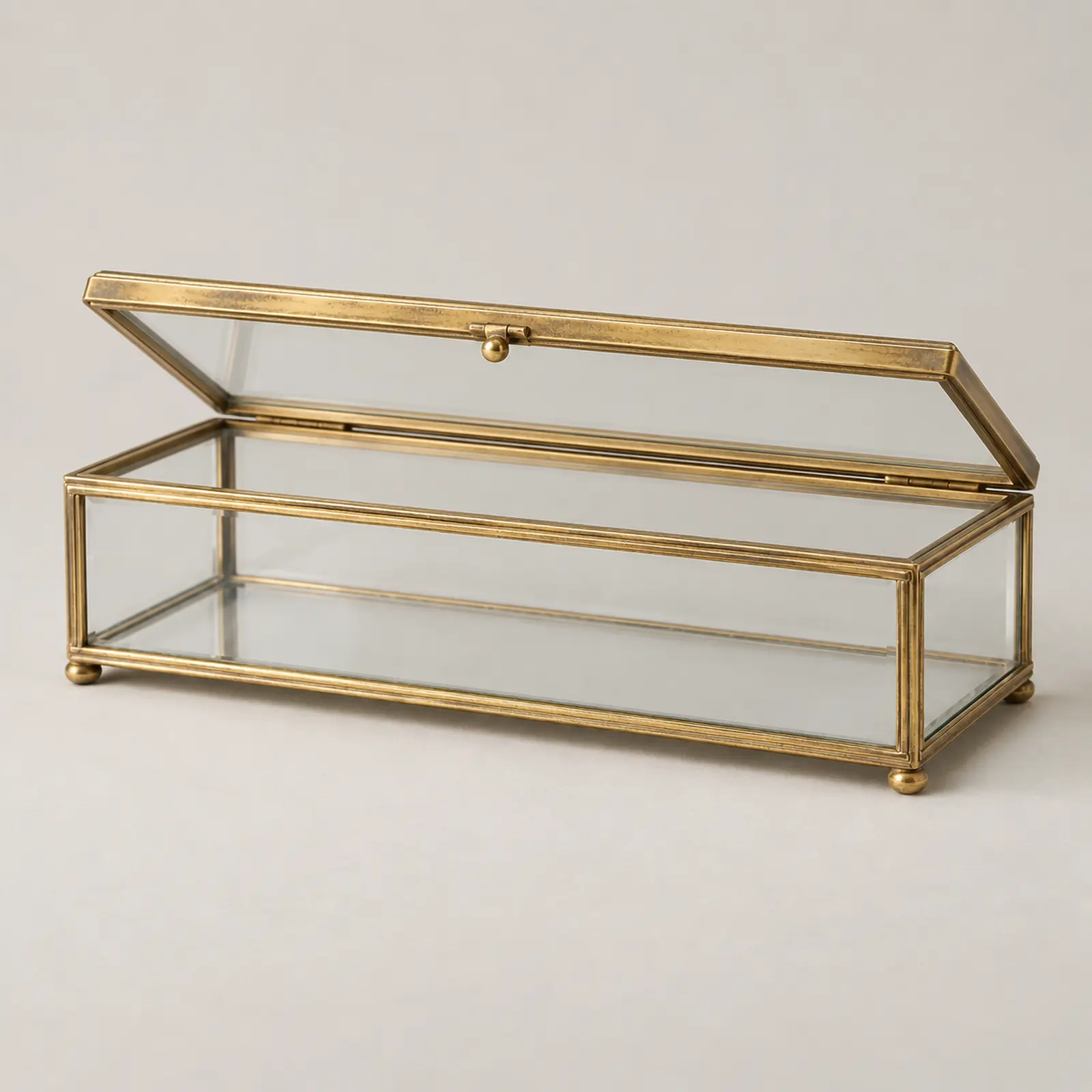
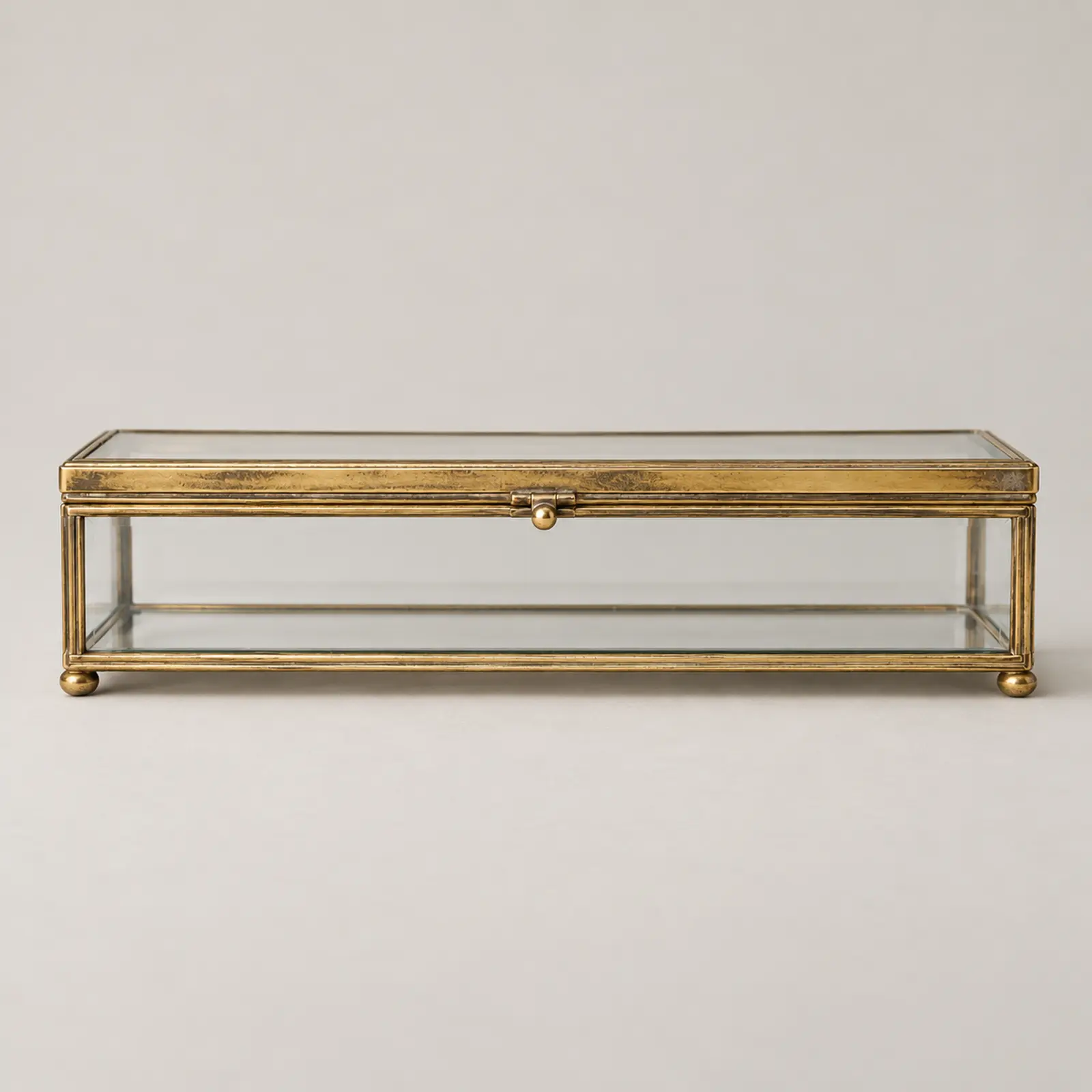
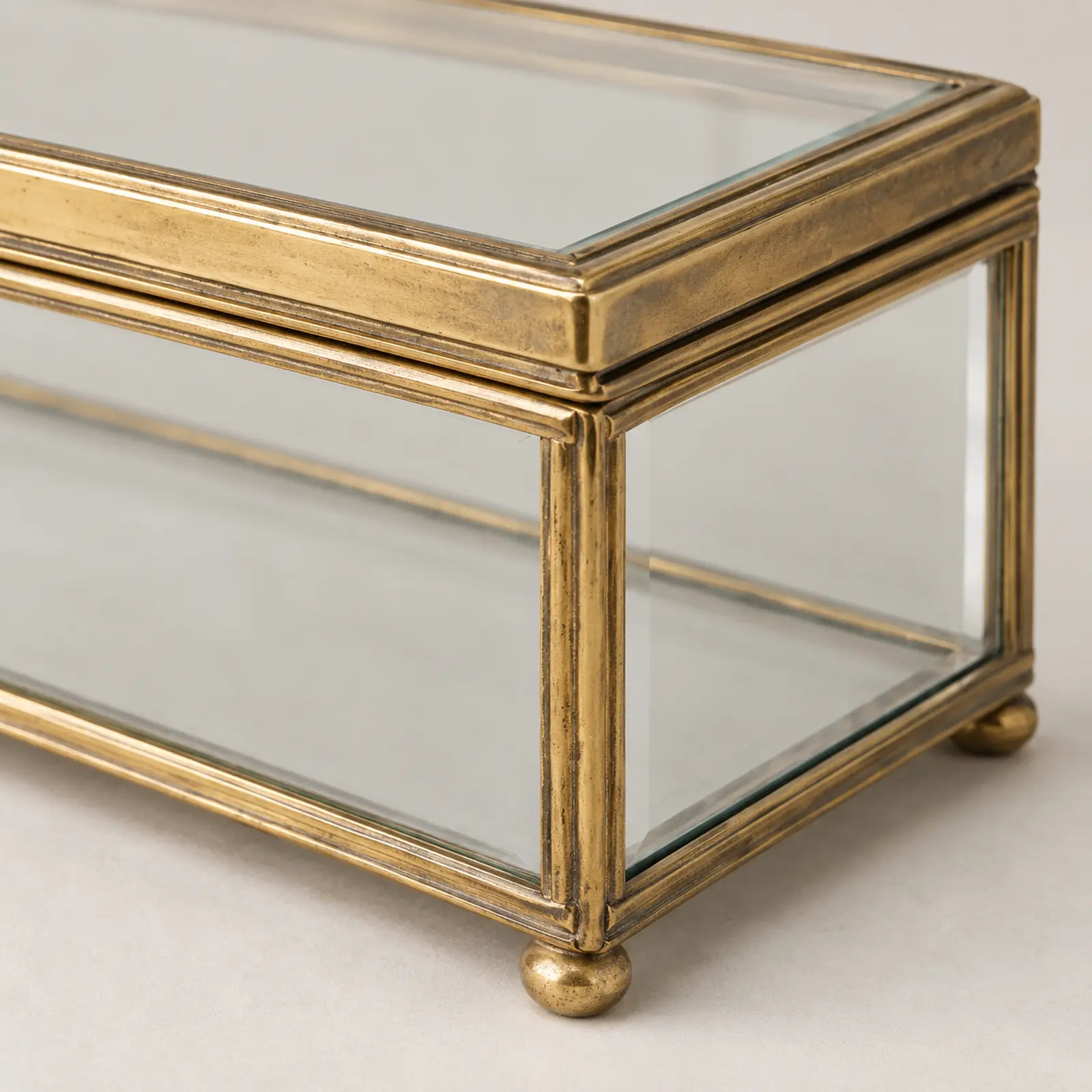
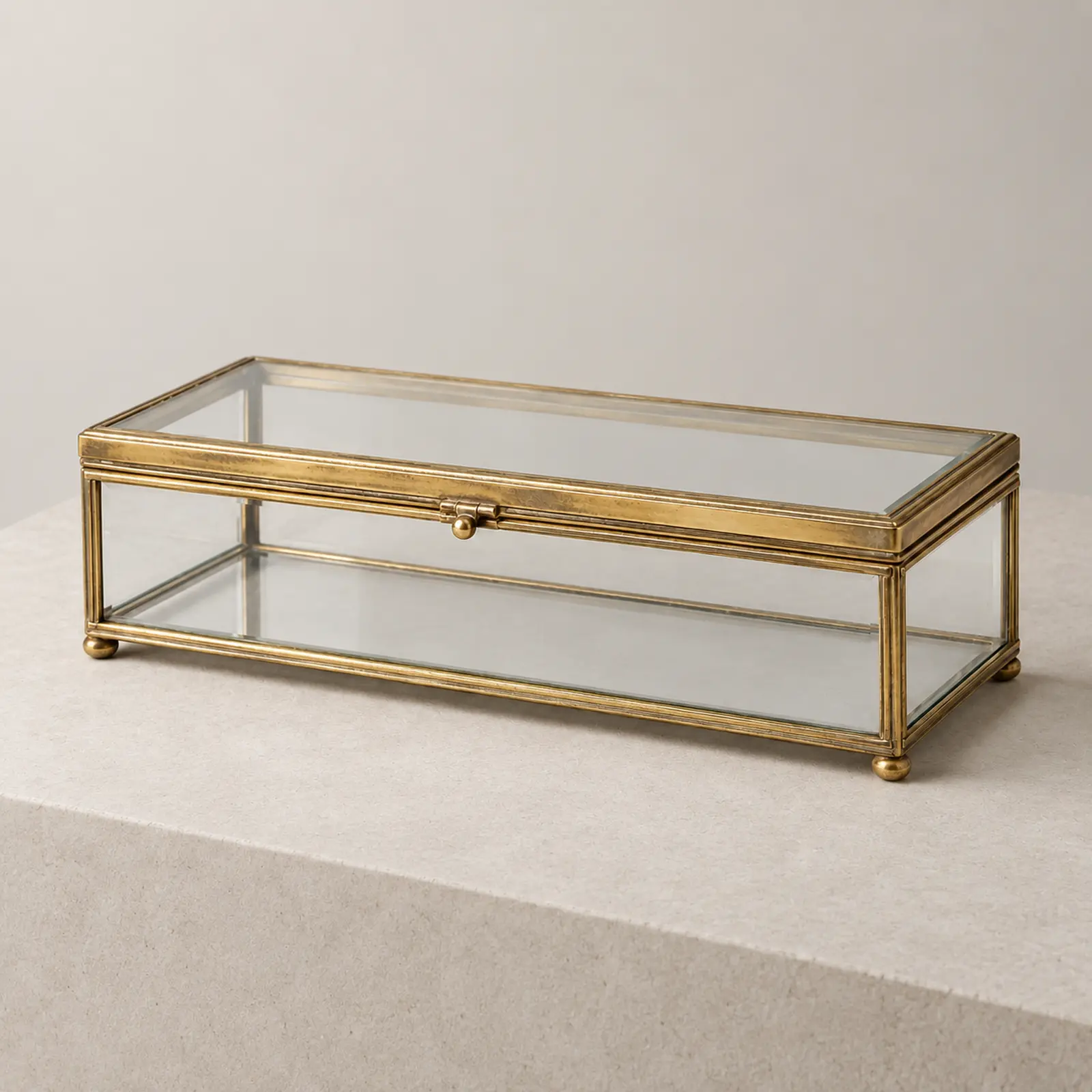
The images accompanying this record are editorial reconstructions made for The Leuchars Archive. They interpret the catalogued type, materials and proportions but are not photographs of the surviving box and do not reproduce its marks, condition or exact ornament. They must not be used as evidence.
A dated object of presentation
A small box can preserve a surprisingly exact social event. Christie’s records this rectangular glass and silver-gilt object as a wedding gift made in 1899, bearing a personal cipher, a date and a Paris retail stamp associated with Leuchars and Geffroy. Those details place it within a particular moment of presentation, while also setting clear limits on what can be said about its manufacture.
The catalogue describes a plain glass body with silver-gilt mounts. The lid was applied with a cipher transcribed as HO and the date 1899; the box measured 21 centimetres in length. Its marks were recorded as a Minerva head, a maker’s mark and the stamp LEUCHARS&SON GEFFROY SR PARIS.
The object is therefore more informative than an unmarked box, but its evidence is distributed. The guarantee and maker’s marks concern the precious-metal work. The Leuchars-Geffroy wording records a Paris commercial association. These are related facts, not interchangeable claims of authorship.
A wedding gift in 1899
Christie’s gives the box a specific presentation history: a wedding gift from Prince Henri d’Orléans to his brother Jean d’Orléans, duc de Guise, and their cousin Isabelle d’Orléans. The auction catalogue dates the marriage to 30 October 1899.
An Archives Nationales record independently confirms that Jean and Isabelle married in England on that date and received the titles Duke and Duchess of Guise for the occasion. It does not document the box itself, but it anchors the event to which the auction provenance refers.
This distinction matters. The marriage is independently documented; the gift and its route into the later estate sale remain statements in the Christie’s catalogue. Reporting both sources together strengthens the chronology without turning one record into proof of the other.
What the Paris stamp establishes
Christie’s headed the lot “by Leuchars et Sons, Paris”, but its detailed description also recorded a separate maker’s mark alongside the Leuchars-Geffroy stamp. Without a legible view or identification of that maker’s mark, the safest reading is commercial rather than manufacturing: the surviving inscription associates the object with the Leuchars-Geffroy Paris business, while the workshop responsible for the mounts remains unresolved.
That separation is characteristic of fitted and presented objects. A retailer or specialist house could bring together material work, personalisation and presentation without every component having been made under one roof. The box does not need a simplified authorship story to be significant. Its value as evidence lies precisely in the combination of mark, object and occasion.
The abbreviation Sr is retained here exactly as Christie’s transcribed it. It has not been expanded, and no exact claim is made for the form or placement of the stamp beyond the catalogue record.
Cipher, date and limits
The applied HO cipher and 1899 date gave the lid a personal and commemorative character. The provenance makes a connection with the Orléans family plausible, but the letters are not expanded here into a named identity. A monogram can be suggestive without being self-explanatory, particularly when it is known only through catalogue transcription and an overall auction photograph.
Nor is the box assigned a more specialised function. Christie’s called it a box; no surviving contents or original fitted purpose were recorded. Terms such as jewellery box or dressing box would add a use that the available evidence does not supply.
Provenance with boundaries
The box appeared as lot 195 in Christie’s sale Succession de feus Monseigneur le Comte de Paris et Madame la Comtesse de Paris, which closed on 14 October 2008. It realised €3,000 against an estimate of €500 to €800.
That sale record provides an important modern point in the object’s history, but it does not supply a complete chain of custody. The present location and owner are unknown. Leuchars London does not claim ownership of the object, the underlying auction image or an inherited archive relating to it.
An object of presentation
For The Leuchars Archive, the box is useful because its meaning depends on presentation rather than scale. Plain glass, precious-metal mounts, a personal device, a date and a recorded gift occasion turn a compact object into a bearer of relationship and memory.
It also enlarges the documented Leuchars field. The Paris stamp does not prove that Leuchars manufactured the box, but it places the name within the commercial life of a personal presentation object at the close of the nineteenth century. That is a narrower claim than authorship, and a more durable one.