

Objects shaped by a social ritual.
Bottles, pouring vessels and the accessories of smoking belong to the material culture of private rooms and travel. Here the interest is in their form, workmanship and historical use.
At the table
An unexpected guest.
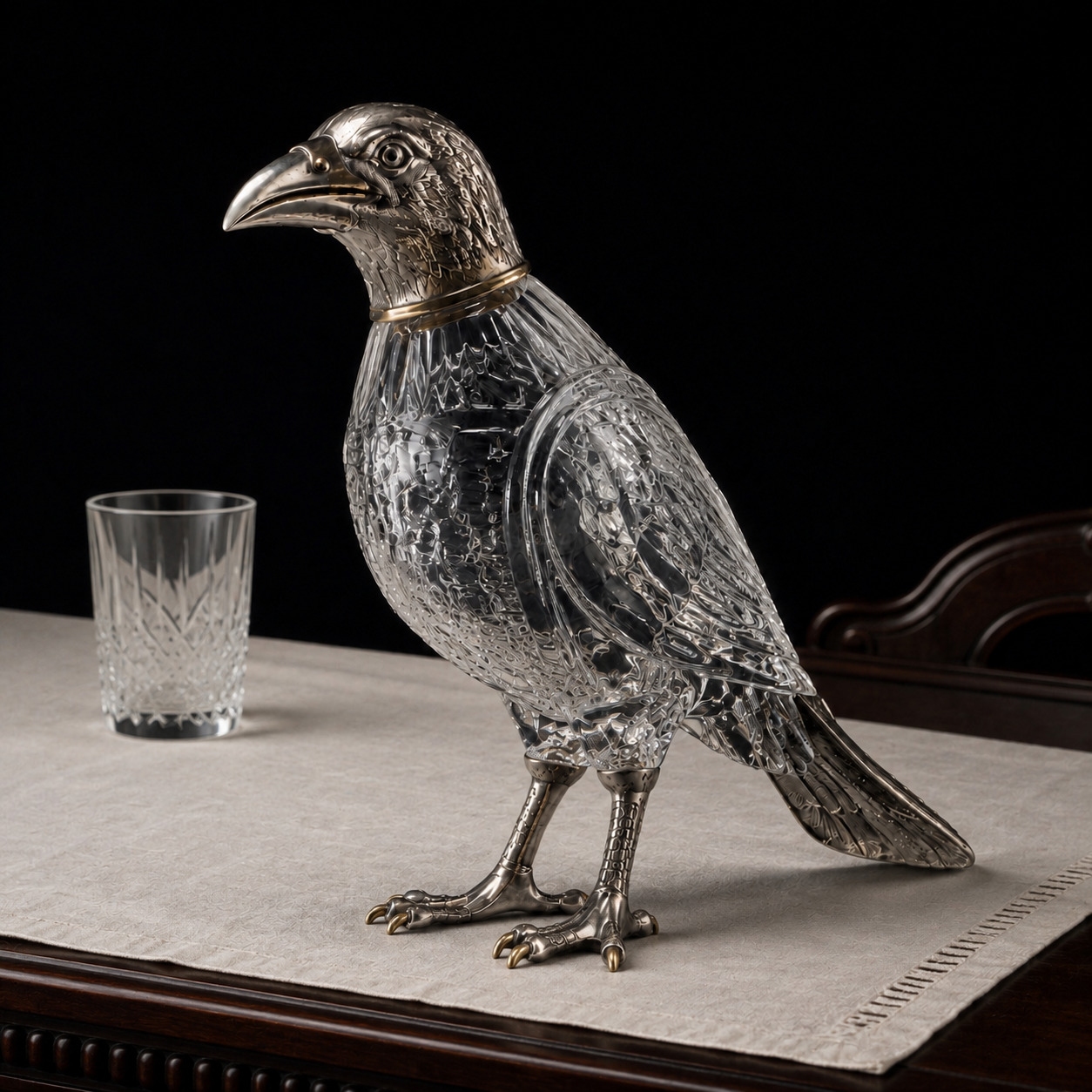
A glass body, a silver head, the unmistakable silhouette of a bird. The Crow Claret Jug turns a pouring vessel into a conversation piece.
The 1881 example recorded in the Archive brings function and wit together: the bird’s anatomy also explains how the vessel stands, opens and pours.
Meet the Crow Claret JugFrom silhouette to detail
Character in the construction.
The catalogue describes a removable silver head, glass eyes and a gilt beak. The head screws into a feathered collar: a practical closure becomes part of the bird’s expression.
This illustration interprets that description. The Archive separates the recorded materials and marks from what the reconstruction can only suggest.
Look closer at the record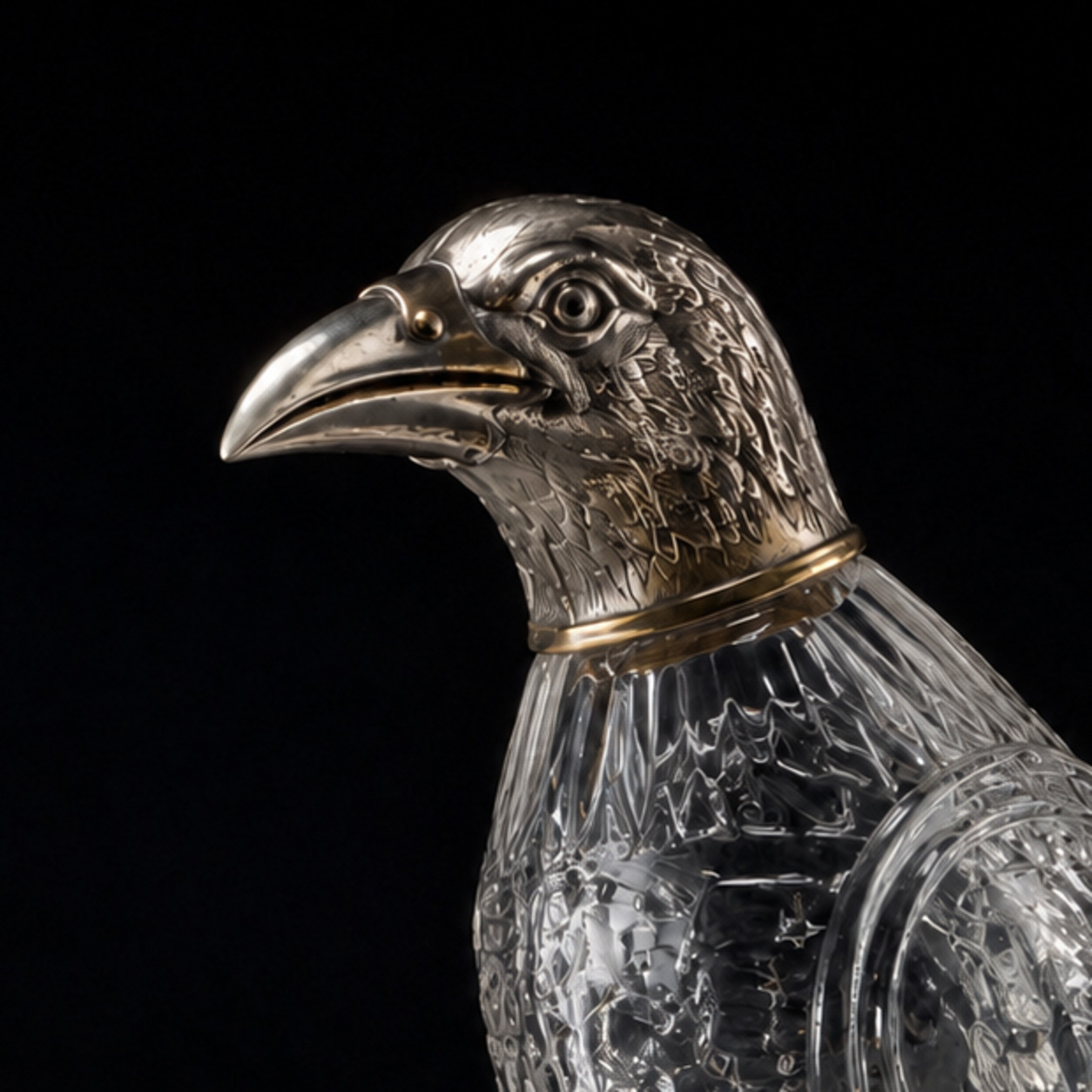
A personal inscription · 1877
A possession made personal.
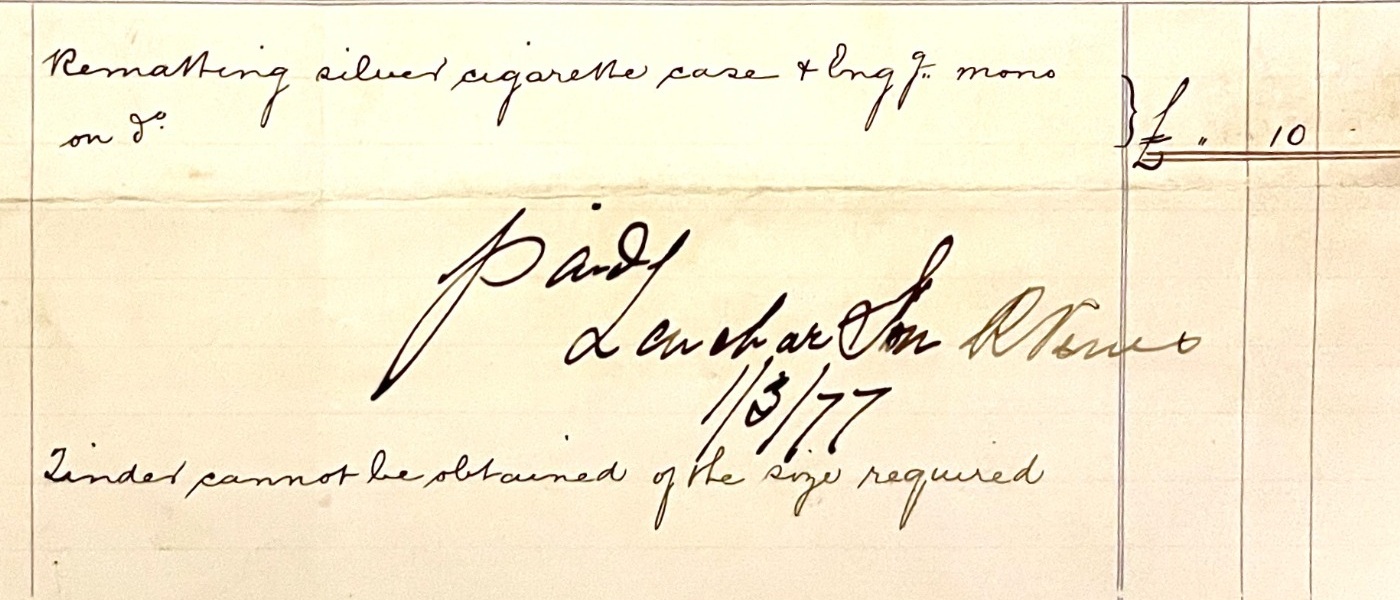
A silver cigarette case, a named client, an apparent monogram. The bill of 1 March 1877 records work that made an object personal. It may concern a possession brought back for attention; the handwriting does not yet establish whether the case was repaired, altered or newly supplied. The surviving trace is the account itself.
Read the bill and its transcription
Old vessels and accessories should not be assumed suitable for food, drink or smoking. Linings, residues, coatings and repairs require individual assessment; collecting and decorative use remain distinct from verified functional use.
The campaign opening is an imagined scene within the Leuchars world. Both Crow images are editorial reconstructions, not photographs of the surviving jug. Historical objects, sources and attribution limits are identified in the Archive. Availability, materials and condition of any offered piece are stated in its individual description.
Look closer
A particular object.
A personal question.
For an enquiry about a case, an object or a mark, begin with the details you can see.
