Napoléon III & Empress Eugénie — Leuchars Imperial Patronage
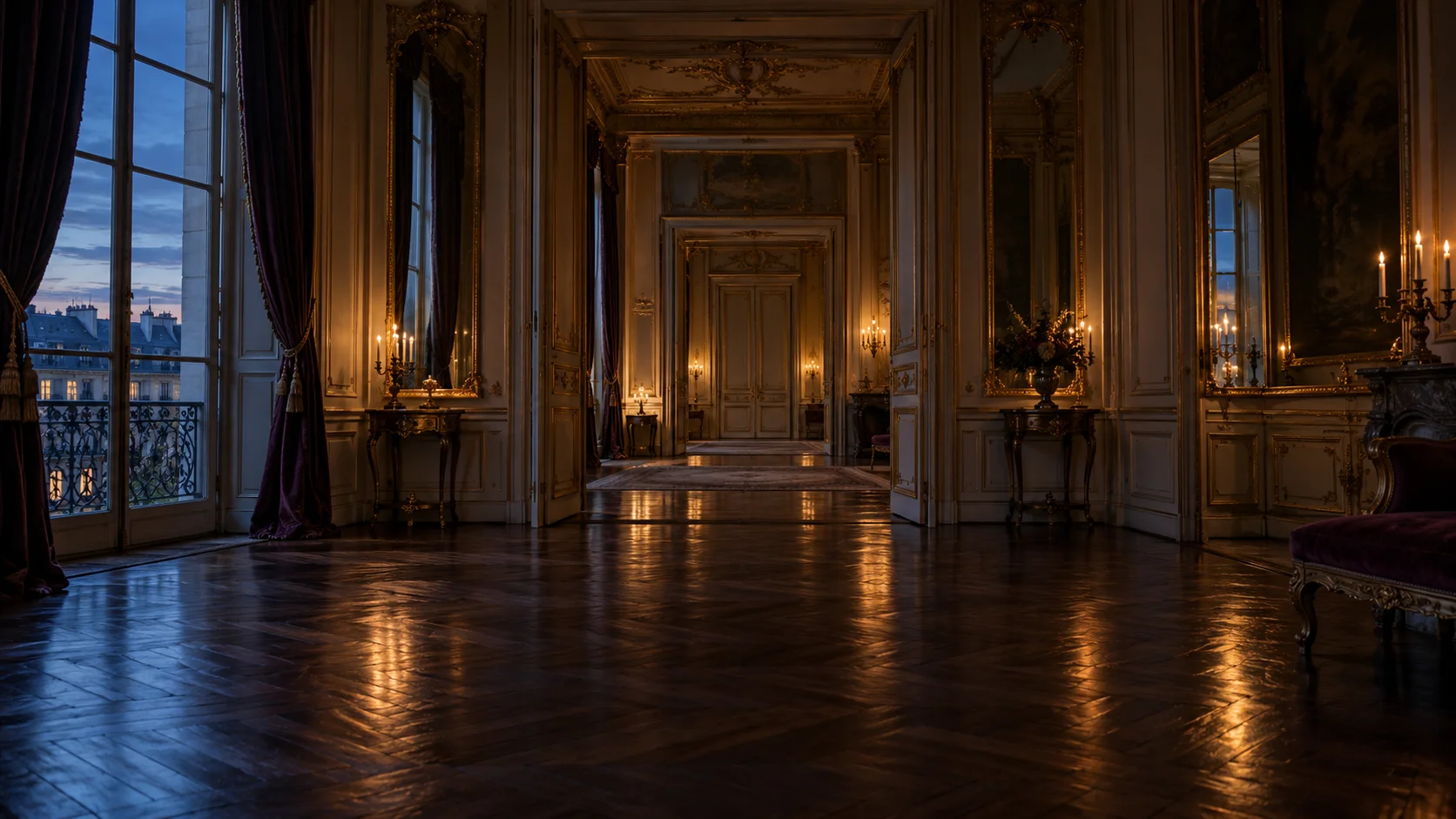
French imperial patronage
Two names. One imperial court.
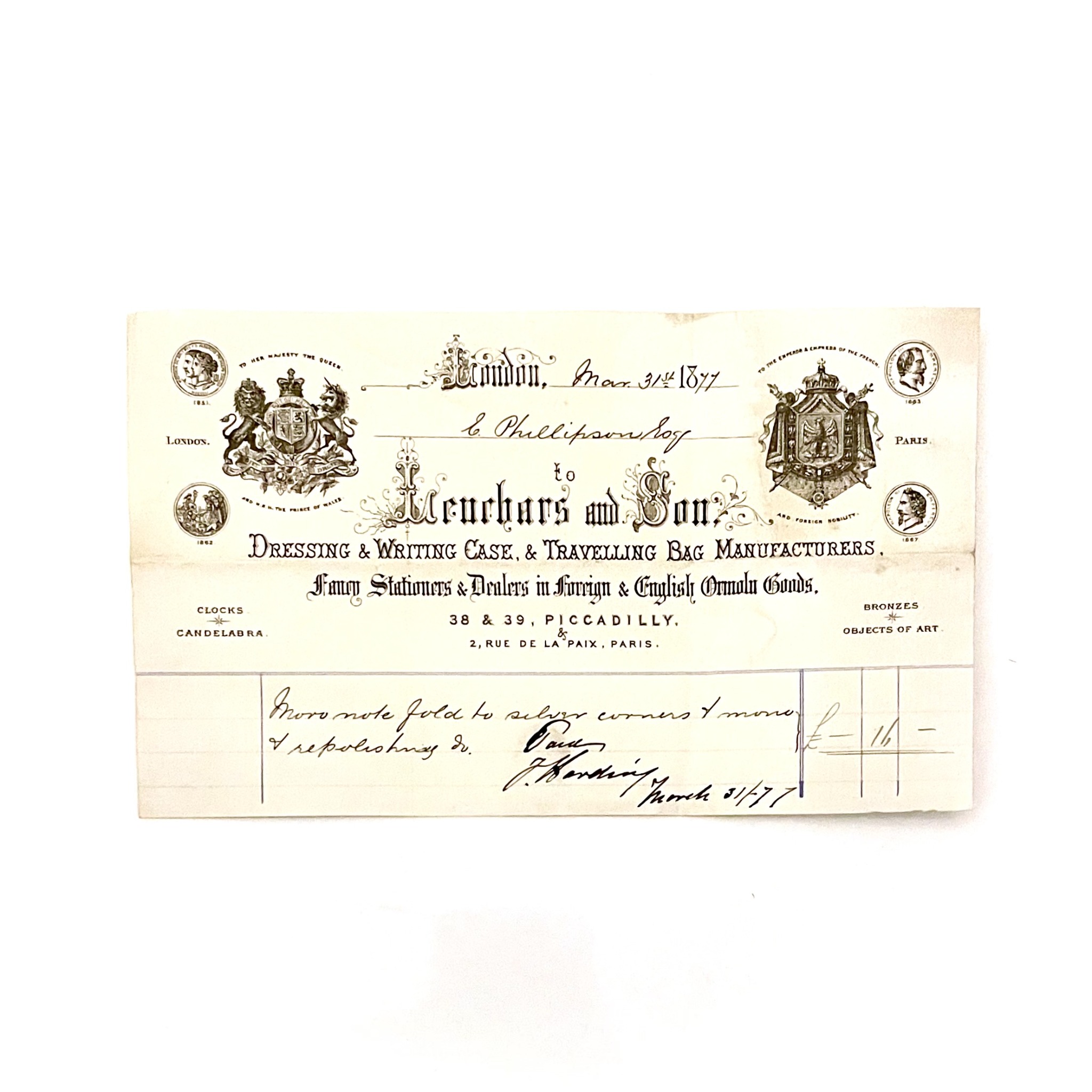
Leuchars enjoyed the patronage of the Emperor and Empress of the French—Napoléon III and Empress Eugénie. The house named both on its own billhead, above the French imperial arms.
“TO THE EMPEROR & EMPRESS OF THE FRENCH.”
Printed alongside the British royal designation, these words place Leuchars within the shared history of London case-making and Parisian luxury.
The original document
Written into the house.
The inscription is explicit: Emperor and Empress. Below the arms, a second line reads “AND FOREIGN NOBILITY.”
The same stationery gives two addresses: 38 & 39 Piccadilly, London, and 2 Rue de la Paix, Paris. It describes Leuchars as manufacturers of dressing and writing cases and travelling bags, alongside stationery, ormolu and objects of art.
View the original photographThe arms of the Second Empire
The eagle, imperial mantle and crown belong to the Napoleonic heraldic tradition used by Napoléon III. The crossed sceptre and hand of justice and the suspended insignia complete the imperial achievement.
Napoléon III ruled as Emperor of the French from 1852 to 1870. His consort, Empress Eugénie, occupied a central place in the ceremonial and fashionable life of the Second Empire. Leuchars’ printed designation names their shared court connection directly.
Piccadilly and Rue de la Paix
The billhead brings the two cities together visually: London beside the British Royal Arms, Paris beside the French imperial arms. Fitted cases and personal objects formed the material world of travel between these centres.
This history gives the Paris address its significance within the Leuchars story. It was part of a house whose commercial identity combined British royal recognition with French imperial patronage.
A document preserved
The invoice in the present collection is dated 31 March 1877. Its continued use of the imperial designation preserves the house’s historical association after the Second Empire had ended. The date belongs to this invoice; it is not the date of the imperial appointment.
The photographs reproduce the surviving document. Its original lettering, handwriting and heraldic detail remain the evidence for the quotations on this page.
Sources
Primary source: Leuchars & Son invoice, 31 March 1877, present Leuchars collection; full document and detail photographs. Heraldic context: Fondation Napoléon, imperial and Napoleonic symbolism.
The opening is an imagined French imperial salon, created as a Leuchars campaign scene. It is not a historical photograph or a reconstruction of a documented room. The receipt and its heraldic detail are edited photographs of the original document, supplied by Leuchars London.
